

206
17 Medical Response
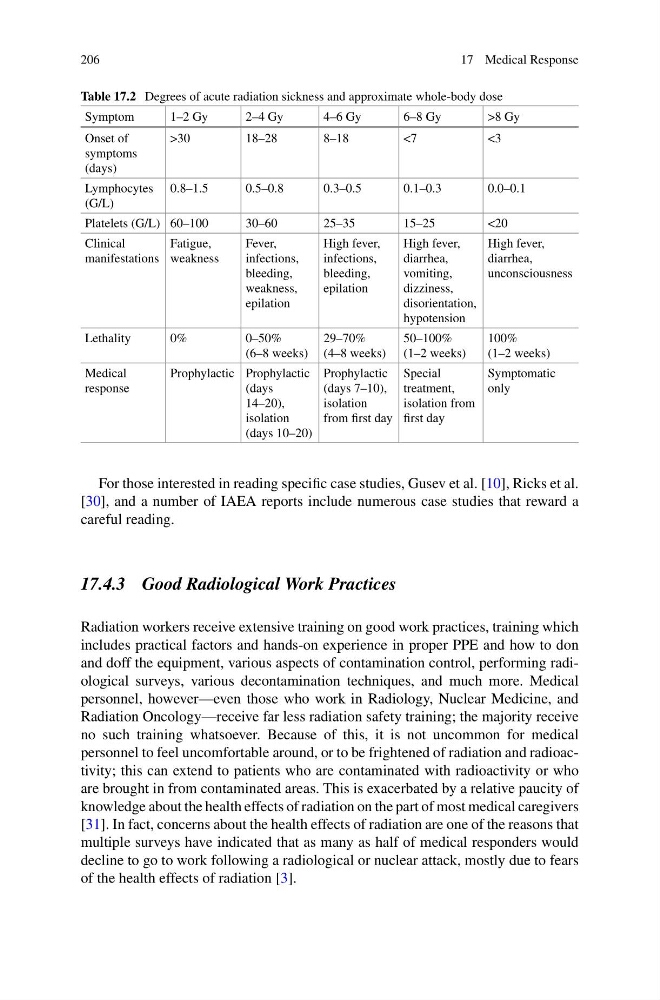
Table 17.2 Degrees of acute radiation sickness and approximate whole-body dose
Symptom
1–2 Gy
2–4 Gy
4–6 Gy
6–8 Gy
>8 Gy
Onset of
symptoms
(days)
>30
18–28
8–18
<7
<3
Lymphocytes
(G/L)
0.8–1.5
0.5–0.8
0.3–0.5
0.1–0.3
0.0–0.1
Platelets (G/L) 60–100
30–60
25–35
15–25
<20
Clinical
manifestations
Fatigue,
weakness
Fever,
infections,
bleeding,
weakness,
epilation
High fever,
infections,
bleeding,
epilation
High fever,
diarrhea,
vomiting,
dizziness,
disorientation,
hypotension
High fever,
diarrhea,
unconsciousness
Lethality
0%
0–50%
(6–8 weeks)
29–70%
(4–8 weeks)
50–100%
(1–2 weeks)
100%
(1–2 weeks)
Medical
response
Prophylactic Prophylactic
(days
14–20),
isolation
(days 10–20)
Prophylactic
(days 7–10),
isolation
from first day
Special
treatment,
isolation from
first day
Symptomatic
only
For those interested in reading specific case studies, Gusev et al. [10], Ricks et al.
[30], and a number of IAEA reports include numerous case studies that reward a
careful reading.
17.4.3 Good Radiological Work Practices
Radiation workers receive extensive training on good work practices, training which
includes practical factors and hands-on experience in proper PPE and how to don
and doff the equipment, various aspects of contamination control, performing radiological surveys, various decontamination techniques, and much more. Medical
personnel, however—even those who work in Radiology, Nuclear Medicine, and
Radiation Oncology—receive far less radiation safety training; the majority receive
no such training whatsoever. Because of this, it is not uncommon for medical
personnel to feel uncomfortable around, or to be frightened of radiation and radioactivity; this can extend to patients who are contaminated with radioactivity or who
are brought in from contaminated areas. This is exacerbated by a relative paucity of
knowledge about the health effects of radiation on the part of most medical caregivers
[31]. In fact, concerns about the health effects of radiation are one of the reasons that
multiple surveys have indicated that as many as half of medical responders would
decline to go to work following a radiological or nuclear attack, mostly due to fears
of the health effects of radiation [3].
17 Medical Response
Table 17.2 Degrees of acute radiation sickness and approximate whole-body dose
Symptom
1–2 Gy
2–4 Gy
4–6 Gy
6–8 Gy
>8 Gy
Onset of
symptoms
(days)
>30
18–28
8–18
<7
<3
Lymphocytes
(G/L)
0.8–1.5
0.5–0.8
0.3–0.5
0.1–0.3
0.0–0.1
Platelets (G/L) 60–100
30–60
25–35
15–25
<20
Clinical
manifestations
Fatigue,
weakness
Fever,
infections,
bleeding,
weakness,
epilation
High fever,
infections,
bleeding,
epilation
High fever,
diarrhea,
vomiting,
dizziness,
disorientation,
hypotension
High fever,
diarrhea,
unconsciousness
Lethality
0%
0–50%
(6–8 weeks)
29–70%
(4–8 weeks)
50–100%
(1–2 weeks)
100%
(1–2 weeks)
Medical
response
Prophylactic Prophylactic
(days
14–20),
isolation
(days 10–20)
Prophylactic
(days 7–10),
isolation
from first day
Special
treatment,
isolation from
first day
Symptomatic
only
For those interested in reading specific case studies, Gusev et al. [10], Ricks et al.
[30], and a number of IAEA reports include numerous case studies that reward a
careful reading.
17.4.3 Good Radiological Work Practices
Radiation workers receive extensive training on good work practices, training which
includes practical factors and hands-on experience in proper PPE and how to don
and doff the equipment, various aspects of contamination control, performing radiological surveys, various decontamination techniques, and much more. Medical
personnel, however—even those who work in Radiology, Nuclear Medicine, and
Radiation Oncology—receive far less radiation safety training; the majority receive
no such training whatsoever. Because of this, it is not uncommon for medical
personnel to feel uncomfortable around, or to be frightened of radiation and radioactivity; this can extend to patients who are contaminated with radioactivity or who
are brought in from contaminated areas. This is exacerbated by a relative paucity of
knowledge about the health effects of radiation on the part of most medical caregivers
[31]. In fact, concerns about the health effects of radiation are one of the reasons that
multiple surveys have indicated that as many as half of medical responders would
decline to go to work following a radiological or nuclear attack, mostly due to fears
of the health effects of radiation [3].