

142
13 Developing a Radiological and Nuclear Interdiction Network
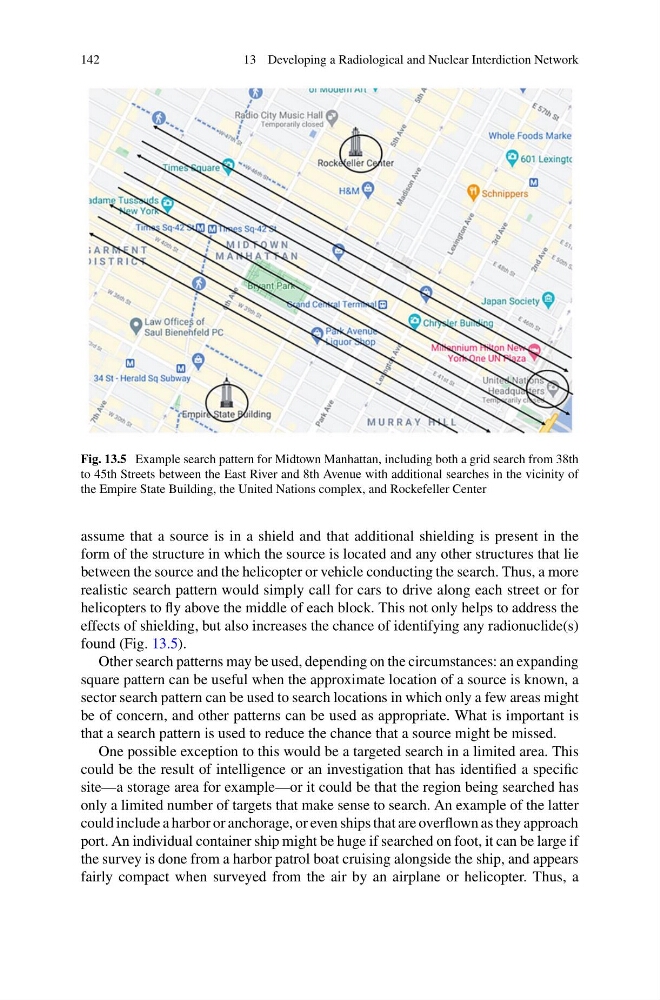
Fig. 13.5 Example search pattern for Midtown Manhattan, including both a grid search from 38th
to 45th Streets between the East River and 8th Avenue with additional searches in the vicinity of
the Empire State Building, the United Nations complex, and Rockefeller Center
assume that a source is in a shield and that additional shielding is present in the
form of the structure in which the source is located and any other structures that lie
between the source and the helicopter or vehicle conducting the search. Thus, a more
realistic search pattern would simply call for cars to drive along each street or for
helicopters to fly above the middle of each block. This not only helps to address the
effects of shielding, but also increases the chance of identifying any radionuclide(s)
found (Fig. 13.5).
Other search patterns may be used, depending on the circumstances: an expanding
square pattern can be useful when the approximate location of a source is known, a
sector search pattern can be used to search locations in which only a few areas might
be of concern, and other patterns can be used as appropriate. What is important is
that a search pattern is used to reduce the chance that a source might be missed.
One possible exception to this would be a targeted search in a limited area. This
could be the result of intelligence or an investigation that has identified a specific
site—a storage area for example—or it could be that the region being searched has
only a limited number of targets that make sense to search. An example of the latter
could include a harbor or anchorage, or even ships that are overflown as they approach
port. An individual container ship might be huge if searched on foot, it can be large if
the survey is done from a harbor patrol boat cruising alongside the ship, and appears
fairly compact when surveyed from the air by an airplane or helicopter. Thus, a
13 Developing a Radiological and Nuclear Interdiction Network
Fig. 13.5 Example search pattern for Midtown Manhattan, including both a grid search from 38th
to 45th Streets between the East River and 8th Avenue with additional searches in the vicinity of
the Empire State Building, the United Nations complex, and Rockefeller Center
assume that a source is in a shield and that additional shielding is present in the
form of the structure in which the source is located and any other structures that lie
between the source and the helicopter or vehicle conducting the search. Thus, a more
realistic search pattern would simply call for cars to drive along each street or for
helicopters to fly above the middle of each block. This not only helps to address the
effects of shielding, but also increases the chance of identifying any radionuclide(s)
found (Fig. 13.5).
Other search patterns may be used, depending on the circumstances: an expanding
square pattern can be useful when the approximate location of a source is known, a
sector search pattern can be used to search locations in which only a few areas might
be of concern, and other patterns can be used as appropriate. What is important is
that a search pattern is used to reduce the chance that a source might be missed.
One possible exception to this would be a targeted search in a limited area. This
could be the result of intelligence or an investigation that has identified a specific
site—a storage area for example—or it could be that the region being searched has
only a limited number of targets that make sense to search. An example of the latter
could include a harbor or anchorage, or even ships that are overflown as they approach
port. An individual container ship might be huge if searched on foot, it can be large if
the survey is done from a harbor patrol boat cruising alongside the ship, and appears
fairly compact when surveyed from the air by an airplane or helicopter. Thus, a