

2
1 Introduction
(a)
(b)
F-actin
S1
G-actin
(c)
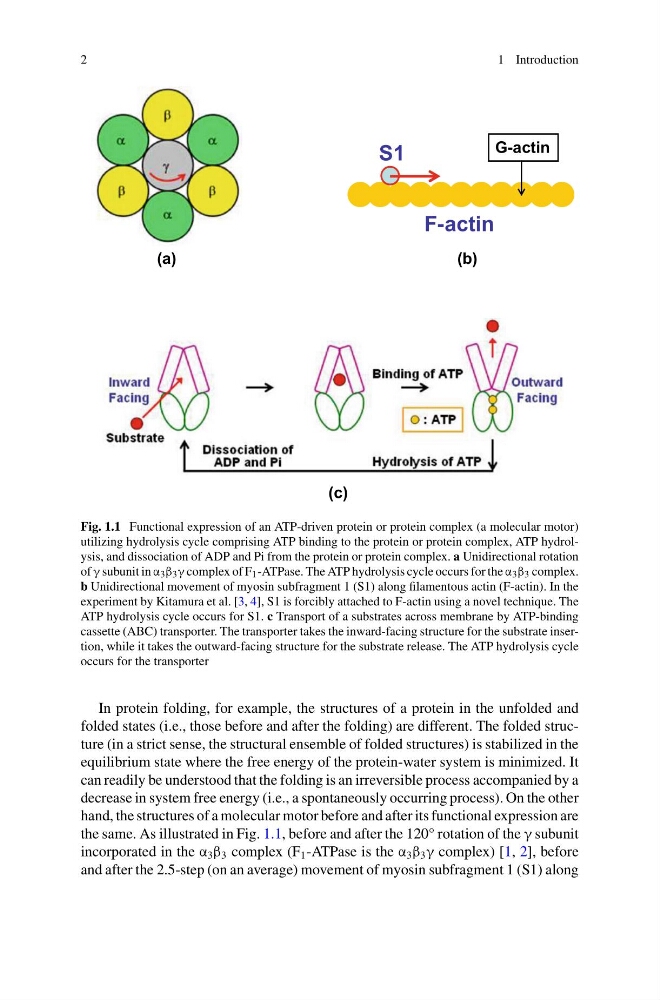
Fig. 1.1 Functional expression of an ATP-driven protein or protein complex (a molecular motor)
utilizing hydrolysis cycle comprising ATP binding to the protein or protein complex, ATP hydrolysis, and dissociation of ADP and Pi from the protein or protein complex. a Unidirectional rotation
of γ subunit in α 3 β 3 γ complex of F 1 -ATPase. The ATP hydrolysis cycle occurs for the α 3 β 3 complex.
b Unidirectional movement of myosin subfragment 1 (S1) along filamentous actin (F-actin). In the
experiment by Kitamura et al. [3, 4], S1 is forcibly attached to F-actin using a novel technique. The
ATP hydrolysis cycle occurs for S1. c Transport of a substrates across membrane by ATP-binding
cassette (ABC) transporter. The transporter takes the inward-facing structure for the substrate insertion, while it takes the outward-facing structure for the substrate release. The ATP hydrolysis cycle
occurs for the transporter
In protein folding, for example, the structures of a protein in the unfolded and
folded states (i.e., those before and after the folding) are different. The folded structure (in a strict sense, the structural ensemble of folded structures) is stabilized in the
equilibrium state where the free energy of the protein-water system is minimized. It
can readily be understood that the folding is an irreversible process accompanied by a
decrease in system free energy (i.e., a spontaneously occurring process). On the other
hand, the structures of a molecular motor before and after its functional expression are
the same. As illustrated in Fig. 1.1, before and after the 120° rotation of the γ subunit
incorporated in the α 3 β 3 complex (F 1 -ATPase is the α 3 β 3 γ complex) [1, 2], before
and after the 2.5-step (on an average) movement of myosin subfragment 1 (S1) along
1 Introduction
(a)
(b)
F-actin
S1
G-actin
(c)
Fig. 1.1 Functional expression of an ATP-driven protein or protein complex (a molecular motor)
utilizing hydrolysis cycle comprising ATP binding to the protein or protein complex, ATP hydrolysis, and dissociation of ADP and Pi from the protein or protein complex. a Unidirectional rotation
of γ subunit in α 3 β 3 γ complex of F 1 -ATPase. The ATP hydrolysis cycle occurs for the α 3 β 3 complex.
b Unidirectional movement of myosin subfragment 1 (S1) along filamentous actin (F-actin). In the
experiment by Kitamura et al. [3, 4], S1 is forcibly attached to F-actin using a novel technique. The
ATP hydrolysis cycle occurs for S1. c Transport of a substrates across membrane by ATP-binding
cassette (ABC) transporter. The transporter takes the inward-facing structure for the substrate insertion, while it takes the outward-facing structure for the substrate release. The ATP hydrolysis cycle
occurs for the transporter
In protein folding, for example, the structures of a protein in the unfolded and
folded states (i.e., those before and after the folding) are different. The folded structure (in a strict sense, the structural ensemble of folded structures) is stabilized in the
equilibrium state where the free energy of the protein-water system is minimized. It
can readily be understood that the folding is an irreversible process accompanied by a
decrease in system free energy (i.e., a spontaneously occurring process). On the other
hand, the structures of a molecular motor before and after its functional expression are
the same. As illustrated in Fig. 1.1, before and after the 120° rotation of the γ subunit
incorporated in the α 3 β 3 complex (F 1 -ATPase is the α 3 β 3 γ complex) [1, 2], before
and after the 2.5-step (on an average) movement of myosin subfragment 1 (S1) along