

582
K. Takeda et al.
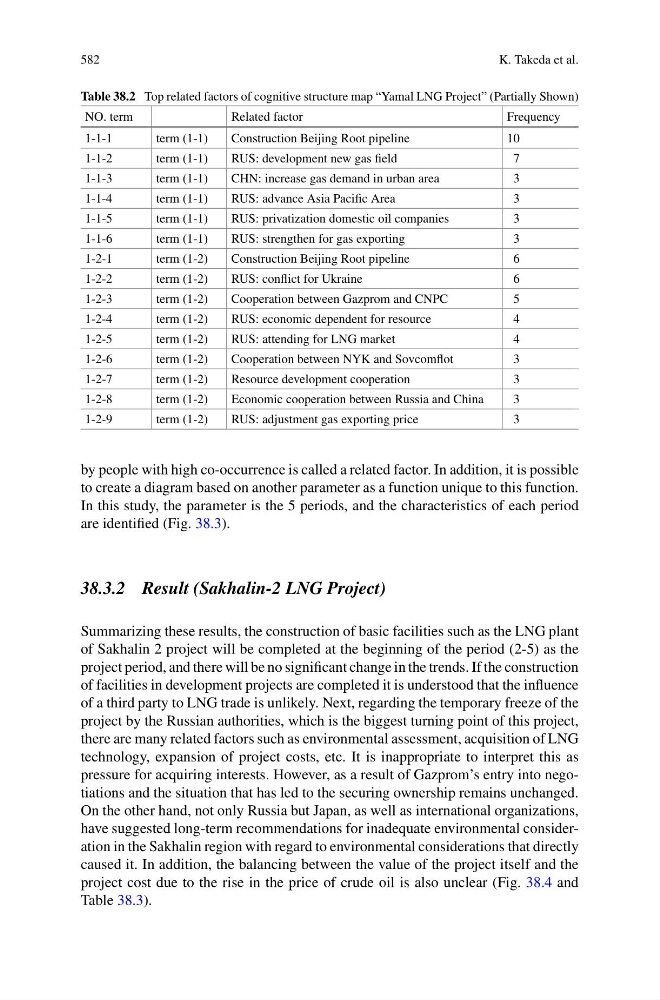
Table 38.2 Top related factors of cognitive structure map “Yamal LNG Project” (Partially Shown)
NO. term
Related factor
Frequency
1-1-1
term (1-1)
Construction Beijing Root pipeline
10
1-1-2
term (1-1)
RUS: development new gas field
7
1-1-3
term (1-1)
CHN: increase gas demand in urban area
3
1-1-4
term (1-1)
RUS: advance Asia Pacific Area
3
1-1-5
term (1-1)
RUS: privatization domestic oil companies
3
1-1-6
term (1-1)
RUS: strengthen for gas exporting
3
1-2-1
term (1-2)
Construction Beijing Root pipeline
6
1-2-2
term (1-2)
RUS: conflict for Ukraine
6
1-2-3
term (1-2)
Cooperation between Gazprom and CNPC
5
1-2-4
term (1-2)
RUS: economic dependent for resource
4
1-2-5
term (1-2)
RUS: attending for LNG market
4
1-2-6
term (1-2)
Cooperation between NYK and Sovcomflot
3
1-2-7
term (1-2)
Resource development cooperation
3
1-2-8
term (1-2)
Economic cooperation between Russia and China
3
1-2-9
term (1-2)
RUS: adjustment gas exporting price
3
by people with high co-occurrence is called a related factor. In addition, it is possible
to create a diagram based on another parameter as a function unique to this function.
In this study, the parameter is the 5 periods, and the characteristics of each period
are identified (Fig. 38.3).
38.3.2 Result (Sakhalin-2 LNG Project)
Summarizing these results, the construction of basic facilities such as the LNG plant
of Sakhalin 2 project will be completed at the beginning of the period (2-5) as the
project period, and there will be no significant change in the trends. If the construction
of facilities in development projects are completed it is understood that the influence
of a third party to LNG trade is unlikely. Next, regarding the temporary freeze of the
project by the Russian authorities, which is the biggest turning point of this project,
there are many related factors such as environmental assessment, acquisition of LNG
technology, expansion of project costs, etc. It is inappropriate to interpret this as
pressure for acquiring interests. However, as a result of Gazprom’s entry into negotiations and the situation that has led to the securing ownership remains unchanged.
On the other hand, not only Russia but Japan, as well as international organizations,
have suggested long-term recommendations for inadequate environmental consideration in the Sakhalin region with regard to environmental considerations that directly
caused it. In addition, the balancing between the value of the project itself and the
project cost due to the rise in the price of crude oil is also unclear (Fig. 38.4 and
Table 38.3).