

580
K. Takeda et al.
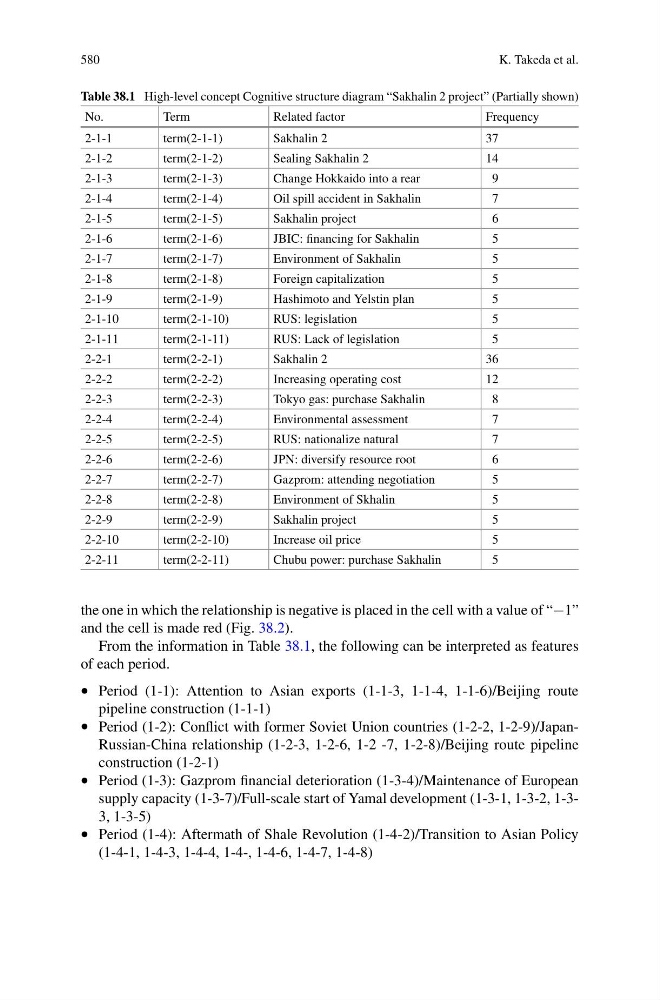
Table 38.1 High-level concept Cognitive structure diagram “Sakhalin 2 project” (Partially shown)
No.
Term
Related factor
Frequency
2-1-1
term(2-1-1)
Sakhalin 2
37
2-1-2
term(2-1-2)
Sealing Sakhalin 2
14
2-1-3
term(2-1-3)
Change Hokkaido into a rear
9
2-1-4
term(2-1-4)
Oil spill accident in Sakhalin
7
2-1-5
term(2-1-5)
Sakhalin project
6
2-1-6
term(2-1-6)
JBIC: financing for Sakhalin
5
2-1-7
term(2-1-7)
Environment of Sakhalin
5
2-1-8
term(2-1-8)
Foreign capitalization
5
2-1-9
term(2-1-9)
Hashimoto and Yelstin plan
5
2-1-10
term(2-1-10)
RUS: legislation
5
2-1-11
term(2-1-11)
RUS: Lack of legislation
5
2-2-1
term(2-2-1)
Sakhalin 2
36
2-2-2
term(2-2-2)
Increasing operating cost
12
2-2-3
term(2-2-3)
Tokyo gas: purchase Sakhalin
8
2-2-4
term(2-2-4)
Environmental assessment
7
2-2-5
term(2-2-5)
RUS: nationalize natural
7
2-2-6
term(2-2-6)
JPN: diversify resource root
6
2-2-7
term(2-2-7)
Gazprom: attending negotiation
5
2-2-8
term(2-2-8)
Environment of Skhalin
5
2-2-9
term(2-2-9)
Sakhalin project
5
2-2-10
term(2-2-10)
Increase oil price
5
2-2-11
term(2-2-11)
Chubu power: purchase Sakhalin
5
the one in which the relationship is negative is placed in the cell with a value of “−1”
and the cell is made red (Fig. 38.2).
From the information in Table 38.1, the following can be interpreted as features
of each period.
• Period (1-1): Attention to Asian exports (1-1-3, 1-1-4, 1-1-6)/Beijing route
pipeline construction (1-1-1)
• Period (1-2): Conflict with former Soviet Union countries (1-2-2, 1-2-9)/JapanRussian-China relationship (1-2-3, 1-2-6, 1-2 -7, 1-2-8)/Beijing route pipeline
construction (1-2-1)
• Period (1-3): Gazprom financial deterioration (1-3-4)/Maintenance of European
supply capacity (1-3-7)/Full-scale start of Yamal development (1-3-1, 1-3-2, 1-33, 1-3-5)
• Period (1-4): Aftermath of Shale Revolution (1-4-2)/Transition to Asian Policy
(1-4-1, 1-4-3, 1-4-4, 1-4-, 1-4-6, 1-4-7, 1-4-8)