

33 Optimal Design and Operation of a Residential Hybrid Microgrid …
509
Table 33.7 Electric
appliances rated power
Electric appliances
Power consumption [kW]
TV
0.057
Refrigerator
0.228
Lighting
0.0358
Air conditioner (AC)
0.815 (Cooling)
0.957 (Heating)
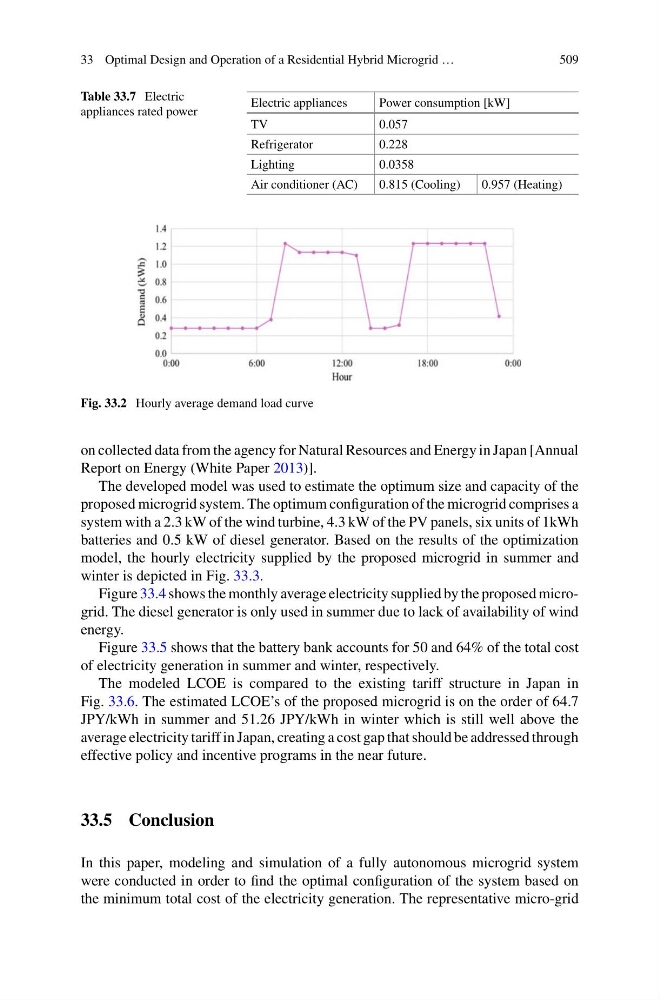
Fig. 33.2 Hourly average demand load curve
on collected data from the agency for Natural Resources and Energy in Japan [Annual
Report on Energy (White Paper 2013)].
The developed model was used to estimate the optimum size and capacity of the
proposed microgrid system. The optimum configuration of the microgrid comprises a
system with a 2.3 kW of the wind turbine, 4.3 kW of the PV panels, six units of 1kWh
batteries and 0.5 kW of diesel generator. Based on the results of the optimization
model, the hourly electricity supplied by the proposed microgrid in summer and
winter is depicted in Fig. 33.3.
Figure 33.4 shows the monthly average electricity supplied by the proposed microgrid. The diesel generator is only used in summer due to lack of availability of wind
energy.
Figure 33.5 shows that the battery bank accounts for 50 and 64% of the total cost
of electricity generation in summer and winter, respectively.
The modeled LCOE is compared to the existing tariff structure in Japan in
Fig. 33.6. The estimated LCOE’s of the proposed microgrid is on the order of 64.7
JPY/kWh in summer and 51.26 JPY/kWh in winter which is still well above the
average electricity tariff in Japan, creating a cost gap that should be addressed through
effective policy and incentive programs in the near future.
33.5 Conclusion
In this paper, modeling and simulation of a fully autonomous microgrid system
were conducted in order to find the optimal configuration of the system based on
the minimum total cost of the electricity generation. The representative micro-grid
509
Table 33.7 Electric
appliances rated power
Electric appliances
Power consumption [kW]
TV
0.057
Refrigerator
0.228
Lighting
0.0358
Air conditioner (AC)
0.815 (Cooling)
0.957 (Heating)
Fig. 33.2 Hourly average demand load curve
on collected data from the agency for Natural Resources and Energy in Japan [Annual
Report on Energy (White Paper 2013)].
The developed model was used to estimate the optimum size and capacity of the
proposed microgrid system. The optimum configuration of the microgrid comprises a
system with a 2.3 kW of the wind turbine, 4.3 kW of the PV panels, six units of 1kWh
batteries and 0.5 kW of diesel generator. Based on the results of the optimization
model, the hourly electricity supplied by the proposed microgrid in summer and
winter is depicted in Fig. 33.3.
Figure 33.4 shows the monthly average electricity supplied by the proposed microgrid. The diesel generator is only used in summer due to lack of availability of wind
energy.
Figure 33.5 shows that the battery bank accounts for 50 and 64% of the total cost
of electricity generation in summer and winter, respectively.
The modeled LCOE is compared to the existing tariff structure in Japan in
Fig. 33.6. The estimated LCOE’s of the proposed microgrid is on the order of 64.7
JPY/kWh in summer and 51.26 JPY/kWh in winter which is still well above the
average electricity tariff in Japan, creating a cost gap that should be addressed through
effective policy and incentive programs in the near future.
33.5 Conclusion
In this paper, modeling and simulation of a fully autonomous microgrid system
were conducted in order to find the optimal configuration of the system based on
the minimum total cost of the electricity generation. The representative micro-grid