

494
N. Takatsu and H. Farzaneh
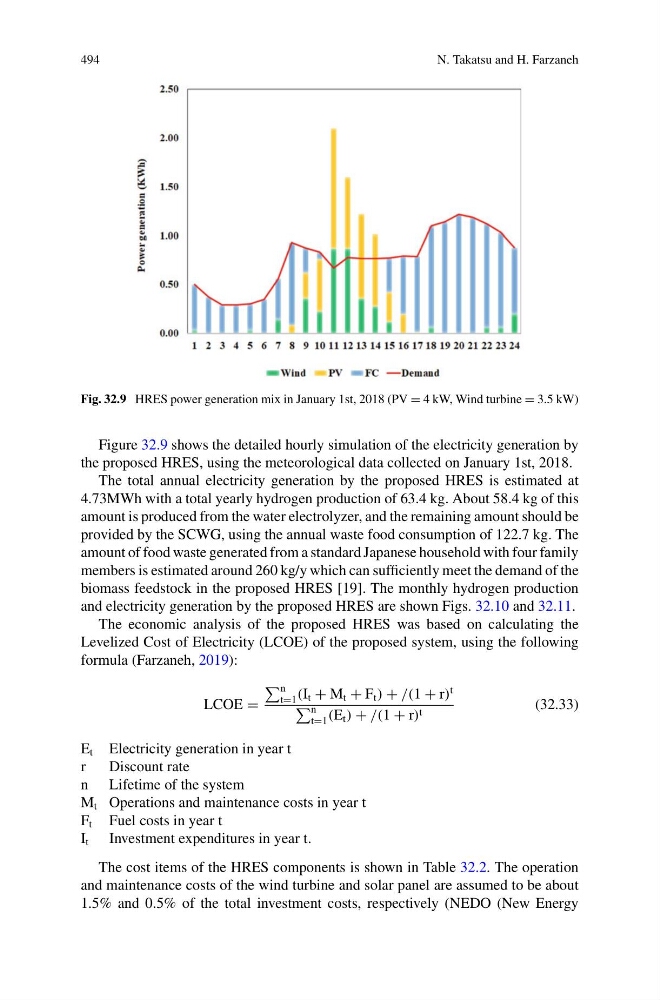
Fig. 32.9 HRES power generation mix in January 1st, 2018 (PV = 4 kW, Wind turbine = 3.5 kW)
Figure 32.9 shows the detailed hourly simulation of the electricity generation by
the proposed HRES, using the meteorological data collected on January 1st, 2018.
The total annual electricity generation by the proposed HRES is estimated at
4.73MWh with a total yearly hydrogen production of 63.4 kg. About 58.4 kg of this
amount is produced from the water electrolyzer, and the remaining amount should be
provided by the SCWG, using the annual waste food consumption of 122.7 kg. The
amount of food waste generated from a standard Japanese household with four family
members is estimated around 260 kg/y which can sufficiently meet the demand of the
biomass feedstock in the proposed HRES [19]. The monthly hydrogen production
and electricity generation by the proposed HRES are shown Figs. 32.10 and 32.11.
The economic analysis of the proposed HRES was based on calculating the
Levelized Cost of Electricity (LCOE) of the proposed system, using the following
formula (Farzaneh, 2019):
LCOE =
n
t=1 (I t + M t + F t ) + /(1 + r)
t
n
t=1 (E t ) + /(1 + r) t
(32.33)
E t Electricity generation in year t
r
Discount rate
n Lifetime of the system
M t Operations and maintenance costs in year t
F t Fuel costs in year t
I t Investment expenditures in year t.
The cost items of the HRES components is shown in Table 32.2. The operation
and maintenance costs of the wind turbine and solar panel are assumed to be about
1.5% and 0.5% of the total investment costs, respectively (NEDO (New Energy
N. Takatsu and H. Farzaneh
Fig. 32.9 HRES power generation mix in January 1st, 2018 (PV = 4 kW, Wind turbine = 3.5 kW)
Figure 32.9 shows the detailed hourly simulation of the electricity generation by
the proposed HRES, using the meteorological data collected on January 1st, 2018.
The total annual electricity generation by the proposed HRES is estimated at
4.73MWh with a total yearly hydrogen production of 63.4 kg. About 58.4 kg of this
amount is produced from the water electrolyzer, and the remaining amount should be
provided by the SCWG, using the annual waste food consumption of 122.7 kg. The
amount of food waste generated from a standard Japanese household with four family
members is estimated around 260 kg/y which can sufficiently meet the demand of the
biomass feedstock in the proposed HRES [19]. The monthly hydrogen production
and electricity generation by the proposed HRES are shown Figs. 32.10 and 32.11.
The economic analysis of the proposed HRES was based on calculating the
Levelized Cost of Electricity (LCOE) of the proposed system, using the following
formula (Farzaneh, 2019):
LCOE =
n
t=1 (I t + M t + F t ) + /(1 + r)
t
n
t=1 (E t ) + /(1 + r) t
(32.33)
E t Electricity generation in year t
r
Discount rate
n Lifetime of the system
M t Operations and maintenance costs in year t
F t Fuel costs in year t
I t Investment expenditures in year t.
The cost items of the HRES components is shown in Table 32.2. The operation
and maintenance costs of the wind turbine and solar panel are assumed to be about
1.5% and 0.5% of the total investment costs, respectively (NEDO (New Energy