

350
A. Evangelista et al.
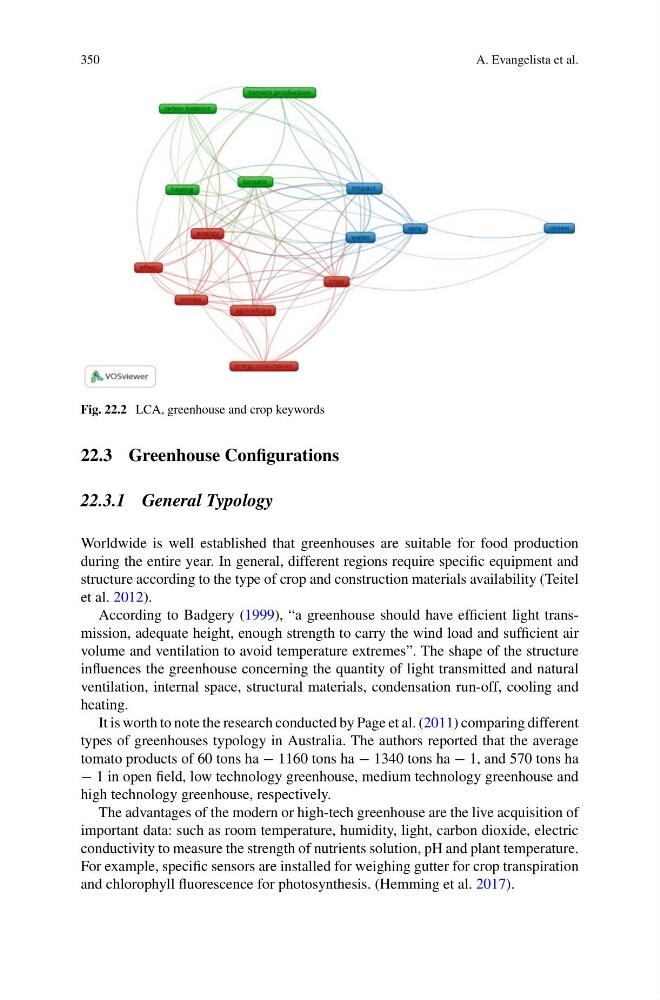
Fig. 22.2 LCA, greenhouse and crop keywords
22.3 Greenhouse Configurations
22.3.1 General Typology
Worldwide is well established that greenhouses are suitable for food production
during the entire year. In general, different regions require specific equipment and
structure according to the type of crop and construction materials availability (Teitel
et al. 2012).
According to Badgery (1999), “a greenhouse should have efficient light transmission, adequate height, enough strength to carry the wind load and sufficient air
volume and ventilation to avoid temperature extremes”. The shape of the structure
influences the greenhouse concerning the quantity of light transmitted and natural
ventilation, internal space, structural materials, condensation run-off, cooling and
heating.
It is worth to note the research conducted by Page et al. (2011) comparing different
types of greenhouses typology in Australia. The authors reported that the average
tomato products of 60 tons ha − 1160 tons ha − 1340 tons ha − 1, and 570 tons ha
− 1 in open field, low technology greenhouse, medium technology greenhouse and
high technology greenhouse, respectively.
The advantages of the modern or high-tech greenhouse are the live acquisition of
important data: such as room temperature, humidity, light, carbon dioxide, electric
conductivity to measure the strength of nutrients solution, pH and plant temperature.
For example, specific sensors are installed for weighing gutter for crop transpiration
and chlorophyll fluorescence for photosynthesis. (Hemming et al. 2017).
A. Evangelista et al.
Fig. 22.2 LCA, greenhouse and crop keywords
22.3 Greenhouse Configurations
22.3.1 General Typology
Worldwide is well established that greenhouses are suitable for food production
during the entire year. In general, different regions require specific equipment and
structure according to the type of crop and construction materials availability (Teitel
et al. 2012).
According to Badgery (1999), “a greenhouse should have efficient light transmission, adequate height, enough strength to carry the wind load and sufficient air
volume and ventilation to avoid temperature extremes”. The shape of the structure
influences the greenhouse concerning the quantity of light transmitted and natural
ventilation, internal space, structural materials, condensation run-off, cooling and
heating.
It is worth to note the research conducted by Page et al. (2011) comparing different
types of greenhouses typology in Australia. The authors reported that the average
tomato products of 60 tons ha − 1160 tons ha − 1340 tons ha − 1, and 570 tons ha
− 1 in open field, low technology greenhouse, medium technology greenhouse and
high technology greenhouse, respectively.
The advantages of the modern or high-tech greenhouse are the live acquisition of
important data: such as room temperature, humidity, light, carbon dioxide, electric
conductivity to measure the strength of nutrients solution, pH and plant temperature.
For example, specific sensors are installed for weighing gutter for crop transpiration
and chlorophyll fluorescence for photosynthesis. (Hemming et al. 2017).