

21 Progress for Life Cycle Sustainability Assessment by Means …
331
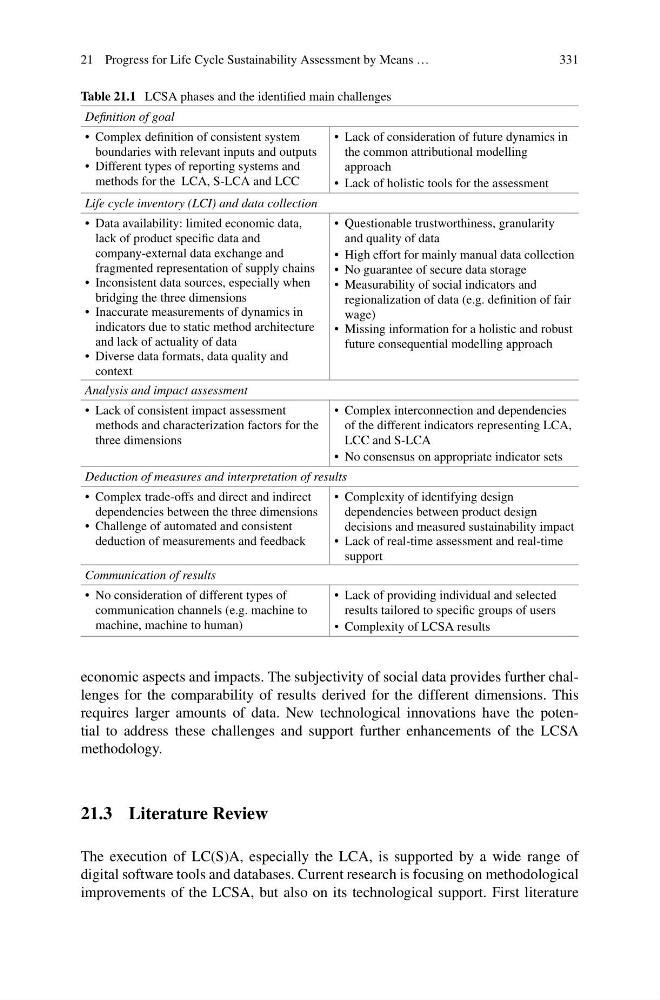
Table 21.1 LCSA phases and the identified main challenges
Definition of goal
• Complex definition of consistent system
boundaries with relevant inputs and outputs
• Different types of reporting systems and
methods for the LCA, S-LCA and LCC
• Lack of consideration of future dynamics in
the common attributional modelling
approach
• Lack of holistic tools for the assessment
Life cycle inventory (LCI) and data collection
• Data availability: limited economic data,
lack of product specific data and
company-external data exchange and
fragmented representation of supply chains
• Inconsistent data sources, especially when
bridging the three dimensions
• Inaccurate measurements of dynamics in
indicators due to static method architecture
and lack of actuality of data
• Diverse data formats, data quality and
context
• Questionable trustworthiness, granularity
and quality of data
• High effort for mainly manual data collection
• No guarantee of secure data storage
• Measurability of social indicators and
regionalization of data (e.g. definition of fair
wage)
• Missing information for a holistic and robust
future consequential modelling approach
Analysis and impact assessment
• Lack of consistent impact assessment
methods and characterization factors for the
three dimensions
• Complex interconnection and dependencies
of the different indicators representing LCA,
LCC and S-LCA
• No consensus on appropriate indicator sets
Deduction of measures and interpretation of results
• Complex trade-offs and direct and indirect
dependencies between the three dimensions
• Challenge of automated and consistent
deduction of measurements and feedback
• Complexity of identifying design
dependencies between product design
decisions and measured sustainability impact
• Lack of real-time assessment and real-time
support
Communication of results
• No consideration of different types of
communication channels (e.g. machine to
machine, machine to human)
• Lack of providing individual and selected
results tailored to specific groups of users
• Complexity of LCSA results
economic aspects and impacts. The subjectivity of social data provides further challenges for the comparability of results derived for the different dimensions. This
requires larger amounts of data. New technological innovations have the potential to address these challenges and support further enhancements of the LCSA
methodology.
21.3 Literature Review
The execution of LC(S)A, especially the LCA, is supported by a wide range of
digital software tools and databases. Current research is focusing on methodological
improvements of the LCSA, but also on its technological support. First literature
331
Table 21.1 LCSA phases and the identified main challenges
Definition of goal
• Complex definition of consistent system
boundaries with relevant inputs and outputs
• Different types of reporting systems and
methods for the LCA, S-LCA and LCC
• Lack of consideration of future dynamics in
the common attributional modelling
approach
• Lack of holistic tools for the assessment
Life cycle inventory (LCI) and data collection
• Data availability: limited economic data,
lack of product specific data and
company-external data exchange and
fragmented representation of supply chains
• Inconsistent data sources, especially when
bridging the three dimensions
• Inaccurate measurements of dynamics in
indicators due to static method architecture
and lack of actuality of data
• Diverse data formats, data quality and
context
• Questionable trustworthiness, granularity
and quality of data
• High effort for mainly manual data collection
• No guarantee of secure data storage
• Measurability of social indicators and
regionalization of data (e.g. definition of fair
wage)
• Missing information for a holistic and robust
future consequential modelling approach
Analysis and impact assessment
• Lack of consistent impact assessment
methods and characterization factors for the
three dimensions
• Complex interconnection and dependencies
of the different indicators representing LCA,
LCC and S-LCA
• No consensus on appropriate indicator sets
Deduction of measures and interpretation of results
• Complex trade-offs and direct and indirect
dependencies between the three dimensions
• Challenge of automated and consistent
deduction of measurements and feedback
• Complexity of identifying design
dependencies between product design
decisions and measured sustainability impact
• Lack of real-time assessment and real-time
support
Communication of results
• No consideration of different types of
communication channels (e.g. machine to
machine, machine to human)
• Lack of providing individual and selected
results tailored to specific groups of users
• Complexity of LCSA results
economic aspects and impacts. The subjectivity of social data provides further challenges for the comparability of results derived for the different dimensions. This
requires larger amounts of data. New technological innovations have the potential to address these challenges and support further enhancements of the LCSA
methodology.
21.3 Literature Review
The execution of LC(S)A, especially the LCA, is supported by a wide range of
digital software tools and databases. Current research is focusing on methodological
improvements of the LCSA, but also on its technological support. First literature