

226
L. Stobbe et al.
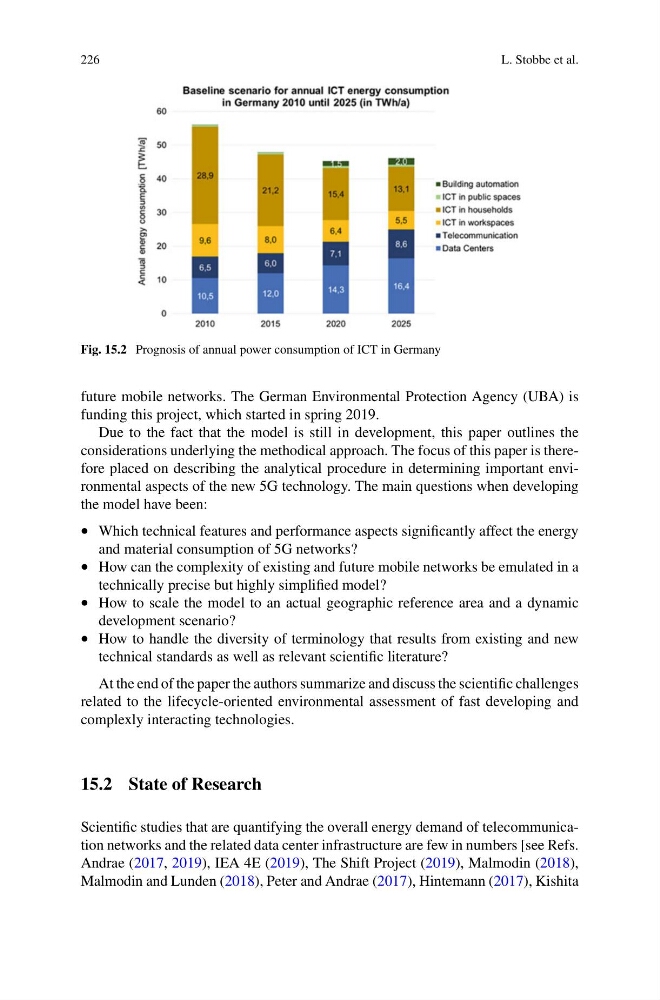
Fig. 15.2 Prognosis of annual power consumption of ICT in Germany
future mobile networks. The German Environmental Protection Agency (UBA) is
funding this project, which started in spring 2019.
Due to the fact that the model is still in development, this paper outlines the
considerations underlying the methodical approach. The focus of this paper is therefore placed on describing the analytical procedure in determining important environmental aspects of the new 5G technology. The main questions when developing
the model have been:
• Which technical features and performance aspects significantly affect the energy
and material consumption of 5G networks?
• How can the complexity of existing and future mobile networks be emulated in a
technically precise but highly simplified model?
• How to scale the model to an actual geographic reference area and a dynamic
development scenario?
• How to handle the diversity of terminology that results from existing and new
technical standards as well as relevant scientific literature?
At the end of the paper the authors summarize and discuss the scientific challenges
related to the lifecycle-oriented environmental assessment of fast developing and
complexly interacting technologies.
15.2 State of Research
Scientific studies that are quantifying the overall energy demand of telecommunication networks and the related data center infrastructure are few in numbers [see Refs.
Andrae (2017, 2019), IEA 4E (2019), The Shift Project (2019), Malmodin (2018),
Malmodin and Lunden (2018), Peter and Andrae (2017), Hintemann (2017), Kishita
L. Stobbe et al.
Fig. 15.2 Prognosis of annual power consumption of ICT in Germany
future mobile networks. The German Environmental Protection Agency (UBA) is
funding this project, which started in spring 2019.
Due to the fact that the model is still in development, this paper outlines the
considerations underlying the methodical approach. The focus of this paper is therefore placed on describing the analytical procedure in determining important environmental aspects of the new 5G technology. The main questions when developing
the model have been:
• Which technical features and performance aspects significantly affect the energy
and material consumption of 5G networks?
• How can the complexity of existing and future mobile networks be emulated in a
technically precise but highly simplified model?
• How to scale the model to an actual geographic reference area and a dynamic
development scenario?
• How to handle the diversity of terminology that results from existing and new
technical standards as well as relevant scientific literature?
At the end of the paper the authors summarize and discuss the scientific challenges
related to the lifecycle-oriented environmental assessment of fast developing and
complexly interacting technologies.
15.2 State of Research
Scientific studies that are quantifying the overall energy demand of telecommunication networks and the related data center infrastructure are few in numbers [see Refs.
Andrae (2017, 2019), IEA 4E (2019), The Shift Project (2019), Malmodin (2018),
Malmodin and Lunden (2018), Peter and Andrae (2017), Hintemann (2017), Kishita