

50
2 Observations of Radio and X-ray Pulsars
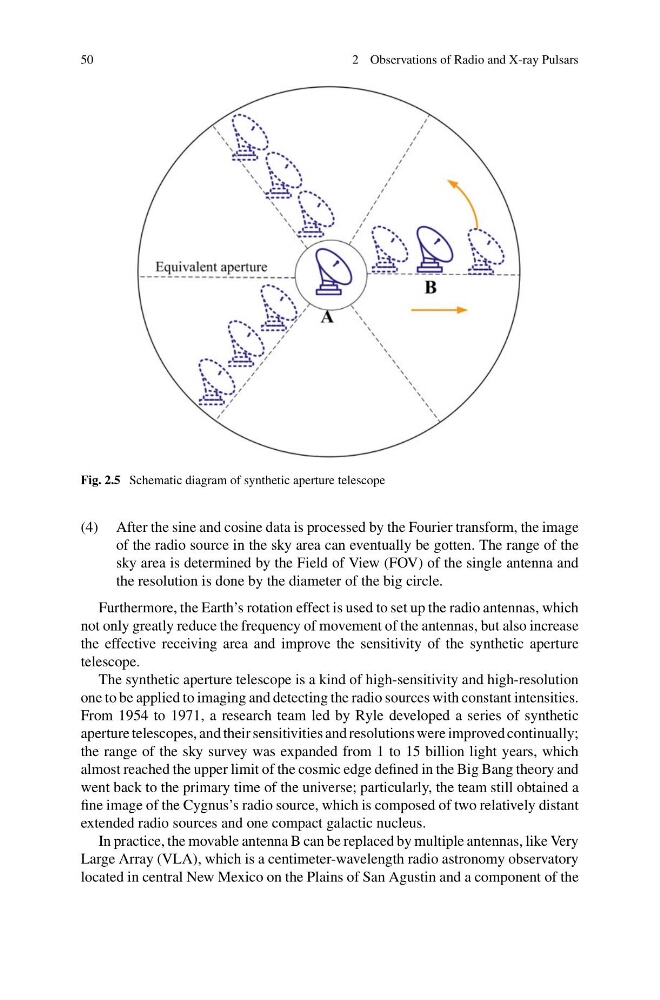
Fig. 2.5 Schematic diagram of synthetic aperture telescope
(4) After the sine and cosine data is processed by the Fourier transform, the image
of the radio source in the sky area can eventually be gotten. The range of the
sky area is determined by the Field of View (FOV) of the single antenna and
the resolution is done by the diameter of the big circle.
Furthermore, the Earth’s rotation effect is used to set up the radio antennas, which
not only greatly reduce the frequency of movement of the antennas, but also increase
the effective receiving area and improve the sensitivity of the synthetic aperture
telescope.
The synthetic aperture telescope is a kind of high-sensitivity and high-resolution
one to be applied to imaging and detecting the radio sources with constant intensities.
From 1954 to 1971, a research team led by Ryle developed a series of synthetic
aperture telescopes, and their sensitivities and resolutions were improved continually;
the range of the sky survey was expanded from 1 to 15 billion light years, which
almost reached the upper limit of the cosmic edge defined in the Big Bang theory and
went back to the primary time of the universe; particularly, the team still obtained a
fine image of the Cygnus’s radio source, which is composed of two relatively distant
extended radio sources and one compact galactic nucleus.
In practice, the movable antenna B can be replaced by multiple antennas, like Very
Large Array (VLA), which is a centimeter-wavelength radio astronomy observatory
located in central New Mexico on the Plains of San Agustin and a component of the
2 Observations of Radio and X-ray Pulsars
Fig. 2.5 Schematic diagram of synthetic aperture telescope
(4) After the sine and cosine data is processed by the Fourier transform, the image
of the radio source in the sky area can eventually be gotten. The range of the
sky area is determined by the Field of View (FOV) of the single antenna and
the resolution is done by the diameter of the big circle.
Furthermore, the Earth’s rotation effect is used to set up the radio antennas, which
not only greatly reduce the frequency of movement of the antennas, but also increase
the effective receiving area and improve the sensitivity of the synthetic aperture
telescope.
The synthetic aperture telescope is a kind of high-sensitivity and high-resolution
one to be applied to imaging and detecting the radio sources with constant intensities.
From 1954 to 1971, a research team led by Ryle developed a series of synthetic
aperture telescopes, and their sensitivities and resolutions were improved continually;
the range of the sky survey was expanded from 1 to 15 billion light years, which
almost reached the upper limit of the cosmic edge defined in the Big Bang theory and
went back to the primary time of the universe; particularly, the team still obtained a
fine image of the Cygnus’s radio source, which is composed of two relatively distant
extended radio sources and one compact galactic nucleus.
In practice, the movable antenna B can be replaced by multiple antennas, like Very
Large Array (VLA), which is a centimeter-wavelength radio astronomy observatory
located in central New Mexico on the Plains of San Agustin and a component of the