

376
5 X-ray Pulsar-Based Navigation: Theories and Experiments
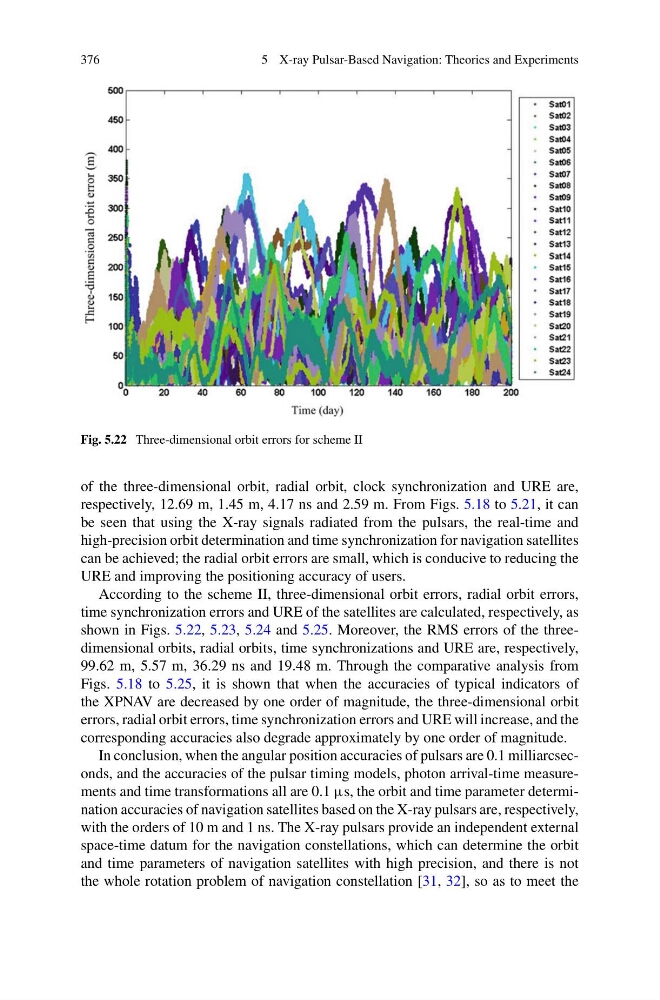
Fig. 5.22 Three-dimensional orbit errors for scheme II
of the three-dimensional orbit, radial orbit, clock synchronization and URE are,
respectively, 12.69 m, 1.45 m, 4.17 ns and 2.59 m. From Figs. 5.18 to 5.21, it can
be seen that using the X-ray signals radiated from the pulsars, the real-time and
high-precision orbit determination and time synchronization for navigation satellites
can be achieved; the radial orbit errors are small, which is conducive to reducing the
URE and improving the positioning accuracy of users.
According to the scheme II, three-dimensional orbit errors, radial orbit errors,
time synchronization errors and URE of the satellites are calculated, respectively, as
shown in Figs. 5.22, 5.23, 5.24 and 5.25. Moreover, the RMS errors of the threedimensional orbits, radial orbits, time synchronizations and URE are, respectively,
99.62 m, 5.57 m, 36.29 ns and 19.48 m. Through the comparative analysis from
Figs. 5.18 to 5.25, it is shown that when the accuracies of typical indicators of
the XPNAV are decreased by one order of magnitude, the three-dimensional orbit
errors, radial orbit errors, time synchronization errors and URE will increase, and the
corresponding accuracies also degrade approximately by one order of magnitude.
In conclusion, when the angular position accuracies of pulsars are 0.1 milliarcseconds, and the accuracies of the pulsar timing models, photon arrival-time measurements and time transformations all are 0.1 μs, the orbit and time parameter determination accuracies of navigation satellites based on the X-ray pulsars are, respectively,
with the orders of 10 m and 1 ns. The X-ray pulsars provide an independent external
space-time datum for the navigation constellations, which can determine the orbit
and time parameters of navigation satellites with high precision, and there is not
the whole rotation problem of navigation constellation [31, 32], so as to meet the
5 X-ray Pulsar-Based Navigation: Theories and Experiments
Fig. 5.22 Three-dimensional orbit errors for scheme II
of the three-dimensional orbit, radial orbit, clock synchronization and URE are,
respectively, 12.69 m, 1.45 m, 4.17 ns and 2.59 m. From Figs. 5.18 to 5.21, it can
be seen that using the X-ray signals radiated from the pulsars, the real-time and
high-precision orbit determination and time synchronization for navigation satellites
can be achieved; the radial orbit errors are small, which is conducive to reducing the
URE and improving the positioning accuracy of users.
According to the scheme II, three-dimensional orbit errors, radial orbit errors,
time synchronization errors and URE of the satellites are calculated, respectively, as
shown in Figs. 5.22, 5.23, 5.24 and 5.25. Moreover, the RMS errors of the threedimensional orbits, radial orbits, time synchronizations and URE are, respectively,
99.62 m, 5.57 m, 36.29 ns and 19.48 m. Through the comparative analysis from
Figs. 5.18 to 5.25, it is shown that when the accuracies of typical indicators of
the XPNAV are decreased by one order of magnitude, the three-dimensional orbit
errors, radial orbit errors, time synchronization errors and URE will increase, and the
corresponding accuracies also degrade approximately by one order of magnitude.
In conclusion, when the angular position accuracies of pulsars are 0.1 milliarcseconds, and the accuracies of the pulsar timing models, photon arrival-time measurements and time transformations all are 0.1 μs, the orbit and time parameter determination accuracies of navigation satellites based on the X-ray pulsars are, respectively,
with the orders of 10 m and 1 ns. The X-ray pulsars provide an independent external
space-time datum for the navigation constellations, which can determine the orbit
and time parameters of navigation satellites with high precision, and there is not
the whole rotation problem of navigation constellation [31, 32], so as to meet the