

364
5 X-ray Pulsar-Based Navigation: Theories and Experiments
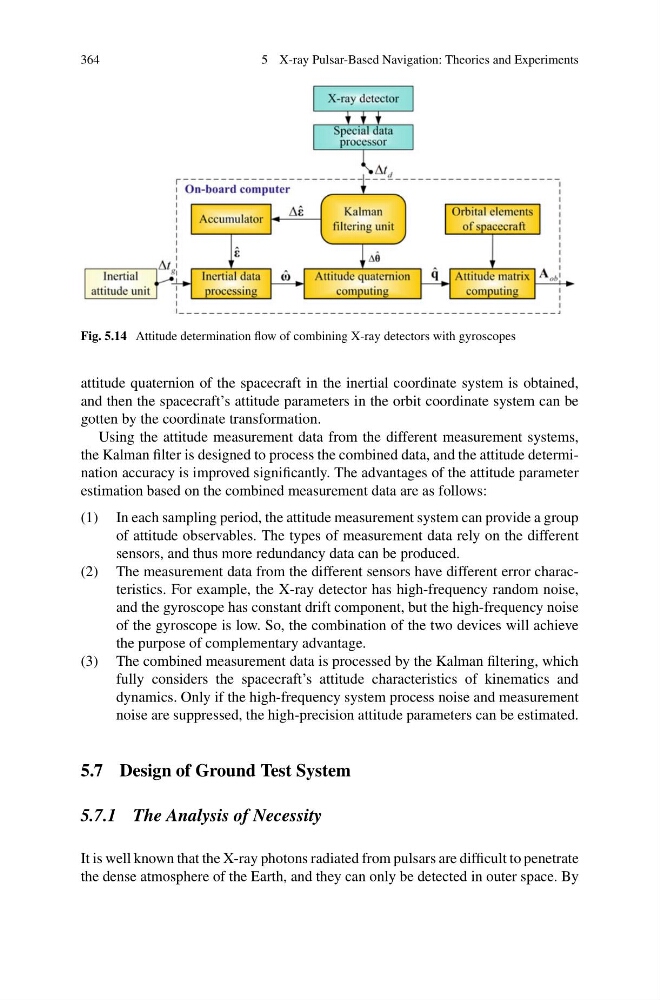
Fig. 5.14 Attitude determination flow of combining X-ray detectors with gyroscopes
attitude quaternion of the spacecraft in the inertial coordinate system is obtained,
and then the spacecraft’s attitude parameters in the orbit coordinate system can be
gotten by the coordinate transformation.
Using the attitude measurement data from the different measurement systems,
the Kalman filter is designed to process the combined data, and the attitude determination accuracy is improved significantly. The advantages of the attitude parameter
estimation based on the combined measurement data are as follows:
(1) In each sampling period, the attitude measurement system can provide a group
of attitude observables. The types of measurement data rely on the different
sensors, and thus more redundancy data can be produced.
(2) The measurement data from the different sensors have different error characteristics. For example, the X-ray detector has high-frequency random noise,
and the gyroscope has constant drift component, but the high-frequency noise
of the gyroscope is low. So, the combination of the two devices will achieve
the purpose of complementary advantage.
(3) The combined measurement data is processed by the Kalman filtering, which
fully considers the spacecraft’s attitude characteristics of kinematics and
dynamics. Only if the high-frequency system process noise and measurement
noise are suppressed, the high-precision attitude parameters can be estimated.
5.7 Design of Ground Test System
5.7.1 The Analysis of Necessity
It is well known that the X-ray photons radiated from pulsars are difficult to penetrate
the dense atmosphere of the Earth, and they can only be detected in outer space. By
5 X-ray Pulsar-Based Navigation: Theories and Experiments
Fig. 5.14 Attitude determination flow of combining X-ray detectors with gyroscopes
attitude quaternion of the spacecraft in the inertial coordinate system is obtained,
and then the spacecraft’s attitude parameters in the orbit coordinate system can be
gotten by the coordinate transformation.
Using the attitude measurement data from the different measurement systems,
the Kalman filter is designed to process the combined data, and the attitude determination accuracy is improved significantly. The advantages of the attitude parameter
estimation based on the combined measurement data are as follows:
(1) In each sampling period, the attitude measurement system can provide a group
of attitude observables. The types of measurement data rely on the different
sensors, and thus more redundancy data can be produced.
(2) The measurement data from the different sensors have different error characteristics. For example, the X-ray detector has high-frequency random noise,
and the gyroscope has constant drift component, but the high-frequency noise
of the gyroscope is low. So, the combination of the two devices will achieve
the purpose of complementary advantage.
(3) The combined measurement data is processed by the Kalman filtering, which
fully considers the spacecraft’s attitude characteristics of kinematics and
dynamics. Only if the high-frequency system process noise and measurement
noise are suppressed, the high-precision attitude parameters can be estimated.
5.7 Design of Ground Test System
5.7.1 The Analysis of Necessity
It is well known that the X-ray photons radiated from pulsars are difficult to penetrate
the dense atmosphere of the Earth, and they can only be detected in outer space. By