

326
5 X-ray Pulsar-Based Navigation: Theories and Experiments
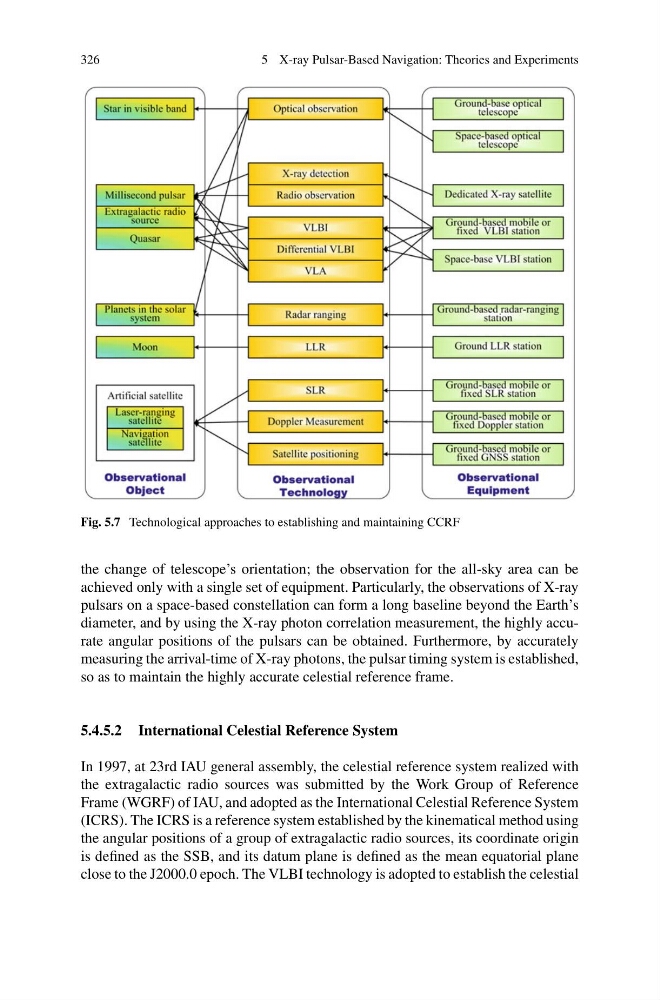
Fig. 5.7 Technological approaches to establishing and maintaining CCRF
the change of telescope’s orientation; the observation for the all-sky area can be
achieved only with a single set of equipment. Particularly, the observations of X-ray
pulsars on a space-based constellation can form a long baseline beyond the Earth’s
diameter, and by using the X-ray photon correlation measurement, the highly accurate angular positions of the pulsars can be obtained. Furthermore, by accurately
measuring the arrival-time of X-ray photons, the pulsar timing system is established,
so as to maintain the highly accurate celestial reference frame.
5.4.5.2 International Celestial Reference System
In 1997, at 23rd IAU general assembly, the celestial reference system realized with
the extragalactic radio sources was submitted by the Work Group of Reference
Frame (WGRF) of IAU, and adopted as the International Celestial Reference System
(ICRS). The ICRS is a reference system established by the kinematical method using
the angular positions of a group of extragalactic radio sources, its coordinate origin
is defined as the SSB, and its datum plane is defined as the mean equatorial plane
close to the J2000.0 epoch. The VLBI technology is adopted to establish the celestial
5 X-ray Pulsar-Based Navigation: Theories and Experiments
Fig. 5.7 Technological approaches to establishing and maintaining CCRF
the change of telescope’s orientation; the observation for the all-sky area can be
achieved only with a single set of equipment. Particularly, the observations of X-ray
pulsars on a space-based constellation can form a long baseline beyond the Earth’s
diameter, and by using the X-ray photon correlation measurement, the highly accurate angular positions of the pulsars can be obtained. Furthermore, by accurately
measuring the arrival-time of X-ray photons, the pulsar timing system is established,
so as to maintain the highly accurate celestial reference frame.
5.4.5.2 International Celestial Reference System
In 1997, at 23rd IAU general assembly, the celestial reference system realized with
the extragalactic radio sources was submitted by the Work Group of Reference
Frame (WGRF) of IAU, and adopted as the International Celestial Reference System
(ICRS). The ICRS is a reference system established by the kinematical method using
the angular positions of a group of extragalactic radio sources, its coordinate origin
is defined as the SSB, and its datum plane is defined as the mean equatorial plane
close to the J2000.0 epoch. The VLBI technology is adopted to establish the celestial