

5.3 Space-Time Reference Based on Newtonian Mechanics
287
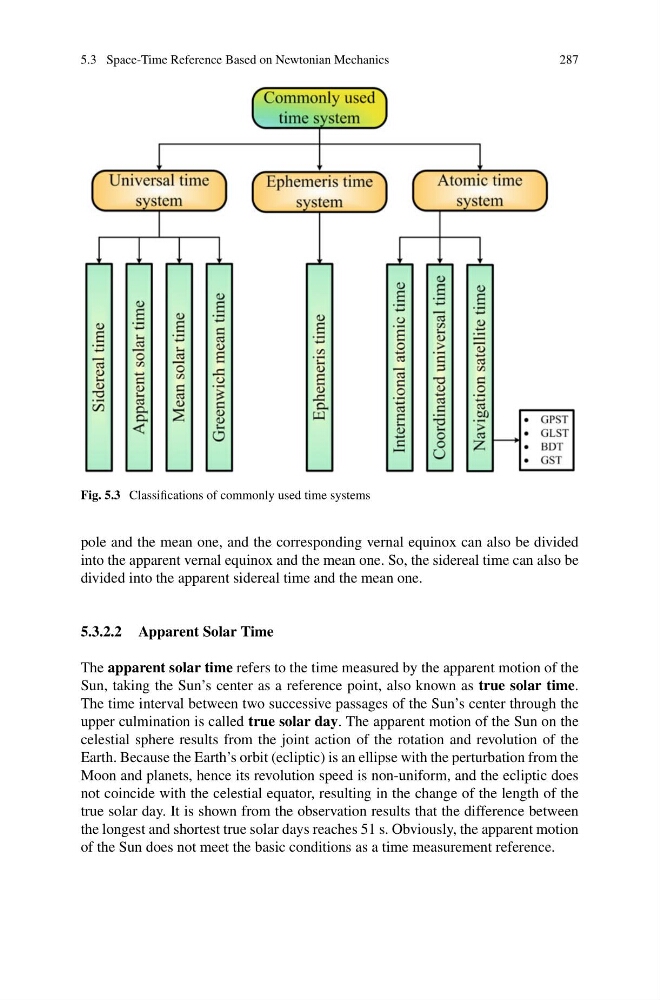
Fig. 5.3 Classifications of commonly used time systems
pole and the mean one, and the corresponding vernal equinox can also be divided
into the apparent vernal equinox and the mean one. So, the sidereal time can also be
divided into the apparent sidereal time and the mean one.
5.3.2.2 Apparent Solar Time
The apparent solar time refers to the time measured by the apparent motion of the
Sun, taking the Sun’s center as a reference point, also known as true solar time.
The time interval between two successive passages of the Sun’s center through the
upper culmination is called true solar day. The apparent motion of the Sun on the
celestial sphere results from the joint action of the rotation and revolution of the
Earth. Because the Earth’s orbit (ecliptic) is an ellipse with the perturbation from the
Moon and planets, hence its revolution speed is non-uniform, and the ecliptic does
not coincide with the celestial equator, resulting in the change of the length of the
true solar day. It is shown from the observation results that the difference between
the longest and shortest true solar days reaches 51 s. Obviously, the apparent motion
of the Sun does not meet the basic conditions as a time measurement reference.
287
Fig. 5.3 Classifications of commonly used time systems
pole and the mean one, and the corresponding vernal equinox can also be divided
into the apparent vernal equinox and the mean one. So, the sidereal time can also be
divided into the apparent sidereal time and the mean one.
5.3.2.2 Apparent Solar Time
The apparent solar time refers to the time measured by the apparent motion of the
Sun, taking the Sun’s center as a reference point, also known as true solar time.
The time interval between two successive passages of the Sun’s center through the
upper culmination is called true solar day. The apparent motion of the Sun on the
celestial sphere results from the joint action of the rotation and revolution of the
Earth. Because the Earth’s orbit (ecliptic) is an ellipse with the perturbation from the
Moon and planets, hence its revolution speed is non-uniform, and the ecliptic does
not coincide with the celestial equator, resulting in the change of the length of the
true solar day. It is shown from the observation results that the difference between
the longest and shortest true solar days reaches 51 s. Obviously, the apparent motion
of the Sun does not meet the basic conditions as a time measurement reference.