

4.8 Ground Navigation Networks for Spacecrafts
251
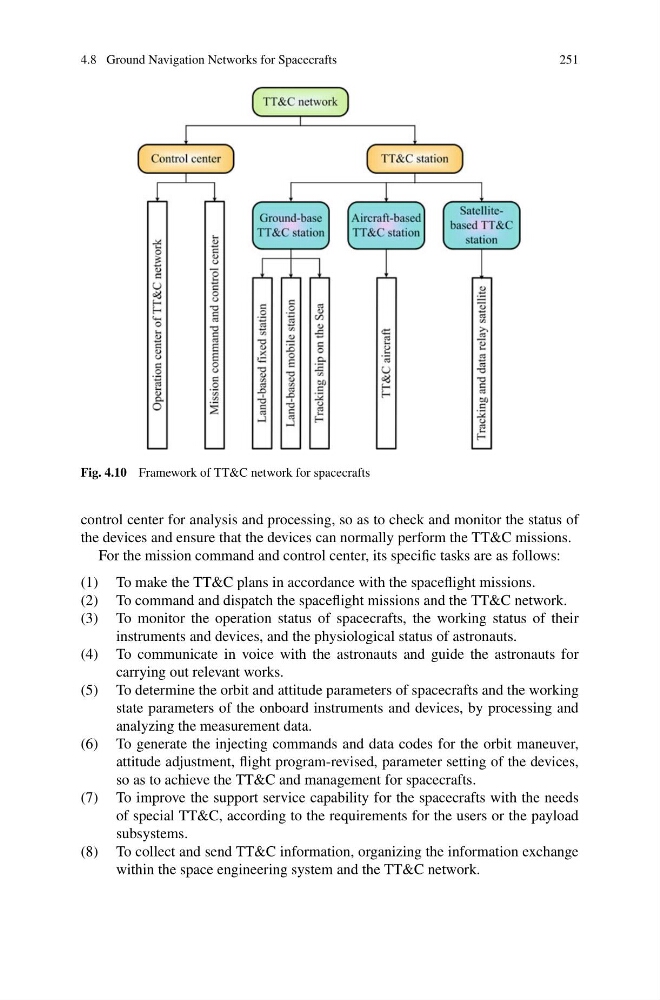
Fig. 4.10 Framework of TT&C network for spacecrafts
control center for analysis and processing, so as to check and monitor the status of
the devices and ensure that the devices can normally perform the TT&C missions.
For the mission command and control center, its specific tasks are as follows:
(1) To make the TT&C plans in accordance with the spaceflight missions.
(2) To command and dispatch the spaceflight missions and the TT&C network.
(3) To monitor the operation status of spacecrafts, the working status of their
instruments and devices, and the physiological status of astronauts.
(4) To communicate in voice with the astronauts and guide the astronauts for
carrying out relevant works.
(5) To determine the orbit and attitude parameters of spacecrafts and the working
state parameters of the onboard instruments and devices, by processing and
analyzing the measurement data.
(6) To generate the injecting commands and data codes for the orbit maneuver,
attitude adjustment, flight program-revised, parameter setting of the devices,
so as to achieve the TT&C and management for spacecrafts.
(7) To improve the support service capability for the spacecrafts with the needs
of special TT&C, according to the requirements for the users or the payload
subsystems.
(8) To collect and send TT&C information, organizing the information exchange
within the space engineering system and the TT&C network.
251
Fig. 4.10 Framework of TT&C network for spacecrafts
control center for analysis and processing, so as to check and monitor the status of
the devices and ensure that the devices can normally perform the TT&C missions.
For the mission command and control center, its specific tasks are as follows:
(1) To make the TT&C plans in accordance with the spaceflight missions.
(2) To command and dispatch the spaceflight missions and the TT&C network.
(3) To monitor the operation status of spacecrafts, the working status of their
instruments and devices, and the physiological status of astronauts.
(4) To communicate in voice with the astronauts and guide the astronauts for
carrying out relevant works.
(5) To determine the orbit and attitude parameters of spacecrafts and the working
state parameters of the onboard instruments and devices, by processing and
analyzing the measurement data.
(6) To generate the injecting commands and data codes for the orbit maneuver,
attitude adjustment, flight program-revised, parameter setting of the devices,
so as to achieve the TT&C and management for spacecrafts.
(7) To improve the support service capability for the spacecrafts with the needs
of special TT&C, according to the requirements for the users or the payload
subsystems.
(8) To collect and send TT&C information, organizing the information exchange
within the space engineering system and the TT&C network.