

4.5 Radio Navigation System
219
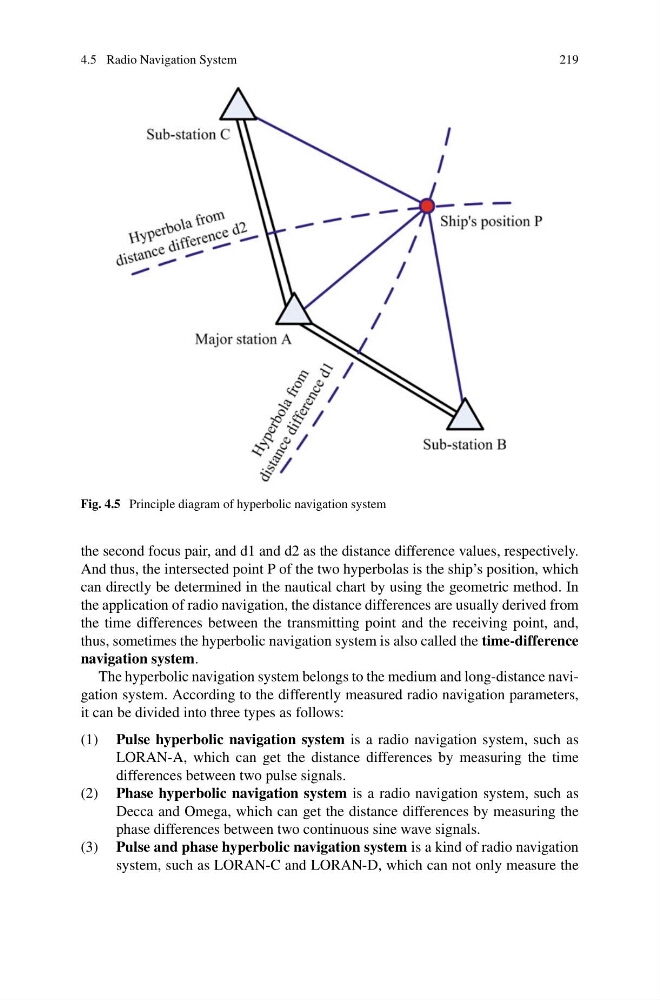
Fig. 4.5 Principle diagram of hyperbolic navigation system
the second focus pair, and d1 and d2 as the distance difference values, respectively.
And thus, the intersected point P of the two hyperbolas is the ship’s position, which
can directly be determined in the nautical chart by using the geometric method. In
the application of radio navigation, the distance differences are usually derived from
the time differences between the transmitting point and the receiving point, and,
thus, sometimes the hyperbolic navigation system is also called the time-difference
navigation system.
The hyperbolic navigation system belongs to the medium and long-distance navigation system. According to the differently measured radio navigation parameters,
it can be divided into three types as follows:
(1) Pulse hyperbolic navigation system is a radio navigation system, such as
LORAN-A, which can get the distance differences by measuring the time
differences between two pulse signals.
(2) Phase hyperbolic navigation system is a radio navigation system, such as
Decca and Omega, which can get the distance differences by measuring the
phase differences between two continuous sine wave signals.
(3) Pulse and phase hyperbolic navigation system is a kind of radio navigation
system, such as LORAN-C and LORAN-D, which can not only measure the
219
Fig. 4.5 Principle diagram of hyperbolic navigation system
the second focus pair, and d1 and d2 as the distance difference values, respectively.
And thus, the intersected point P of the two hyperbolas is the ship’s position, which
can directly be determined in the nautical chart by using the geometric method. In
the application of radio navigation, the distance differences are usually derived from
the time differences between the transmitting point and the receiving point, and,
thus, sometimes the hyperbolic navigation system is also called the time-difference
navigation system.
The hyperbolic navigation system belongs to the medium and long-distance navigation system. According to the differently measured radio navigation parameters,
it can be divided into three types as follows:
(1) Pulse hyperbolic navigation system is a radio navigation system, such as
LORAN-A, which can get the distance differences by measuring the time
differences between two pulse signals.
(2) Phase hyperbolic navigation system is a radio navigation system, such as
Decca and Omega, which can get the distance differences by measuring the
phase differences between two continuous sine wave signals.
(3) Pulse and phase hyperbolic navigation system is a kind of radio navigation
system, such as LORAN-C and LORAN-D, which can not only measure the