

3.6 Flying Out of the Solar System
173
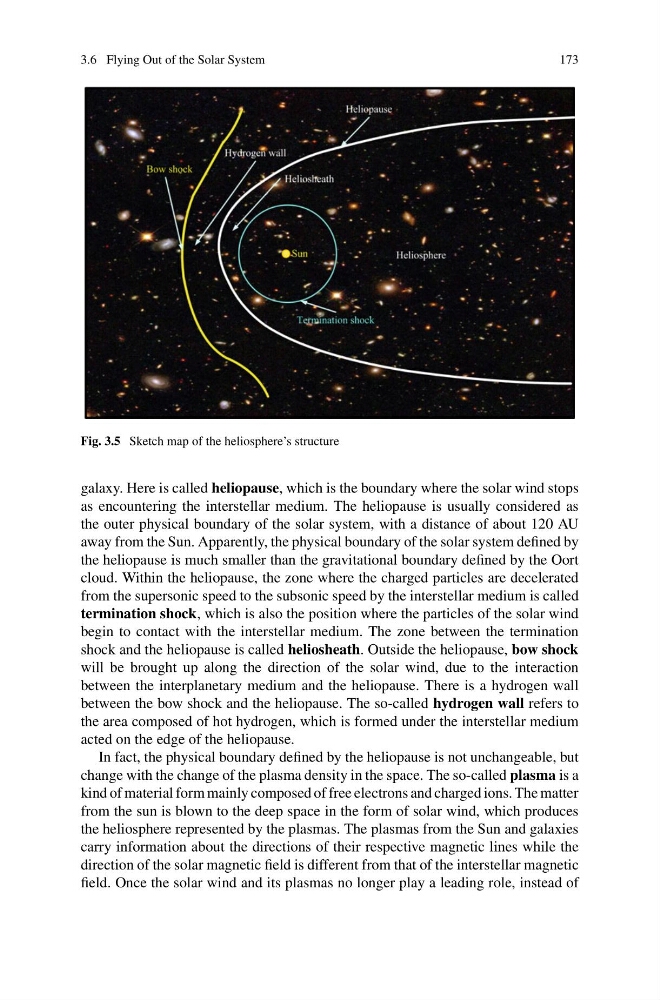
Fig. 3.5 Sketch map of the heliosphere’s structure
galaxy. Here is called heliopause, which is the boundary where the solar wind stops
as encountering the interstellar medium. The heliopause is usually considered as
the outer physical boundary of the solar system, with a distance of about 120 AU
away from the Sun. Apparently, the physical boundary of the solar system defined by
the heliopause is much smaller than the gravitational boundary defined by the Oort
cloud. Within the heliopause, the zone where the charged particles are decelerated
from the supersonic speed to the subsonic speed by the interstellar medium is called
termination shock, which is also the position where the particles of the solar wind
begin to contact with the interstellar medium. The zone between the termination
shock and the heliopause is called heliosheath. Outside the heliopause, bow shock
will be brought up along the direction of the solar wind, due to the interaction
between the interplanetary medium and the heliopause. There is a hydrogen wall
between the bow shock and the heliopause. The so-called hydrogen wall refers to
the area composed of hot hydrogen, which is formed under the interstellar medium
acted on the edge of the heliopause.
In fact, the physical boundary defined by the heliopause is not unchangeable, but
change with the change of the plasma density in the space. The so-called plasma is a
kind of material form mainly composed of free electrons and charged ions. The matter
from the sun is blown to the deep space in the form of solar wind, which produces
the heliosphere represented by the plasmas. The plasmas from the Sun and galaxies
carry information about the directions of their respective magnetic lines while the
direction of the solar magnetic field is different from that of the interstellar magnetic
field. Once the solar wind and its plasmas no longer play a leading role, instead of
173
Fig. 3.5 Sketch map of the heliosphere’s structure
galaxy. Here is called heliopause, which is the boundary where the solar wind stops
as encountering the interstellar medium. The heliopause is usually considered as
the outer physical boundary of the solar system, with a distance of about 120 AU
away from the Sun. Apparently, the physical boundary of the solar system defined by
the heliopause is much smaller than the gravitational boundary defined by the Oort
cloud. Within the heliopause, the zone where the charged particles are decelerated
from the supersonic speed to the subsonic speed by the interstellar medium is called
termination shock, which is also the position where the particles of the solar wind
begin to contact with the interstellar medium. The zone between the termination
shock and the heliopause is called heliosheath. Outside the heliopause, bow shock
will be brought up along the direction of the solar wind, due to the interaction
between the interplanetary medium and the heliopause. There is a hydrogen wall
between the bow shock and the heliopause. The so-called hydrogen wall refers to
the area composed of hot hydrogen, which is formed under the interstellar medium
acted on the edge of the heliopause.
In fact, the physical boundary defined by the heliopause is not unchangeable, but
change with the change of the plasma density in the space. The so-called plasma is a
kind of material form mainly composed of free electrons and charged ions. The matter
from the sun is blown to the deep space in the form of solar wind, which produces
the heliosphere represented by the plasmas. The plasmas from the Sun and galaxies
carry information about the directions of their respective magnetic lines while the
direction of the solar magnetic field is different from that of the interstellar magnetic
field. Once the solar wind and its plasmas no longer play a leading role, instead of