

80
PROPERTIES OF INDIVIDUAL NANOPARTICLES
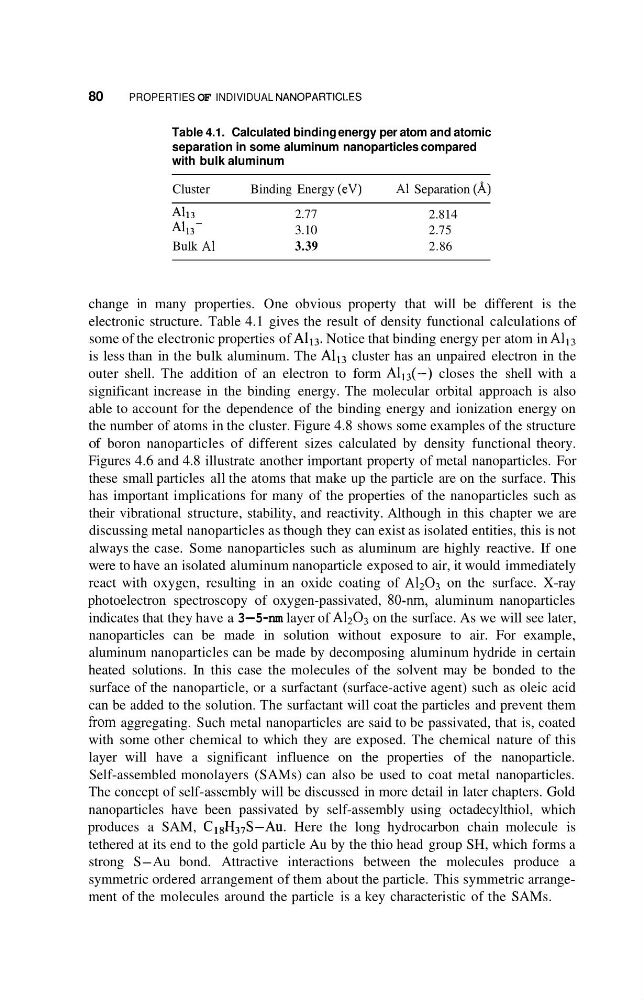
Table 4.1. Calculated binding energy per atom and atomic
separation in some aluminum nanoparticles compared
with bulk aluminum
Cluster
Binding Energy (eV)
A1 Separation (A)
A113
2.77
A1133.10
Bulk A1
3.39
2.814
2.75
2.86
change in many properties. One obvious property that will be different is the
electronic structure. Table 4.1 gives the result of density functional calculations of
some of the electronic properties of Al13. Notice that binding energy per atom in AlI3
is less than in the bulk aluminum. The A113 cluster has an unpaired electron in the
outer shell. The addition of an electron to form Al13(-) closes the shell with a
significant increase in the binding energy. The molecular orbital approach is also
able to account for the dependence of the binding energy and ionization energy on
the number of atoms in the cluster. Figure 4.8 shows some examples of the structure
of boron nanoparticles of different sizes calculated by density functional theory.
Figures 4.6 and 4.8 illustrate another important property of metal nanoparticles. For
these small particles all the atoms that make up the particle are on the surface. This
has important implications for many of the properties of the nanoparticles such as
their vibrational structure, stability, and reactivity. Although in this chapter we are
discussing metal nanoparticles as though they can exist as isolated entities, this is not
always the case. Some nanoparticles such as aluminum are highly reactive. If one
were to have an isolated aluminum nanoparticle exposed to air, it would immediately
react with oxygen, resulting in an oxide coating of A1203 on the surface. X-ray
photoelectron spectroscopy of oxygen-passivated, 80-nm, aluminum nanoparticles
indicates that they have a 3-5-nm layer of A1203 on the surface. As we will see later,
nanoparticles can be made in solution without exposure to air. For example,
aluminum nanoparticles can be made by decomposing aluminum hydride in certain
heated solutions. In this case the molecules of the solvent may be bonded to the
surface of the nanoparticle, or a surfactant (surface-active agent) such as oleic acid
can be added to the solution. The surfactant will coat the particles and prevent them
from aggregating. Such metal nanoparticles are said to be passivated, that is, coated
with some other chemical to which they are exposed. The chemical nature of this
layer will have a significant influence on the properties of the nanoparticle.
Self-assembled monolayers (SAMs) can also be used to coat metal nanoparticles.
The concept of self-assembly will be discussed in more detail in later chapters. Gold
nanoparticles have been passivated by self-assembly using octadecylthiol, which
produces a SAM, C18H3,S-Au. Here the long hydrocarbon chain molecule is
tethered at its end to the gold particle Au by the thio head group SH, which forms a
strong S-Au bond. Attractive interactions between the molecules produce a
symmetric ordered arrangement of them about the particle. This symmetric arrangement of the molecules around the particle is a key characteristic of the SAMs.
PROPERTIES OF INDIVIDUAL NANOPARTICLES
Table 4.1. Calculated binding energy per atom and atomic
separation in some aluminum nanoparticles compared
with bulk aluminum
Cluster
Binding Energy (eV)
A1 Separation (A)
A113
2.77
A1133.10
Bulk A1
3.39
2.814
2.75
2.86
change in many properties. One obvious property that will be different is the
electronic structure. Table 4.1 gives the result of density functional calculations of
some of the electronic properties of Al13. Notice that binding energy per atom in AlI3
is less than in the bulk aluminum. The A113 cluster has an unpaired electron in the
outer shell. The addition of an electron to form Al13(-) closes the shell with a
significant increase in the binding energy. The molecular orbital approach is also
able to account for the dependence of the binding energy and ionization energy on
the number of atoms in the cluster. Figure 4.8 shows some examples of the structure
of boron nanoparticles of different sizes calculated by density functional theory.
Figures 4.6 and 4.8 illustrate another important property of metal nanoparticles. For
these small particles all the atoms that make up the particle are on the surface. This
has important implications for many of the properties of the nanoparticles such as
their vibrational structure, stability, and reactivity. Although in this chapter we are
discussing metal nanoparticles as though they can exist as isolated entities, this is not
always the case. Some nanoparticles such as aluminum are highly reactive. If one
were to have an isolated aluminum nanoparticle exposed to air, it would immediately
react with oxygen, resulting in an oxide coating of A1203 on the surface. X-ray
photoelectron spectroscopy of oxygen-passivated, 80-nm, aluminum nanoparticles
indicates that they have a 3-5-nm layer of A1203 on the surface. As we will see later,
nanoparticles can be made in solution without exposure to air. For example,
aluminum nanoparticles can be made by decomposing aluminum hydride in certain
heated solutions. In this case the molecules of the solvent may be bonded to the
surface of the nanoparticle, or a surfactant (surface-active agent) such as oleic acid
can be added to the solution. The surfactant will coat the particles and prevent them
from aggregating. Such metal nanoparticles are said to be passivated, that is, coated
with some other chemical to which they are exposed. The chemical nature of this
layer will have a significant influence on the properties of the nanoparticle.
Self-assembled monolayers (SAMs) can also be used to coat metal nanoparticles.
The concept of self-assembly will be discussed in more detail in later chapters. Gold
nanoparticles have been passivated by self-assembly using octadecylthiol, which
produces a SAM, C18H3,S-Au. Here the long hydrocarbon chain molecule is
tethered at its end to the gold particle Au by the thio head group SH, which forms a
strong S-Au bond. Attractive interactions between the molecules produce a
symmetric ordered arrangement of them about the particle. This symmetric arrangement of the molecules around the particle is a key characteristic of the SAMs.