

16
w
U
3 10
2
U
w
i 6
u
$ 6
0 9 m 4 2 -
7.5. NANOCARBON FERROMAGNETS
, , , ,
, , , , , , , , , , ,
I , , , ,
~~:~
~ ~
O O " ' 5 ; o ";dob";5ob";dob"~~ob"~ooo
As discussed in Chapter 5, the presence of iron or cobalt particles is necessary for
the nucleation and growth of carbon nanotubes fabricated by pyrolysis. In the
preparation of aligned carbon nanotubes by pyrolyzing iron II phthalacyanide (FcPc)
it has been demonstrated that nanotube growth involves two iron nanoparticles.
A small iron particle serves as a nucleus for the tube to grow on, and at the other end
of the tube larger iron particles enhance the growth. Aligned nanotubes are prepared
on quartz glass by pyrolysis of FePc in an argon-hydrogen atmosphere.
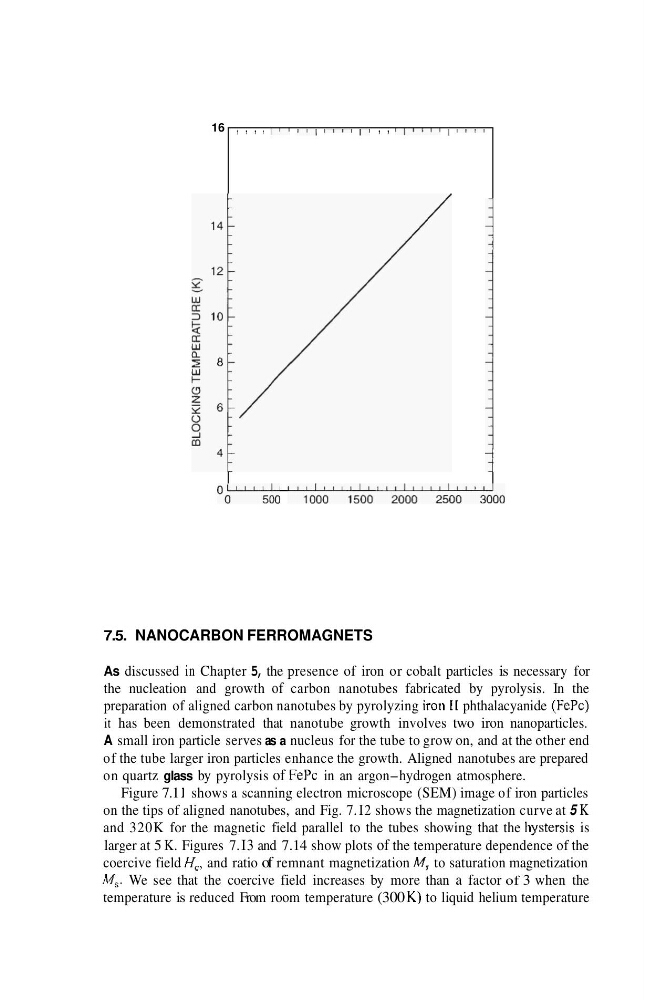
Figure 7.1 I shows a scanning electron microscope (SEM) image of iron particles
on the tips of aligned nanotubes, and Fig. 7. I2 shows the magnetization curve at 5 K
and 320K for the magnetic field parallel to the tubes showing that the hystenis is
larger at 5 K. Figures 7. I3 and 7.14 show plots of the temperature dependence of the
coercive field Hc, and ratio of remnant magnetization M, to saturation magnetization
M,. We see that the coercive field increases by more than a factor of 3 when the
temperature is reduced From room temperature (300 K) to liquid helium temperature
w
U
3 10
2
U
w
i 6
u
$ 6
0 9 m 4 2 -
7.5. NANOCARBON FERROMAGNETS
, , , ,
, , , , , , , , , , ,
I , , , ,
~~:~
~ ~
O O " ' 5 ; o ";dob";5ob";dob"~~ob"~ooo
As discussed in Chapter 5, the presence of iron or cobalt particles is necessary for
the nucleation and growth of carbon nanotubes fabricated by pyrolysis. In the
preparation of aligned carbon nanotubes by pyrolyzing iron II phthalacyanide (FcPc)
it has been demonstrated that nanotube growth involves two iron nanoparticles.
A small iron particle serves as a nucleus for the tube to grow on, and at the other end
of the tube larger iron particles enhance the growth. Aligned nanotubes are prepared
on quartz glass by pyrolysis of FePc in an argon-hydrogen atmosphere.
Figure 7.1 I shows a scanning electron microscope (SEM) image of iron particles
on the tips of aligned nanotubes, and Fig. 7. I2 shows the magnetization curve at 5 K
and 320K for the magnetic field parallel to the tubes showing that the hystenis is
larger at 5 K. Figures 7. I3 and 7.14 show plots of the temperature dependence of the
coercive field Hc, and ratio of remnant magnetization M, to saturation magnetization
M,. We see that the coercive field increases by more than a factor of 3 when the
temperature is reduced From room temperature (300 K) to liquid helium temperature