

F.2 Generalization of the Feynman Model to Solids
649
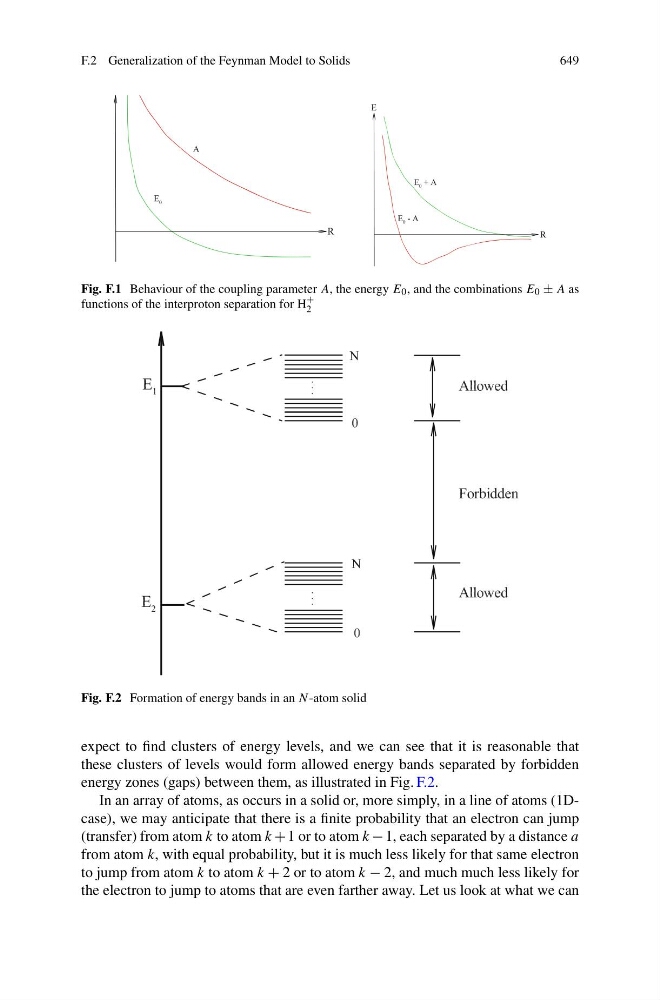
Fig. F.1 Behaviour of the coupling parameter A, the energy E 0 , and the combinations E 0 ± A as
functions of the interproton separation for H
+
2
Fig. F.2 Formation of energy bands in an N -atom solid
expect to find clusters of energy levels, and we can see that it is reasonable that
these clusters of levels would form allowed energy bands separated by forbidden
energy zones (gaps) between them, as illustrated in Fig. F.2.
In an array of atoms, as occurs in a solid or, more simply, in a line of atoms (1Dcase), we may anticipate that there is a finite probability that an electron can jump
(transfer) from atom k to atom k + 1 or to atom k − 1, each separated by a distance a
from atom k, with equal probability, but it is much less likely for that same electron
to jump from atom k to atom k + 2 or to atom k − 2, and much much less likely for
the electron to jump to atoms that are even farther away. Let us look at what we can