

1.1 Strings, a Distinguished Theory
3
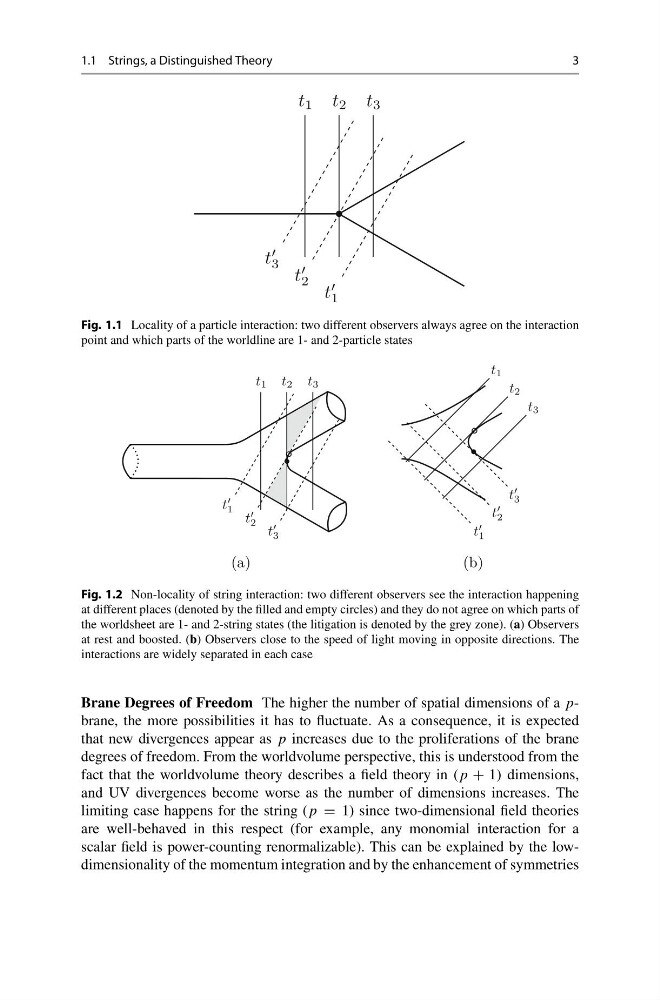
Fig. 1.1 Locality of a particle interaction: two different observers always agree on the interaction
point and which parts of the worldline are 1- and 2-particle states
(a)
(b)
Fig. 1.2 Non-locality of string interaction: two different observers see the interaction happening
at different places (denoted by the filled and empty circles) and they do not agree on which parts of
the worldsheet are 1- and 2-string states (the litigation is denoted by the grey zone). (a) Observers
at rest and boosted. (b) Observers close to the speed of light moving in opposite directions. The
interactions are widely separated in each case
Brane Degrees of Freedom The higher the number of spatial dimensions of a pbrane, the more possibilities it has to fluctuate. As a consequence, it is expected
that new divergences appear as p increases due to the proliferations of the brane
degrees of freedom. From the worldvolume perspective, this is understood from the
fact that the worldvolume theory describes a field theory in (p + 1) dimensions,
and UV divergences become worse as the number of dimensions increases. The
limiting case happens for the string (p = 1) since two-dimensional field theories
are well-behaved in this respect (for example, any monomial interaction for a
scalar field is power-counting renormalizable). This can be explained by the lowdimensionality of the momentum integration and by the enhancement of symmetries
3
Fig. 1.1 Locality of a particle interaction: two different observers always agree on the interaction
point and which parts of the worldline are 1- and 2-particle states
(a)
(b)
Fig. 1.2 Non-locality of string interaction: two different observers see the interaction happening
at different places (denoted by the filled and empty circles) and they do not agree on which parts of
the worldsheet are 1- and 2-string states (the litigation is denoted by the grey zone). (a) Observers
at rest and boosted. (b) Observers close to the speed of light moving in opposite directions. The
interactions are widely separated in each case
Brane Degrees of Freedom The higher the number of spatial dimensions of a pbrane, the more possibilities it has to fluctuate. As a consequence, it is expected
that new divergences appear as p increases due to the proliferations of the brane
degrees of freedom. From the worldvolume perspective, this is understood from the
fact that the worldvolume theory describes a field theory in (p + 1) dimensions,
and UV divergences become worse as the number of dimensions increases. The
limiting case happens for the string (p = 1) since two-dimensional field theories
are well-behaved in this respect (for example, any monomial interaction for a
scalar field is power-counting renormalizable). This can be explained by the lowdimensionality of the momentum integration and by the enhancement of symmetries