

(c) For primary drying, decrease the chamber pressure to
60 mTorr, while maintaining the shelf temperature at
À30
C, and dry for 48 h.
(d) For secondary drying, increase the shelve temperature
from À30 to 40
C at a rate of 0.1
C/min, while maintaining the pressure at 60 mTorr. Keep the shelf temperature at 40
C for 30 min, and then reduce to 5
C at a rate
of 1
C/min and keep there until the next step (see
Note 7).
5. After freeze-drying, transfer the dried valves into a dry environment or seal with a vacuum sealer, and store in a standard
refrigerator or at room temperature (see Note 8).
6. Rehydrate dried valves in a large amount (>100 mL) of PBS
solution for minimally 1 h changing the PBS solution with
fresh solution several times (see Note 9).
3.3 Histological
Analysis
1. Rehydrate dried valves in water for at least 1 h at room temperature prior histological inspection.
2. Fix hydrated valve tissue by incubating in formalin solution for
24 h at room temperature.
3. Transfer the tissue samples into distilled water (twice), 25%
ethanol (twice), and 50% ethanol (twice), respectively, keeping
the samples for 30 min in each solution.
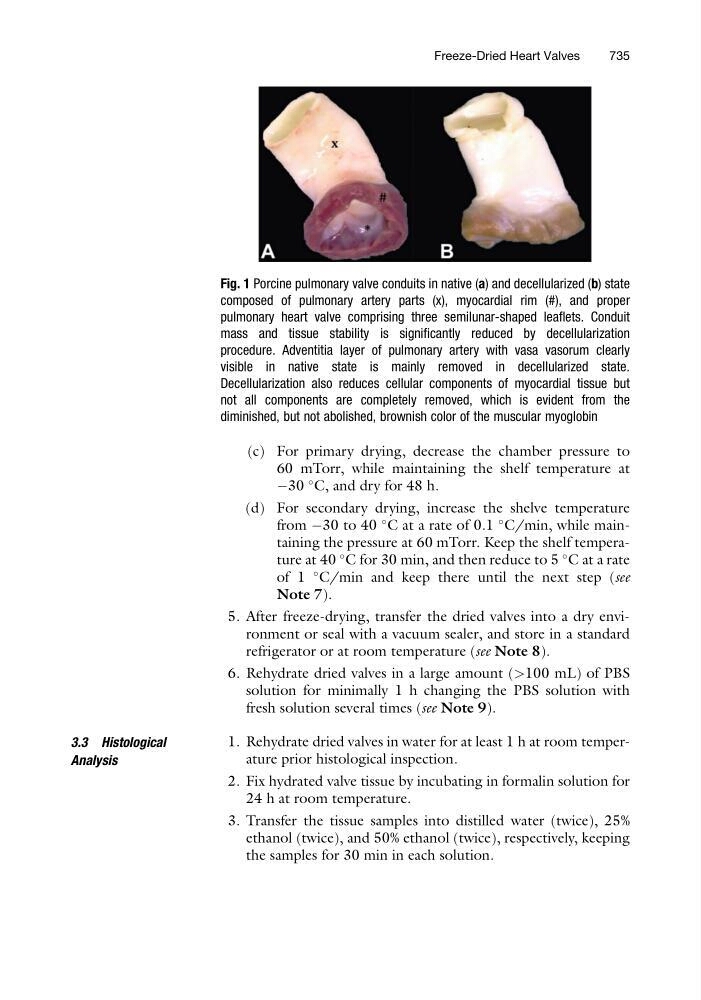
Fig. 1 Porcine pulmonary valve conduits in native (a) and decellularized (b) state
composed of pulmonary artery parts (x), myocardial rim (#), and proper
pulmonary heart valve comprising three semilunar-shaped leaflets. Conduit
mass and tissue stability is significantly reduced by decellularization
procedure. Adventitia layer of pulmonary artery with vasa vasorum clearly
visible in native state is mainly removed in decellularized state.
Decellularization also reduces cellular components of myocardial tissue but
not all components are completely removed, which is evident from the
diminished, but not abolished, brownish color of the muscular myoglobin
Freeze-Dried Heart Valves
735