

discarded as all the spores should be on the paper sheet. If the
sporangia are still closed in the frond, leave the frond to dry a
few more days until the spores have dehisced).
6. Take an A4 or A3 piece of clean plain paper, on top of this,
place the chosen sieve. The pore of the sieve should be of a size
that retains the sporangia and frond debris so that only spores
pass through it.
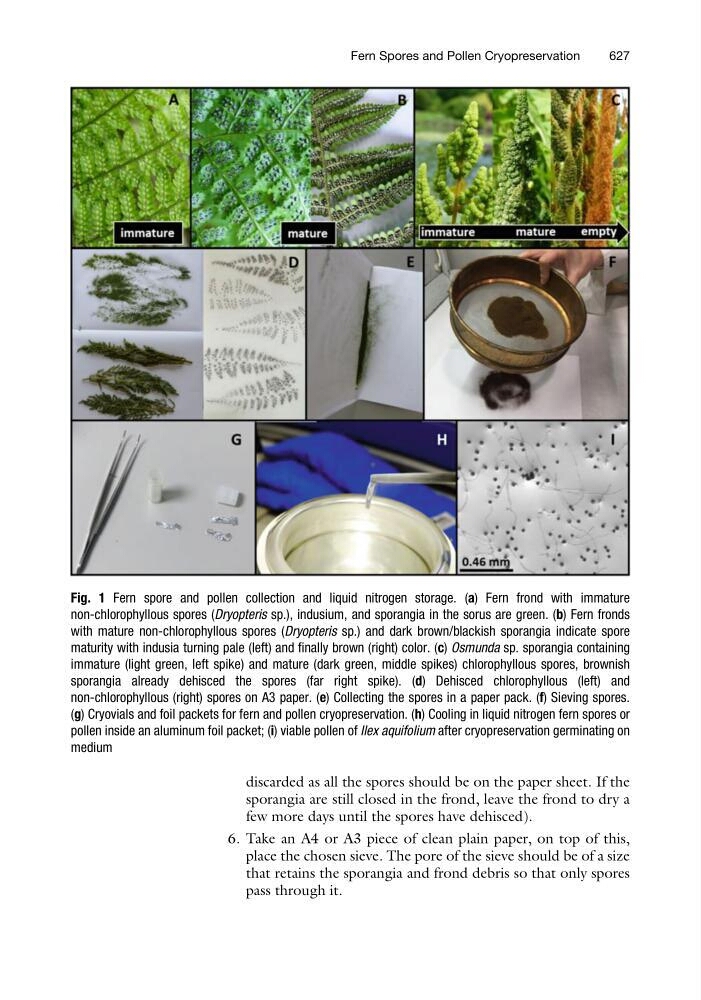
Fig. 1 Fern spore and pollen collection and liquid nitrogen storage. (a) Fern frond with immature
non-chlorophyllous spores (Dryopteris sp.), indusium, and sporangia in the sorus are green. (b) Fern fronds
with mature non-chlorophyllous spores (Dryopteris sp.) and dark brown/blackish sporangia indicate spore
maturity with indusia turning pale (left) and finally brown (right) color. (c) Osmunda sp. sporangia containing
immature (light green, left spike) and mature (dark green, middle spikes) chlorophyllous spores, brownish
sporangia already dehisced the spores (far right spike). (d) Dehisced chlorophyllous (left) and
non-chlorophyllous (right) spores on A3 paper. (e) Collecting the spores in a paper pack. (f) Sieving spores.
(g) Cryovials and foil packets for fern and pollen cryopreservation. (h) Cooling in liquid nitrogen fern spores or
pollen inside an aluminum foil packet; (i) viable pollen of Ilex aquifolium after cryopreservation germinating on
medium
Fern Spores and Pollen Cryopreservation
627