

success (see Table 2a, b). In terms of geographic origin, approximately two thirds of temperate and polar strains cryopreserved
successfully, whereas almost all tropical strains (albeit from a lower
total number) grew after thawing (see Table 2c). In terms of estimated cell size, approximately two thirds of the small (<1000 μm
3 )
and intermediate (1000–2500 μm
3 ) categories cryopreserved successfully, whereas few of the larger (>2500 μm
3
) category survived
cryopreservation (see Table 2d). Cell size therefore appears to be a
key factor in cryopreservation success, with cold-adapted (polar)
strains apparently not showing an increased resistance to
cryopreservation.
3.2 Cryopreservation
of Microalgae
of Interest
in Aquaculture:
Chaetoceros
neogracilis (RCC2278),
Nannochloropsis
gaditana (CSIC-ICMAN
Owned),
and Rhodomonas lens
(CCMP 739)
1. The culture should be either in exponential growth or in early
stationary phase when harvesting for cryopreservation. Concentrate the algae by decantation when possible or by gentle
centrifugation to obtain the highest possible density. All
handling should be conducted in a laminar flow cabinet,
using sterile materials and media.
2. All three species can be cryopreserved using a 15% (v/v)
DMSO solution prepared in sterile culture medium. This solution should be prepared at twice the desired final concentration
to allow for a 1:1 dilution factor in step 3.
3. Using 2 mL cryo-tubes, add 1 mL of culture and stepwise add
1 mL of cryoprotectant solution in ten steps of 100 μL (1 min
apart) to allow for gentle cellular equilibration at room temperature (18–20
C). This step is preferably conducted under low
light. Allow the cells to equilibrate for 5 more minutes while you
close the cryo-tubes. Total equilibration time 15 min.
143
332
399
0
0
184
0
69 170
0 10
188
0
2
194
107
660
10 18
683
65
212 967
87 436
8
37 86
0%
10%
20%
30%
40%
50%
60%
70%
80%
90%
100%
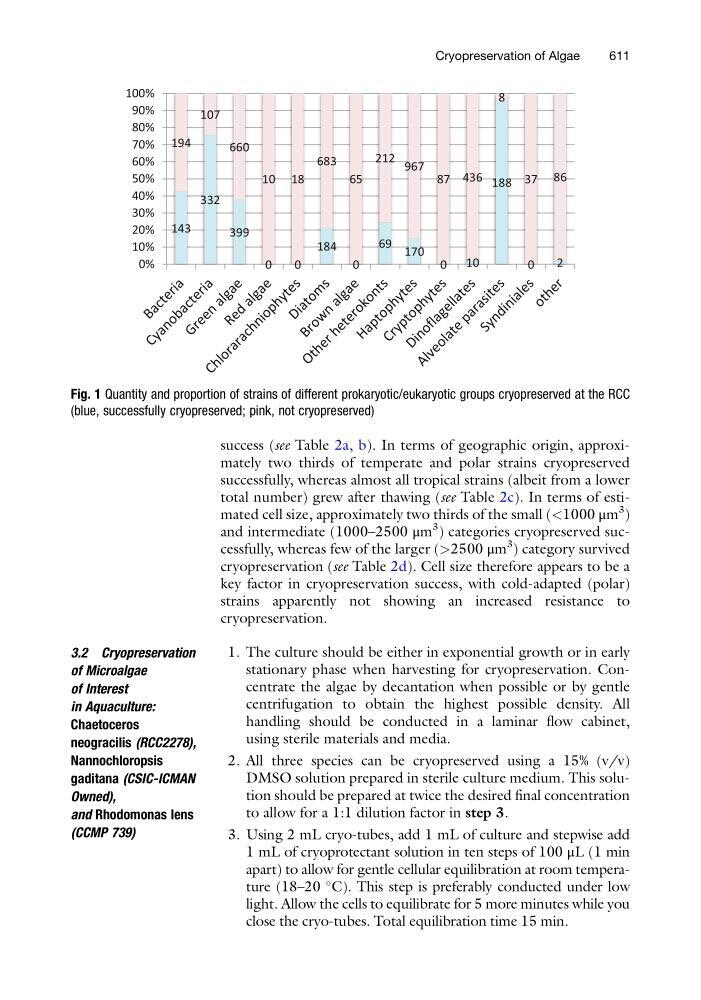
Fig. 1 Quantity and proportion of strains of different prokaryotic/eukaryotic groups cryopreserved at the RCC
(blue, successfully cryopreserved; pink, not cryopreserved)
Cryopreservation of Algae
611