

3. At around 9–10 min of equilibration treatment, fill the Styrofoam box can with LN leaving a 3–4 cm rim of the box (see
Note 11 and Fig. 1).
4. At 10–11 min of the equilibration treatment, prepare triplets of
50 μL drops of VM for each group of 30–50 oocytes/zygotes
on a 60 or 100 mm Petri dish (see Note 12). If the oocyte
group is larger than 50 (up to 100), they should be separated
into two groups (30–50) within the third well (EM), for the
easier handling.
5. At 12 min of the equilibration (see Note 13), place the aluminum foil cooling surface on LN, and fix it with pins (see Fig. 1).
If a divided cooling surface is used, placing a small volume
(1–2 mL) of LN on the cooling surface is beneficial to prevent
the negative effects of white ice formed on the metal surface. It
will improve vitrification efficacy by preventing the accidental
fusion of droplets and their sticking to the metal surface; however, it cannot be considered a solid surface vitrification.
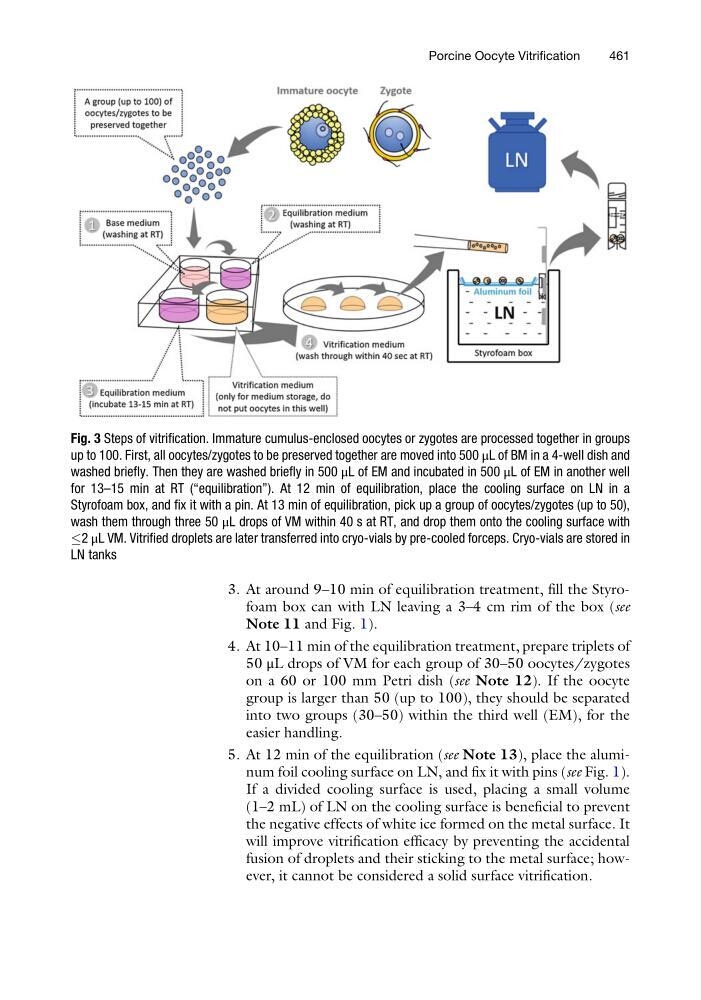
Fig. 3 Steps of vitrification. Immature cumulus-enclosed oocytes or zygotes are processed together in groups
up to 100. First, all oocytes/zygotes to be preserved together are moved into 500 μL of BM in a 4-well dish and
washed briefly. Then they are washed briefly in 500 μL of EM and incubated in 500 μL of EM in another well
for 13–15 min at RT (“equilibration”). At 12 min of equilibration, place the cooling surface on LN in a
Styrofoam box, and fix it with a pin. At 13 min of equilibration, pick up a group of oocytes/zygotes (up to 50),
wash them through three 50 μL drops of VM within 40 s at RT, and drop them onto the cooling surface with
2 μL VM. Vitrified droplets are later transferred into cryo-vials by pre-cooled forceps. Cryo-vials are stored in
LN tanks
Porcine Oocyte Vitrification
461
Note 11 and Fig. 1).
4. At 10–11 min of the equilibration treatment, prepare triplets of
50 μL drops of VM for each group of 30–50 oocytes/zygotes
on a 60 or 100 mm Petri dish (see Note 12). If the oocyte
group is larger than 50 (up to 100), they should be separated
into two groups (30–50) within the third well (EM), for the
easier handling.
5. At 12 min of the equilibration (see Note 13), place the aluminum foil cooling surface on LN, and fix it with pins (see Fig. 1).
If a divided cooling surface is used, placing a small volume
(1–2 mL) of LN on the cooling surface is beneficial to prevent
the negative effects of white ice formed on the metal surface. It
will improve vitrification efficacy by preventing the accidental
fusion of droplets and their sticking to the metal surface; however, it cannot be considered a solid surface vitrification.
Fig. 3 Steps of vitrification. Immature cumulus-enclosed oocytes or zygotes are processed together in groups
up to 100. First, all oocytes/zygotes to be preserved together are moved into 500 μL of BM in a 4-well dish and
washed briefly. Then they are washed briefly in 500 μL of EM and incubated in 500 μL of EM in another well
for 13–15 min at RT (“equilibration”). At 12 min of equilibration, place the cooling surface on LN in a
Styrofoam box, and fix it with a pin. At 13 min of equilibration, pick up a group of oocytes/zygotes (up to 50),
wash them through three 50 μL drops of VM within 40 s at RT, and drop them onto the cooling surface with
2 μL VM. Vitrified droplets are later transferred into cryo-vials by pre-cooled forceps. Cryo-vials are stored in
LN tanks
Porcine Oocyte Vitrification
461