

the liquid nitrogen level. Use a rack in which straws can be
positioned in horizontal position in separate slots. Adjust the
height at which the straws are positioned for attaining a specific
cooling rate.
8. Cryogenic container and goblets for storage of straws in liquid
nitrogen (vapor).
9. Water bath set at 37
C for thawing of straws.
3 Methods
3.1 Preparation
of (Clarified) Egg Yolk
1. Separate egg yolks from egg whites, and then carefully roll
them on filter paper to remove remnants. Cut the surrounding
membrane using a scalpel.
2. Recover the yolks only in a cylinder (see Note 3). This egg yolk
solution (~100% solution) can be directly used for, for example,
preparing TRIS- or lactose-egg yolk extender.
3. For preparing clarified egg yolk, for use with INRA-82, add an
equal volume of distilled water (gives a ~50% egg yolk solution), mix well, and centrifuge at 10,000 Â g for 20 min at
4
C.
4. Recover the clear water-soluble fraction, and discard the pellet
(as well as lipid material floating at the surface). Filter through a
folded/fluted paper filter. Use directly or freeze as aliquots for
later use (see Note 4).
(polystyrene box)
length depth height: 60 40 20 cm
3 cm
(liquid nitrogen)
1.5
3.5
5.5
5 stapled racks
in vapor phase, above liquid nitrogen level:
7.5
9.5 cm
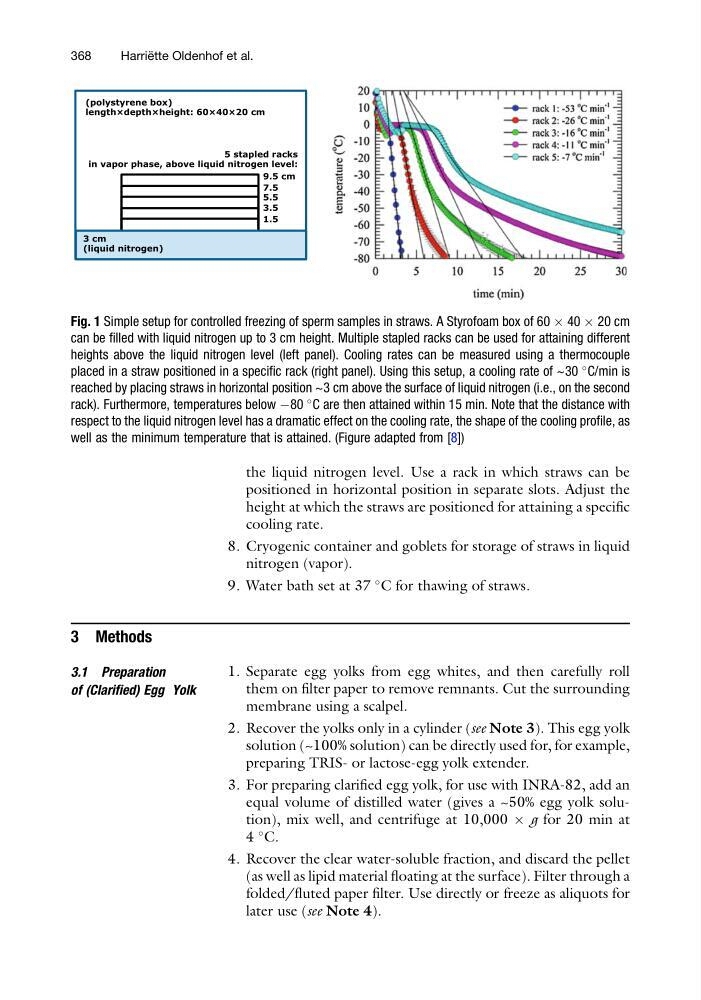
Fig. 1 Simple setup for controlled freezing of sperm samples in straws. A Styrofoam box of 60 Â 40 Â 20 cm
can be filled with liquid nitrogen up to 3 cm height. Multiple stapled racks can be used for attaining different
heights above the liquid nitrogen level (left panel). Cooling rates can be measured using a thermocouple
placed in a straw positioned in a specific rack (right panel). Using this setup, a cooling rate of ~30
C/min is
reached by placing straws in horizontal position ~3 cm above the surface of liquid nitrogen (i.e., on the second
rack). Furthermore, temperatures below À80
C are then attained within 15 min. Note that the distance with
respect to the liquid nitrogen level has a dramatic effect on the cooling rate, the shape of the cooling profile, as
well as the minimum temperature that is attained. (Figure adapted from [8])
368
Harrie ¨ tte Oldenhof et al.
positioned in horizontal position in separate slots. Adjust the
height at which the straws are positioned for attaining a specific
cooling rate.
8. Cryogenic container and goblets for storage of straws in liquid
nitrogen (vapor).
9. Water bath set at 37
C for thawing of straws.
3 Methods
3.1 Preparation
of (Clarified) Egg Yolk
1. Separate egg yolks from egg whites, and then carefully roll
them on filter paper to remove remnants. Cut the surrounding
membrane using a scalpel.
2. Recover the yolks only in a cylinder (see Note 3). This egg yolk
solution (~100% solution) can be directly used for, for example,
preparing TRIS- or lactose-egg yolk extender.
3. For preparing clarified egg yolk, for use with INRA-82, add an
equal volume of distilled water (gives a ~50% egg yolk solution), mix well, and centrifuge at 10,000 Â g for 20 min at
4
C.
4. Recover the clear water-soluble fraction, and discard the pellet
(as well as lipid material floating at the surface). Filter through a
folded/fluted paper filter. Use directly or freeze as aliquots for
later use (see Note 4).
(polystyrene box)
length depth height: 60 40 20 cm
3 cm
(liquid nitrogen)
1.5
3.5
5.5
5 stapled racks
in vapor phase, above liquid nitrogen level:
7.5
9.5 cm
Fig. 1 Simple setup for controlled freezing of sperm samples in straws. A Styrofoam box of 60 Â 40 Â 20 cm
can be filled with liquid nitrogen up to 3 cm height. Multiple stapled racks can be used for attaining different
heights above the liquid nitrogen level (left panel). Cooling rates can be measured using a thermocouple
placed in a straw positioned in a specific rack (right panel). Using this setup, a cooling rate of ~30
C/min is
reached by placing straws in horizontal position ~3 cm above the surface of liquid nitrogen (i.e., on the second
rack). Furthermore, temperatures below À80
C are then attained within 15 min. Note that the distance with
respect to the liquid nitrogen level has a dramatic effect on the cooling rate, the shape of the cooling profile, as
well as the minimum temperature that is attained. (Figure adapted from [8])
368
Harrie ¨ tte Oldenhof et al.