

3. High glucose RPMI-1640 medium supplemented with 10%
fetal bovine serum.
4. Dulbecco’s phosphate-buffered saline (DPBS).
5. Freezing solution: 480 mM sucrose solution in Normosol R.
3 Methods
3.1 Freeze Cells
Using
the Cooling Stage
1. Jurkat cells (ATCC, TIB-1522) are used for demonstration (see
Note 3). Jurkat cells are incubated at 37
C with 5% CO 2 in
high glucose RPMI-1640 medium (Life Technologies, CA,
USA) supplemented with 10% fetal bovine serum (Life Technologies, CA, USA). Cells are maintained at a concentration of
1–2 Â 10
6 cells/mL in suspension. For sample preparation,
cells are washed twice in Dulbecco’s phosphate-buffered saline
(DPBS) solution before being introduced to freezing solution
of interest (see Note 4). 480 mM sucrose solution in Normosol
R is used as the freezing solution in this demonstration. Cells
are incubated in the freezing solution for 1 h at room temperature before being cryopreserved.
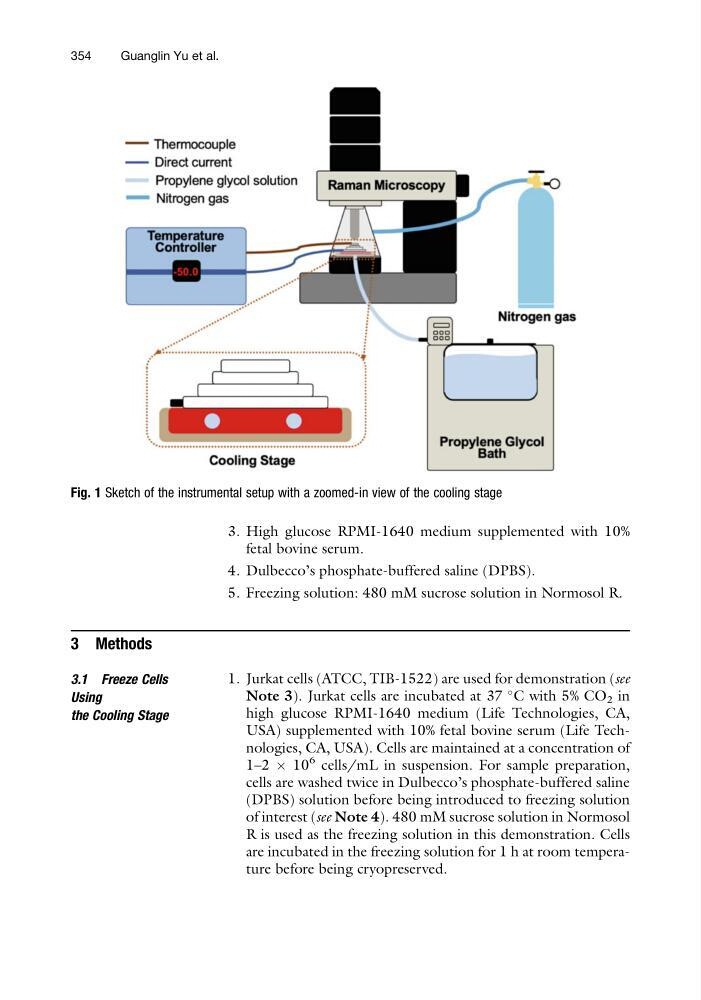
Fig. 1 Sketch of the instrumental setup with a zoomed-in view of the cooling stage
354
Guanglin Yu et al.
fetal bovine serum.
4. Dulbecco’s phosphate-buffered saline (DPBS).
5. Freezing solution: 480 mM sucrose solution in Normosol R.
3 Methods
3.1 Freeze Cells
Using
the Cooling Stage
1. Jurkat cells (ATCC, TIB-1522) are used for demonstration (see
Note 3). Jurkat cells are incubated at 37
C with 5% CO 2 in
high glucose RPMI-1640 medium (Life Technologies, CA,
USA) supplemented with 10% fetal bovine serum (Life Technologies, CA, USA). Cells are maintained at a concentration of
1–2 Â 10
6 cells/mL in suspension. For sample preparation,
cells are washed twice in Dulbecco’s phosphate-buffered saline
(DPBS) solution before being introduced to freezing solution
of interest (see Note 4). 480 mM sucrose solution in Normosol
R is used as the freezing solution in this demonstration. Cells
are incubated in the freezing solution for 1 h at room temperature before being cryopreserved.
Fig. 1 Sketch of the instrumental setup with a zoomed-in view of the cooling stage
354
Guanglin Yu et al.