

4.5 Stability of
Frozen Cells at
Subzero Temperatures
Figure 10 shows an example of studying the stability of frozen
human red blood cells at subzero temperatures. Red blood cells
were cryopreserved by plunging directly into liquid nitrogen in the
presence of 12% hydroxyethyl starch [9]. Hydroxyethyl starch is a
non-permeable cryoprotectant and requires fast cooling and warming rates to avoid intracellular ice formation and excessive cellular
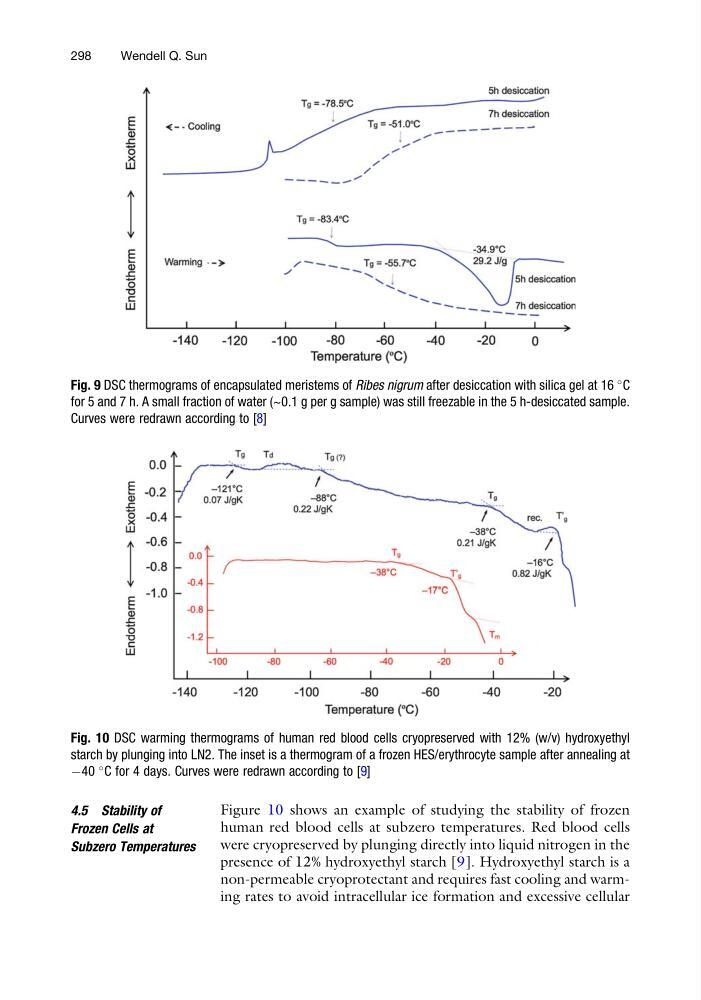
Fig. 9 DSC thermograms of encapsulated meristems of Ribes nigrum after desiccation with silica gel at 16
C
for 5 and 7 h. A small fraction of water (~0.1 g per g sample) was still freezable in the 5 h-desiccated sample.
Curves were redrawn according to [8]
Fig. 10 DSC warming thermograms of human red blood cells cryopreserved with 12% (w/v) hydroxyethyl
starch by plunging into LN2. The inset is a thermogram of a frozen HES/erythrocyte sample after annealing at
À40
C for 4 days. Curves were redrawn according to [9]
298
Wendell Q. Sun
Frozen Cells at
Subzero Temperatures
Figure 10 shows an example of studying the stability of frozen
human red blood cells at subzero temperatures. Red blood cells
were cryopreserved by plunging directly into liquid nitrogen in the
presence of 12% hydroxyethyl starch [9]. Hydroxyethyl starch is a
non-permeable cryoprotectant and requires fast cooling and warming rates to avoid intracellular ice formation and excessive cellular
Fig. 9 DSC thermograms of encapsulated meristems of Ribes nigrum after desiccation with silica gel at 16
C
for 5 and 7 h. A small fraction of water (~0.1 g per g sample) was still freezable in the 5 h-desiccated sample.
Curves were redrawn according to [8]
Fig. 10 DSC warming thermograms of human red blood cells cryopreserved with 12% (w/v) hydroxyethyl
starch by plunging into LN2. The inset is a thermogram of a frozen HES/erythrocyte sample after annealing at
À40
C for 4 days. Curves were redrawn according to [9]
298
Wendell Q. Sun