

6
1 A Historical Review of the Structures of Water and Ice
H
H
O
(a)
(b)
O
Si
O
O
(c)
H
H
O
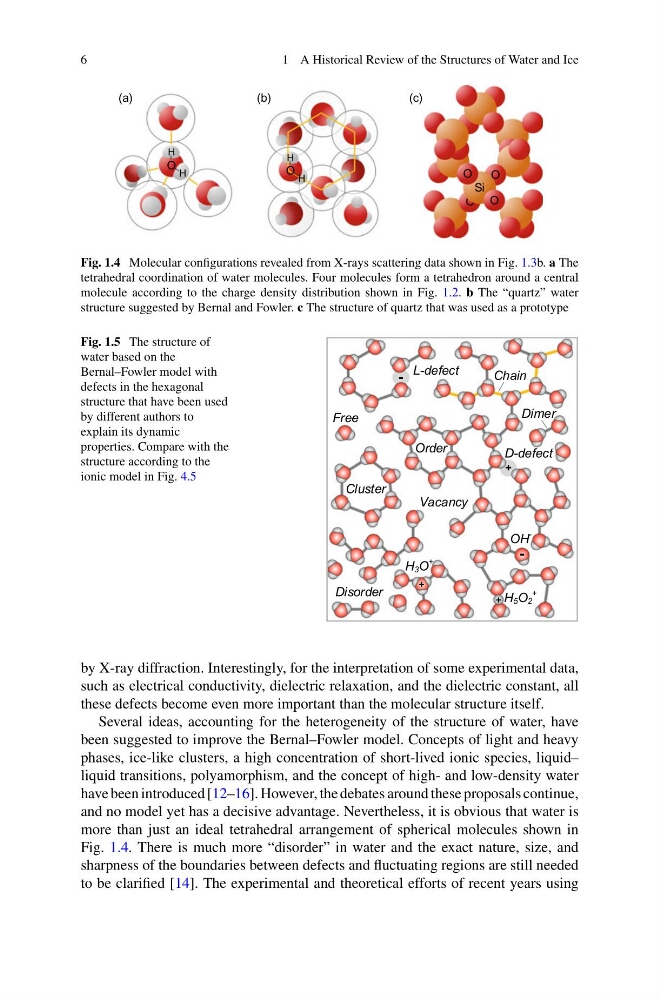
Fig. 1.4 Molecular configurations revealed from X-rays scattering data shown in Fig. 1.3b. a The
tetrahedral coordination of water molecules. Four molecules form a tetrahedron around a central
molecule according to the charge density distribution shown in Fig. 1.2. b The “quartz” water
structure suggested by Bernal and Fowler. c The structure of quartz that was used as a prototype
Fig. 1.5 The structure of
water based on the
Bernal–Fowler model with
defects in the hexagonal
structure that have been used
by different authors to
explain its dynamic
properties. Compare with the
structure according to the
ionic model in Fig. 4.5
+
-
D-defect
L-defect
-
H 3 O
+
OH
-
Vacancy
Chain
Free
Cluster
Disorder
Order
Dimer
H 5 O 2
+
+
by X-ray diffraction. Interestingly, for the interpretation of some experimental data,
such as electrical conductivity, dielectric relaxation, and the dielectric constant, all
these defects become even more important than the molecular structure itself.
Several ideas, accounting for the heterogeneity of the structure of water, have
been suggested to improve the Bernal–Fowler model. Concepts of light and heavy
phases, ice-like clusters, a high concentration of short-lived ionic species, liquid–
liquid transitions, polyamorphism, and the concept of high- and low-density water
have been introduced [12–16]. However, the debates around these proposals continue,
and no model yet has a decisive advantage. Nevertheless, it is obvious that water is
more than just an ideal tetrahedral arrangement of spherical molecules shown in
Fig. 1.4. There is much more “disorder” in water and the exact nature, size, and
sharpness of the boundaries between defects and fluctuating regions are still needed
to be clarified [14]. The experimental and theoretical efforts of recent years using
1 A Historical Review of the Structures of Water and Ice
H
H
O
(a)
(b)
O
Si
O
O
(c)
H
H
O
Fig. 1.4 Molecular configurations revealed from X-rays scattering data shown in Fig. 1.3b. a The
tetrahedral coordination of water molecules. Four molecules form a tetrahedron around a central
molecule according to the charge density distribution shown in Fig. 1.2. b The “quartz” water
structure suggested by Bernal and Fowler. c The structure of quartz that was used as a prototype
Fig. 1.5 The structure of
water based on the
Bernal–Fowler model with
defects in the hexagonal
structure that have been used
by different authors to
explain its dynamic
properties. Compare with the
structure according to the
ionic model in Fig. 4.5
+
-
D-defect
L-defect
-
H 3 O
+
OH
-
Vacancy
Chain
Free
Cluster
Disorder
Order
Dimer
H 5 O 2
+
+
by X-ray diffraction. Interestingly, for the interpretation of some experimental data,
such as electrical conductivity, dielectric relaxation, and the dielectric constant, all
these defects become even more important than the molecular structure itself.
Several ideas, accounting for the heterogeneity of the structure of water, have
been suggested to improve the Bernal–Fowler model. Concepts of light and heavy
phases, ice-like clusters, a high concentration of short-lived ionic species, liquid–
liquid transitions, polyamorphism, and the concept of high- and low-density water
have been introduced [12–16]. However, the debates around these proposals continue,
and no model yet has a decisive advantage. Nevertheless, it is obvious that water is
more than just an ideal tetrahedral arrangement of spherical molecules shown in
Fig. 1.4. There is much more “disorder” in water and the exact nature, size, and
sharpness of the boundaries between defects and fluctuating regions are still needed
to be clarified [14]. The experimental and theoretical efforts of recent years using