

152
4 The Dielectric Properties and Dynamic Structure of Water and Ice
4.5 The Microscopic Origin of the Electrodynamic
Properties of Water and Ice
4.5.1 Dielectric Relaxation and DC Conductivity
In the ionic model, the dielectric (Debye) relaxation and the DC conductivity have
the same origin: the ambipolar diffusion [49] of intrinsic ions. This type of diffusion,
in which charges of two signs interact with each other is responsible, in water, for
both the microwave conductivity σ ac , and the static conduction σ dc . Note that in
the Bernal–Fowler model σ ac and σ dc are independent (see Sects. 1.3 and 2.3.2).
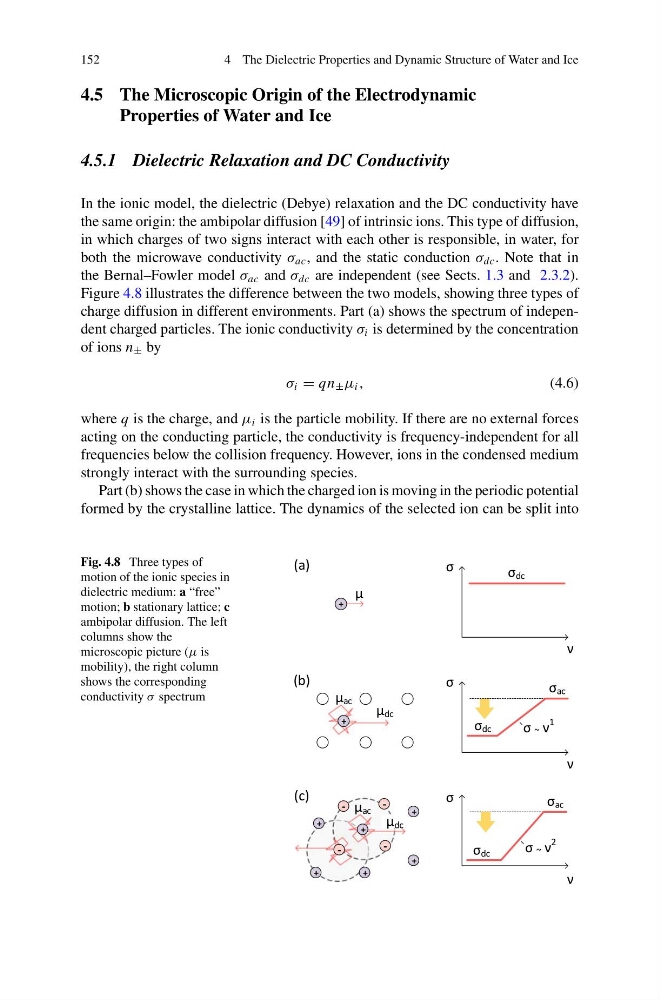
Figure 4.8 illustrates the difference between the two models, showing three types of
charge diffusion in different environments. Part (a) shows the spectrum of independent charged particles. The ionic conductivity σ i is determined by the concentration
of ions n ± by
σ i = qn ± μ i ,
(4.6)
where q is the charge, and μ i is the particle mobility. If there are no external forces
acting on the conducting particle, the conductivity is frequency-independent for all
frequencies below the collision frequency. However, ions in the condensed medium
strongly interact with the surrounding species.
Part (b) shows the case in which the charged ion is moving in the periodic potential
formed by the crystalline lattice. The dynamics of the selected ion can be split into
Fig. 4.8 Three types of
motion of the ionic species in
dielectric medium: a “free”
motion; b stationary lattice; c
ambipolar diffusion. The left
columns show the
microscopic picture (μ is
mobility), the right column
shows the corresponding
conductivity σ spectrum
+
σ
σ
σ
ν
ν
ν
σ dc
σ dc
σ dc
σ ac
σ ac
σ ~ ν
1
σ ~ ν
2
μ
+
μ dc
μ ac
+
μ dc
μ ac
-
-
-
-
+
+
+
+
+
(a)
(b)
(c)
4 The Dielectric Properties and Dynamic Structure of Water and Ice
4.5 The Microscopic Origin of the Electrodynamic
Properties of Water and Ice
4.5.1 Dielectric Relaxation and DC Conductivity
In the ionic model, the dielectric (Debye) relaxation and the DC conductivity have
the same origin: the ambipolar diffusion [49] of intrinsic ions. This type of diffusion,
in which charges of two signs interact with each other is responsible, in water, for
both the microwave conductivity σ ac , and the static conduction σ dc . Note that in
the Bernal–Fowler model σ ac and σ dc are independent (see Sects. 1.3 and 2.3.2).
Figure 4.8 illustrates the difference between the two models, showing three types of
charge diffusion in different environments. Part (a) shows the spectrum of independent charged particles. The ionic conductivity σ i is determined by the concentration
of ions n ± by
σ i = qn ± μ i ,
(4.6)
where q is the charge, and μ i is the particle mobility. If there are no external forces
acting on the conducting particle, the conductivity is frequency-independent for all
frequencies below the collision frequency. However, ions in the condensed medium
strongly interact with the surrounding species.
Part (b) shows the case in which the charged ion is moving in the periodic potential
formed by the crystalline lattice. The dynamics of the selected ion can be split into
Fig. 4.8 Three types of
motion of the ionic species in
dielectric medium: a “free”
motion; b stationary lattice; c
ambipolar diffusion. The left
columns show the
microscopic picture (μ is
mobility), the right column
shows the corresponding
conductivity σ spectrum
+
σ
σ
σ
ν
ν
ν
σ dc
σ dc
σ dc
σ ac
σ ac
σ ~ ν
1
σ ~ ν
2
μ
+
μ dc
μ ac
+
μ dc
μ ac
-
-
-
-
+
+
+
+
+
(a)
(b)
(c)