

54
Biomedical Signal and Image Processing
(a)
(b)
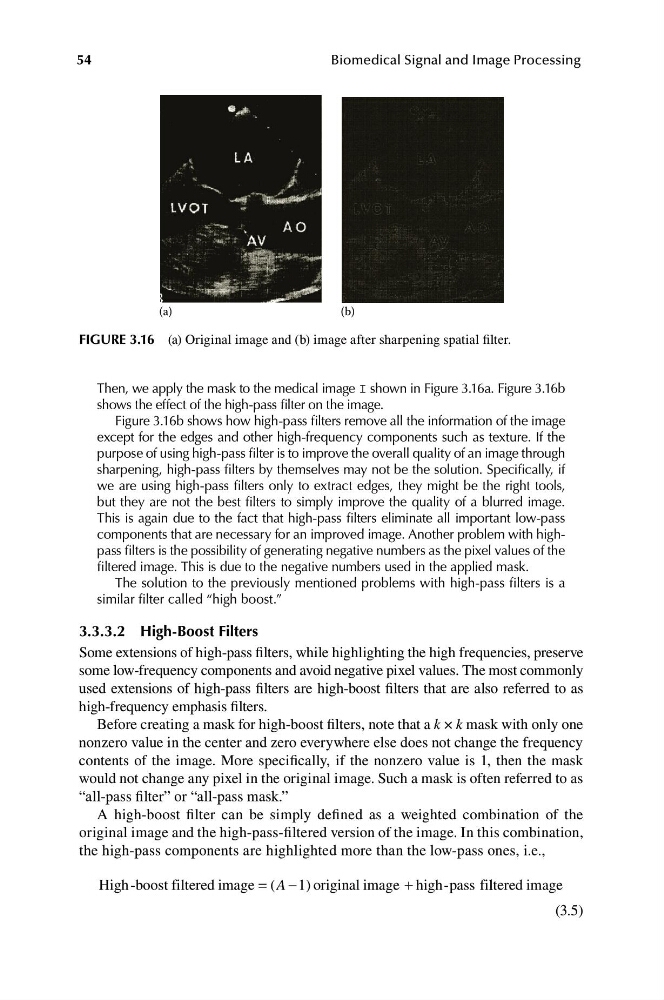
FIGURE 3.16 (a) Original image and (b) image after sharpening spatial filter.
Then, we apply the mask to the medical image I shown in Figure 3.16a. Figure 3.16b
shows the effect of the high-pass filter on the image.
Figure 3.16b shows how high-pass filters remove all the information of the image
except for the edges and other high-frequency components such as texture. If the
purpose of using high-pass filter is to improve the overall quality of an image through
sharpening, high-pass filters by themselves may not be the solution. Specifically, if
we are using high-pass filters only to extract edges, they might be the right tools,
but they are not the best filters to simply improve the quality of a blurred image.
This is again due to the fact that high-pass filters eliminate all important low-pass
components that are necessary for an improved image. Another problem with highpass filters is the possibility of generating negative numbers as the pixel values of the
filtered image. This is due to the negative numbers used in the applied mask.
The solution to the previously mentioned problems with high-pass filters is a
similar filter called “high boost.”
3.3.3.2 High-Boost Filters
Some extensions of high-pass filters, while highlighting the high frequencies, preserve
some low-frequency components and avoid negative pixel values. The most commonly
used extensions of high-pass filters are high-boost filters that are also referred to as
high-frequency emphasis filters.
Before creating a mask for high-boost filters, note that a k × k mask with only one
nonzero value in the center and zero everywhere else does not change the frequency
contents of the image. More specifically, if the nonzero value is 1, then the mask
would not change any pixel in the original image. Such a mask is often referred to as
“all-pass filter” or “all-pass mask.”
A high-boost filter can be simply defined as a weighted combination of the
original image and the high-pass-filtered version of the image. In this combination,
the high-pass components are highlighted more than the low-pass ones, i.e.,
High -boost filtered image = (A −1) original image + high-pass fi l ltered image
(3.5)
Biomedical Signal and Image Processing
(a)
(b)
FIGURE 3.16 (a) Original image and (b) image after sharpening spatial filter.
Then, we apply the mask to the medical image I shown in Figure 3.16a. Figure 3.16b
shows the effect of the high-pass filter on the image.
Figure 3.16b shows how high-pass filters remove all the information of the image
except for the edges and other high-frequency components such as texture. If the
purpose of using high-pass filter is to improve the overall quality of an image through
sharpening, high-pass filters by themselves may not be the solution. Specifically, if
we are using high-pass filters only to extract edges, they might be the right tools,
but they are not the best filters to simply improve the quality of a blurred image.
This is again due to the fact that high-pass filters eliminate all important low-pass
components that are necessary for an improved image. Another problem with highpass filters is the possibility of generating negative numbers as the pixel values of the
filtered image. This is due to the negative numbers used in the applied mask.
The solution to the previously mentioned problems with high-pass filters is a
similar filter called “high boost.”
3.3.3.2 High-Boost Filters
Some extensions of high-pass filters, while highlighting the high frequencies, preserve
some low-frequency components and avoid negative pixel values. The most commonly
used extensions of high-pass filters are high-boost filters that are also referred to as
high-frequency emphasis filters.
Before creating a mask for high-boost filters, note that a k × k mask with only one
nonzero value in the center and zero everywhere else does not change the frequency
contents of the image. More specifically, if the nonzero value is 1, then the mask
would not change any pixel in the original image. Such a mask is often referred to as
“all-pass filter” or “all-pass mask.”
A high-boost filter can be simply defined as a weighted combination of the
original image and the high-pass-filtered version of the image. In this combination,
the high-pass components are highlighted more than the low-pass ones, i.e.,
High -boost filtered image = (A −1) original image + high-pass fi l ltered image
(3.5)