

Stationary anode x-ray tube
Anode
Focusing
cup
Target
Filament
Collimator
Patient
Table
film
262
Biomedical Signal and Image Processing
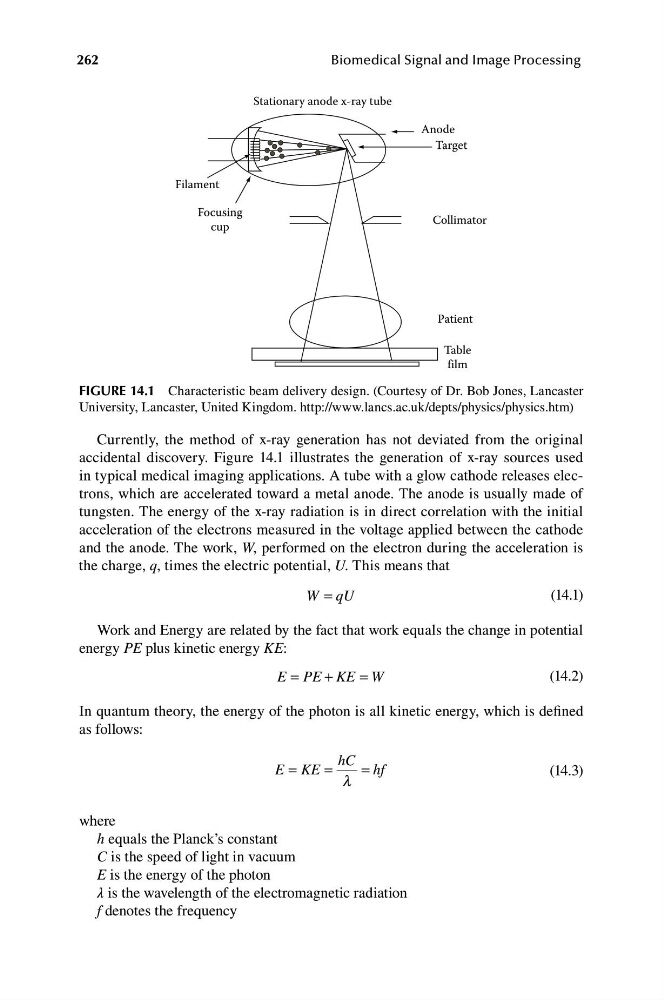
FIGURE 14.1 Characteristic beam delivery design. (Courtesy of Dr. Bob Jones, Lancaster
University, Lancaster, United Kingdom. http://www.lancs.ac.uk/depts/physics/physics.htm)
Currently, the method of x-ray generation has not deviated from the original
accidental discovery. Figure 14.1 illustrates the generation of x-ray sources used
in typical medical imaging applications. A tube with a glow cathode releases electrons, which are accelerated toward a metal anode. The anode is usually made of
tungsten. The energy of the x-ray radiation is in direct correlation with the initial
acceleration of the electrons measured in the voltage applied between the cathode
and the anode. The work, W, performed on the electron during the acceleration is
the charge, q, times the electric potential, U. This means that
W = qU
(14.1)
Work and Energy are related by the fact that work equals the change in potential
energy PE plus kinetic energy KE:
E PE + KE
(14.2)
=
= W
In quantum theory, the energy of the photon is all kinetic energy, which is defined
as follows:
hC
E = KE =
= hf
(14.3)
l
where
h equals the Planck’s constant
C is the speed of light in vacuum
E is the energy of the photon
λ is the wavelength of the electromagnetic radiation
f denotes the frequency
Anode
Focusing
cup
Target
Filament
Collimator
Patient
Table
film
262
Biomedical Signal and Image Processing
FIGURE 14.1 Characteristic beam delivery design. (Courtesy of Dr. Bob Jones, Lancaster
University, Lancaster, United Kingdom. http://www.lancs.ac.uk/depts/physics/physics.htm)
Currently, the method of x-ray generation has not deviated from the original
accidental discovery. Figure 14.1 illustrates the generation of x-ray sources used
in typical medical imaging applications. A tube with a glow cathode releases electrons, which are accelerated toward a metal anode. The anode is usually made of
tungsten. The energy of the x-ray radiation is in direct correlation with the initial
acceleration of the electrons measured in the voltage applied between the cathode
and the anode. The work, W, performed on the electron during the acceleration is
the charge, q, times the electric potential, U. This means that
W = qU
(14.1)
Work and Energy are related by the fact that work equals the change in potential
energy PE plus kinetic energy KE:
E PE + KE
(14.2)
=
= W
In quantum theory, the energy of the photon is all kinetic energy, which is defined
as follows:
hC
E = KE =
= hf
(14.3)
l
where
h equals the Planck’s constant
C is the speed of light in vacuum
E is the energy of the photon
λ is the wavelength of the electromagnetic radiation
f denotes the frequency