

198
Biomedical Signal and Image Processing
Cortex
Cerebrum
(gray matter)
(white matter)
Ventricle
Diencephalon
(thalamus)
Diencephalon
(hypothalamus)
Brain stem
Cerebellum
Pons
Medulla oblongata
Cerebrum
Spinal cord
Speduncles
(nerve connections)
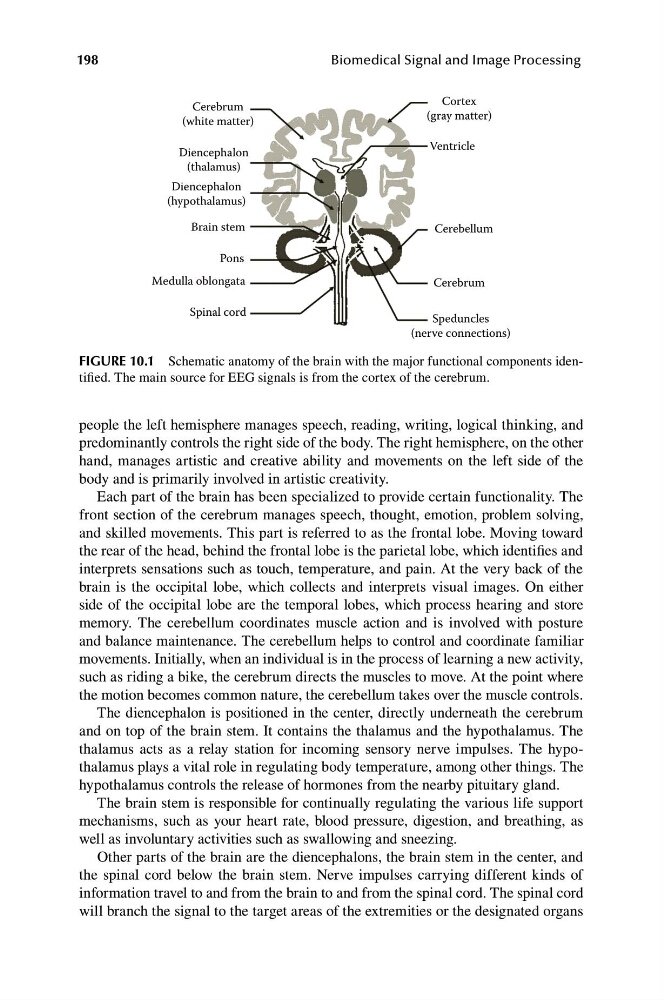
FIGURE 10.1 Schematic anatomy of the brain with the major functional components identified. The main source for EEG signals is from the cortex of the cerebrum.
people the left hemisphere manages speech, reading, writing, logical thinking, and
predominantly controls the right side of the body. The right hemisphere, on the other
hand, manages artistic and creative ability and movements on the left side of the
body and is primarily involved in artistic creativity.
Each part of the brain has been specialized to provide certain functionality. The
front section of the cerebrum manages speech, thought, emotion, problem solving,
and skilled movements. This part is referred to as the frontal lobe. Moving toward
the rear of the head, behind the frontal lobe is the parietal lobe, which identifies and
interprets sensations such as touch, temperature, and pain. At the very back of the
brain is the occipital lobe, which collects and interprets visual images. On either
side of the occipital lobe are the temporal lobes, which process hearing and store
memory. The cerebellum coordinates muscle action and is involved with posture
and balance maintenance. The cerebellum helps to control and coordinate familiar
movements. Initially, when an individual is in the process of learning a new activity,
such as riding a bike, the cerebrum directs the muscles to move. At the point where
the motion becomes common nature, the cerebellum takes over the muscle controls.
The diencephalon is positioned in the center, directly underneath the cerebrum
and on top of the brain stem. It contains the thalamus and the hypothalamus. The
thalamus acts as a relay station for incoming sensory nerve impulses. The hypothalamus plays a vital role in regulating body temperature, among other things. The
hypothalamus controls the release of hormones from the nearby pituitary gland.
The brain stem is responsible for continually regulating the various life support
mechanisms, such as your heart rate, blood pressure, digestion, and breathing, as
well as involuntary activities such as swallowing and sneezing.
Other parts of the brain are the diencephalons, the brain stem in the center, and
the spinal cord below the brain stem. Nerve impulses carrying different kinds of
information travel to and from the brain to and from the spinal cord. The spinal cord
will branch the signal to the target areas of the extremities or the designated organs
Biomedical Signal and Image Processing
Cortex
Cerebrum
(gray matter)
(white matter)
Ventricle
Diencephalon
(thalamus)
Diencephalon
(hypothalamus)
Brain stem
Cerebellum
Pons
Medulla oblongata
Cerebrum
Spinal cord
Speduncles
(nerve connections)
FIGURE 10.1 Schematic anatomy of the brain with the major functional components identified. The main source for EEG signals is from the cortex of the cerebrum.
people the left hemisphere manages speech, reading, writing, logical thinking, and
predominantly controls the right side of the body. The right hemisphere, on the other
hand, manages artistic and creative ability and movements on the left side of the
body and is primarily involved in artistic creativity.
Each part of the brain has been specialized to provide certain functionality. The
front section of the cerebrum manages speech, thought, emotion, problem solving,
and skilled movements. This part is referred to as the frontal lobe. Moving toward
the rear of the head, behind the frontal lobe is the parietal lobe, which identifies and
interprets sensations such as touch, temperature, and pain. At the very back of the
brain is the occipital lobe, which collects and interprets visual images. On either
side of the occipital lobe are the temporal lobes, which process hearing and store
memory. The cerebellum coordinates muscle action and is involved with posture
and balance maintenance. The cerebellum helps to control and coordinate familiar
movements. Initially, when an individual is in the process of learning a new activity,
such as riding a bike, the cerebrum directs the muscles to move. At the point where
the motion becomes common nature, the cerebellum takes over the muscle controls.
The diencephalon is positioned in the center, directly underneath the cerebrum
and on top of the brain stem. It contains the thalamus and the hypothalamus. The
thalamus acts as a relay station for incoming sensory nerve impulses. The hypothalamus plays a vital role in regulating body temperature, among other things. The
hypothalamus controls the release of hormones from the nearby pituitary gland.
The brain stem is responsible for continually regulating the various life support
mechanisms, such as your heart rate, blood pressure, digestion, and breathing, as
well as involuntary activities such as swallowing and sneezing.
Other parts of the brain are the diencephalons, the brain stem in the center, and
the spinal cord below the brain stem. Nerve impulses carrying different kinds of
information travel to and from the brain to and from the spinal cord. The spinal cord
will branch the signal to the target areas of the extremities or the designated organs