

10
1 Melanin Chemistry
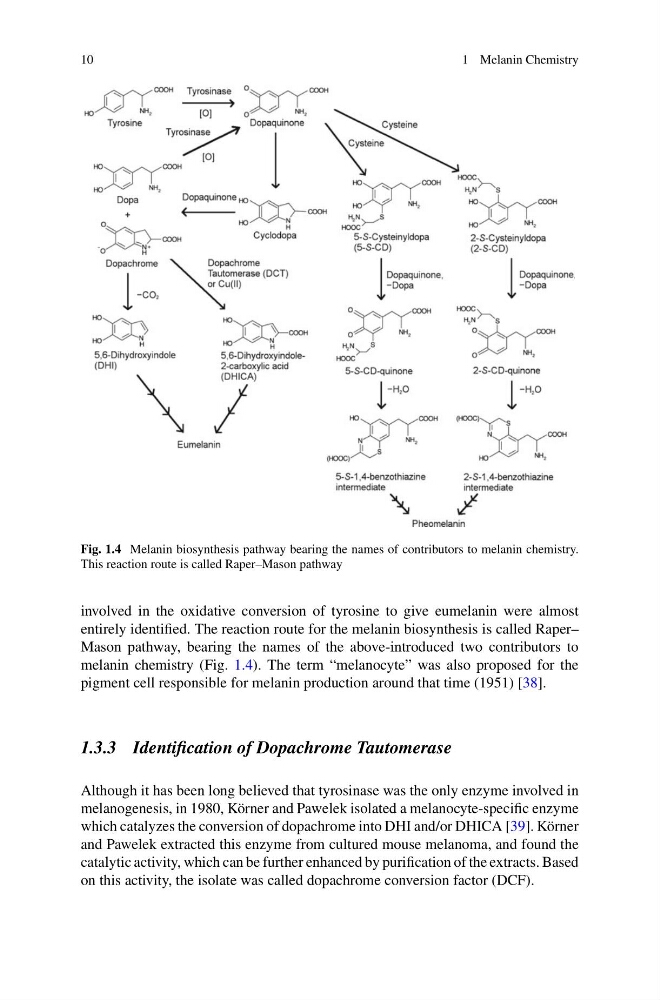
Fig. 1.4 Melanin biosynthesis pathway bearing the names of contributors to melanin chemistry.
This reaction route is called Raper–Mason pathway
involved in the oxidative conversion of tyrosine to give eumelanin were almost
entirely identified. The reaction route for the melanin biosynthesis is called Raper–
Mason pathway, bearing the names of the above-introduced two contributors to
melanin chemistry (Fig. 1.4). The term “melanocyte” was also proposed for the
pigment cell responsible for melanin production around that time (1951) [38].
1.3.3 Identification of Dopachrome Tautomerase
Although it has been long believed that tyrosinase was the only enzyme involved in
melanogenesis, in 1980, Körner and Pawelek isolated a melanocyte-specific enzyme
which catalyzes the conversion of dopachrome into DHI and/or DHICA [39]. Körner
and Pawelek extracted this enzyme from cultured mouse melanoma, and found the
catalytic activity, which can be further enhanced by purification of the extracts. Based
on this activity, the isolate was called dopachrome conversion factor (DCF).
1 Melanin Chemistry
Fig. 1.4 Melanin biosynthesis pathway bearing the names of contributors to melanin chemistry.
This reaction route is called Raper–Mason pathway
involved in the oxidative conversion of tyrosine to give eumelanin were almost
entirely identified. The reaction route for the melanin biosynthesis is called Raper–
Mason pathway, bearing the names of the above-introduced two contributors to
melanin chemistry (Fig. 1.4). The term “melanocyte” was also proposed for the
pigment cell responsible for melanin production around that time (1951) [38].
1.3.3 Identification of Dopachrome Tautomerase
Although it has been long believed that tyrosinase was the only enzyme involved in
melanogenesis, in 1980, Körner and Pawelek isolated a melanocyte-specific enzyme
which catalyzes the conversion of dopachrome into DHI and/or DHICA [39]. Körner
and Pawelek extracted this enzyme from cultured mouse melanoma, and found the
catalytic activity, which can be further enhanced by purification of the extracts. Based
on this activity, the isolate was called dopachrome conversion factor (DCF).