

3. Redundancy and backup systems where applicable, especially with regards to
moorings, which are arguably the most critical components of the cage system.
4. Prepare as much equipment while the system is onshore as possible. It becomes
exponentially more difficult to work on nets, stanchions, cage ties, shackles, and
anchor lines the moment it enters the water.
The future of mariculture worldwide is a bright one. Demand for marine plants
and animals is increasing and, while wild caught fisheries are essentially flat or in
decline, the culture of these products is attempting to meet that demand with
increased supply each year. Where the US fits into this future is unclear given our
past record of low marine aquaculture production, onerous permitting requirements,
and vague regulatory picture, especially in offshore waters. In the US, the Gulf of
Mexico is an area that may play a role in domestic offshore mariculture production,
should it ever develop on a commercial scale. This “audacious hope” for the GoM,
as described in Sims (2015), will hopefully become a reality in the near future when
the right concept is put into action with adequate investment. This will not happen,
however, until the liability and regulatory issues in US federal waters and economic
challenges of production are resolved in order make it a more attractive venture to
investors.
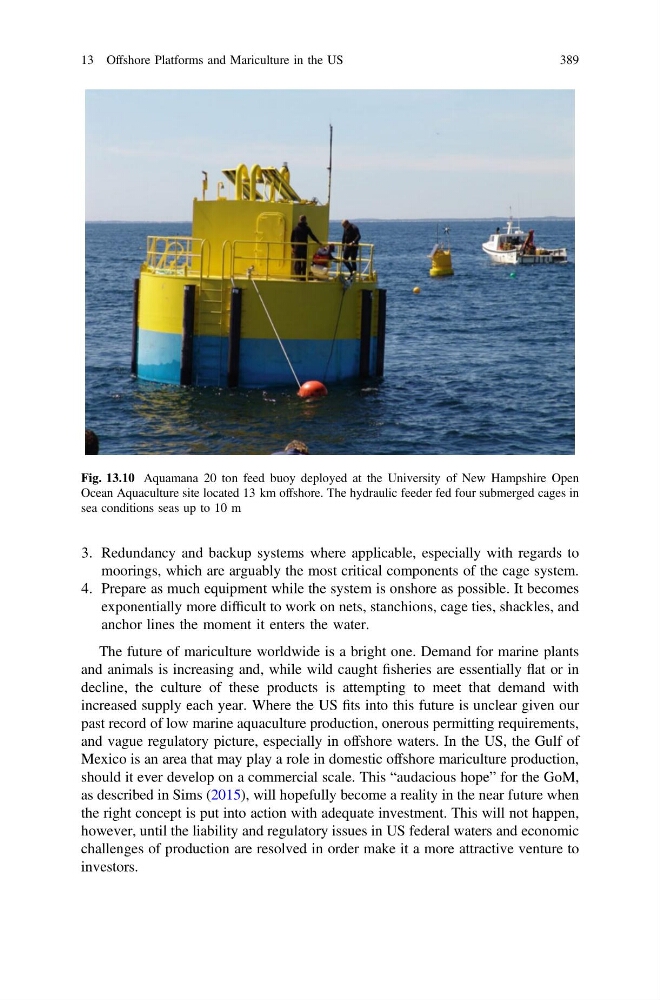
Fig. 13.10 Aquamana 20 ton feed buoy deployed at the University of New Hampshire Open
Ocean Aquaculture site located 13 km offshore. The hydraulic feeder fed four submerged cages in
sea conditions seas up to 10 m
13 Offshore Platforms and Mariculture in the US
389
moorings, which are arguably the most critical components of the cage system.
4. Prepare as much equipment while the system is onshore as possible. It becomes
exponentially more difficult to work on nets, stanchions, cage ties, shackles, and
anchor lines the moment it enters the water.
The future of mariculture worldwide is a bright one. Demand for marine plants
and animals is increasing and, while wild caught fisheries are essentially flat or in
decline, the culture of these products is attempting to meet that demand with
increased supply each year. Where the US fits into this future is unclear given our
past record of low marine aquaculture production, onerous permitting requirements,
and vague regulatory picture, especially in offshore waters. In the US, the Gulf of
Mexico is an area that may play a role in domestic offshore mariculture production,
should it ever develop on a commercial scale. This “audacious hope” for the GoM,
as described in Sims (2015), will hopefully become a reality in the near future when
the right concept is put into action with adequate investment. This will not happen,
however, until the liability and regulatory issues in US federal waters and economic
challenges of production are resolved in order make it a more attractive venture to
investors.
Fig. 13.10 Aquamana 20 ton feed buoy deployed at the University of New Hampshire Open
Ocean Aquaculture site located 13 km offshore. The hydraulic feeder fed four submerged cages in
sea conditions seas up to 10 m
13 Offshore Platforms and Mariculture in the US
389