

While HDPE is a strong and versatile material used globally in numerous cage
culture applications, the high energy surface action in the GoM exerted forces on
the cage which eventually began to break various components, especially the
stanchions and polysteel rope connections to the top of the net. This damage
combined with a particularly active tropical season during 1998 proved to be too
much and the system was totally destroyed by a storm and several thousand red
drum were lost in the process.
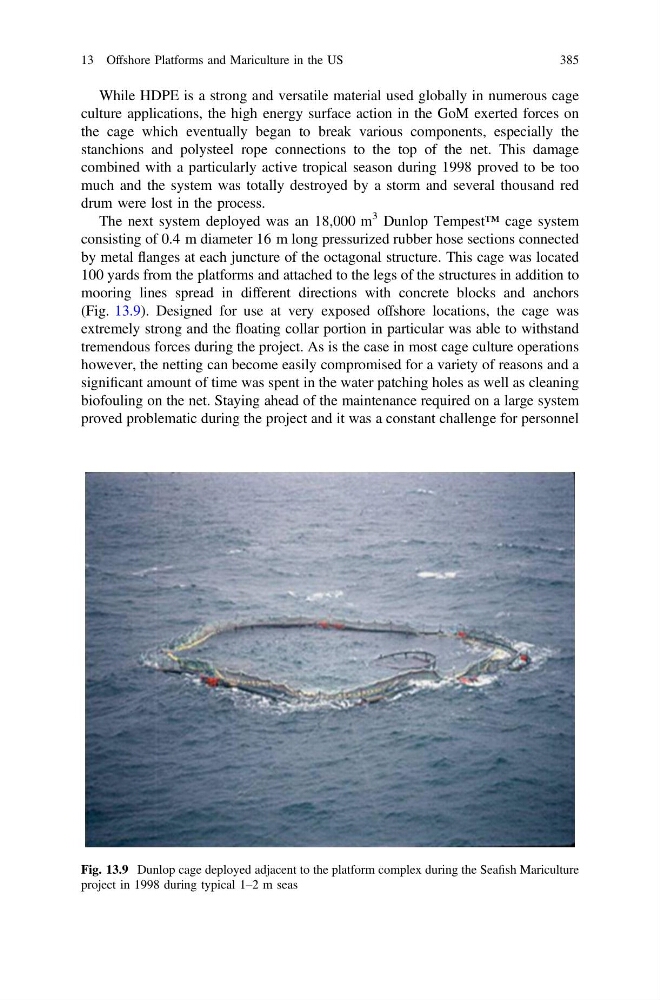
The next system deployed was an 18,000 m
3 Dunlop Tempest™ cage system
consisting of 0.4 m diameter 16 m long pressurized rubber hose sections connected
by metal flanges at each juncture of the octagonal structure. This cage was located
100 yards from the platforms and attached to the legs of the structures in addition to
mooring lines spread in different directions with concrete blocks and anchors
(Fig. 13.9). Designed for use at very exposed offshore locations, the cage was
extremely strong and the floating collar portion in particular was able to withstand
tremendous forces during the project. As is the case in most cage culture operations
however, the netting can become easily compromised for a variety of reasons and a
significant amount of time was spent in the water patching holes as well as cleaning
biofouling on the net. Staying ahead of the maintenance required on a large system
proved problematic during the project and it was a constant challenge for personnel
Fig. 13.9 Dunlop cage deployed adjacent to the platform complex during the Seafish Mariculture
project in 1998 during typical 1–2 m seas
13 Offshore Platforms and Mariculture in the US
385
culture applications, the high energy surface action in the GoM exerted forces on
the cage which eventually began to break various components, especially the
stanchions and polysteel rope connections to the top of the net. This damage
combined with a particularly active tropical season during 1998 proved to be too
much and the system was totally destroyed by a storm and several thousand red
drum were lost in the process.
The next system deployed was an 18,000 m
3 Dunlop Tempest™ cage system
consisting of 0.4 m diameter 16 m long pressurized rubber hose sections connected
by metal flanges at each juncture of the octagonal structure. This cage was located
100 yards from the platforms and attached to the legs of the structures in addition to
mooring lines spread in different directions with concrete blocks and anchors
(Fig. 13.9). Designed for use at very exposed offshore locations, the cage was
extremely strong and the floating collar portion in particular was able to withstand
tremendous forces during the project. As is the case in most cage culture operations
however, the netting can become easily compromised for a variety of reasons and a
significant amount of time was spent in the water patching holes as well as cleaning
biofouling on the net. Staying ahead of the maintenance required on a large system
proved problematic during the project and it was a constant challenge for personnel
Fig. 13.9 Dunlop cage deployed adjacent to the platform complex during the Seafish Mariculture
project in 1998 during typical 1–2 m seas
13 Offshore Platforms and Mariculture in the US
385