

availability may be viewed as an advantage when moving offshore. The benefit for
a low settlement can lead to a one-step cultivation technique (no thinning procedure) if collecting and grow-out sites are within the same region in the vicinity of
offshore structures. The lower settlement success on one hand results in a limited
commercial potential, but on the other hand eases handling and maintenance
(Fig. 11.7c). During Project No. 3 “Roter Sand”
2 different types of submerged
longline systems were developed and tested: a conventional polypropylene longline
as well as a steel hawser longline, both with different versions of buoyancy modes.
Spat collectors and grow-out ropes were suspended perpendicular from the horizontal longline for several months. These multi-use experiments have shown a
massive settlement at offshore cultivation lines, making thinning essential (Buck
2007) (Fig. 11.8).
Resistance of mussels to severe conditions: The resistance of mussels to strong
currents as well as high waves and swell depends on the degree and duration of
these forces (Project No. 5 “MytiFit” and Project No. 10 “River Jade”). Information
on hydrodynamic conditions is important due to the fact that e.g. mussels and
oysters do adapt to harsh conditions but do not automatically grow fast. Even when
flow rates are increasing and consequently deliver more food, which stimulates
mussels and oysters to feed intensively, at a certain current velocity threshold
growth is reduced due to a pressure differential between inhalant and exhalent
siphons (Wildish and Kristmanson 1984, 1985; Rosenberg and Loo 1983). Further,
exposure to high waves/swell also reduces production rates due to the loss of
mussels through detachment (Scarratt 1993). Even if mussels cultivated in high
energy environments are able to adapt to the permanent physical stress by
increasing the strength and number of byssal-thread attachments, system design
adapted from sheltered environments, such as collector devices, have to be modified
to prevent detachment (Brenner and Buck 2010).
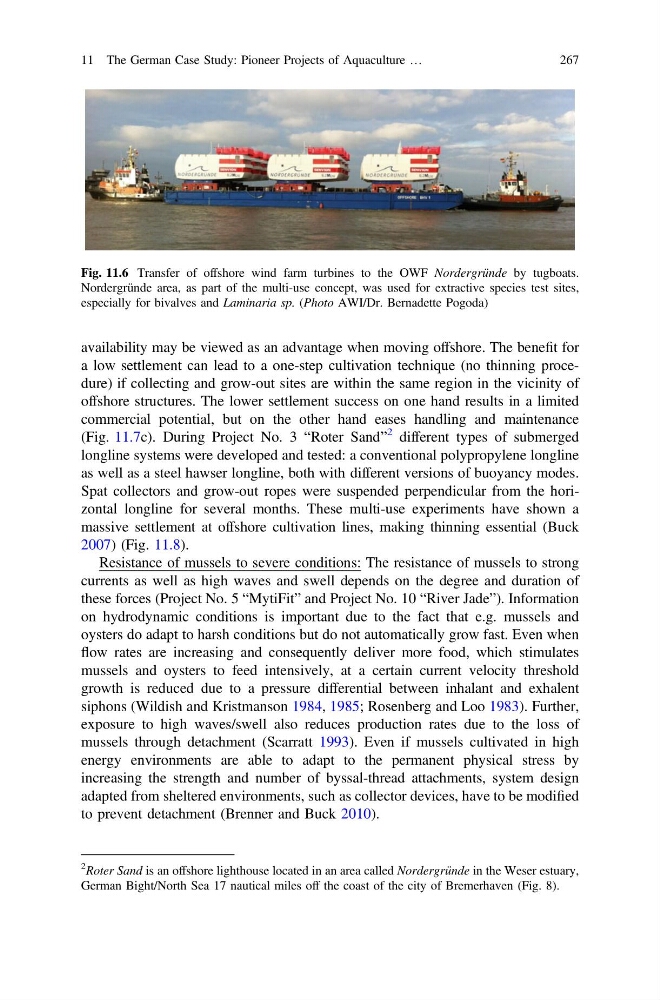
Fig. 11.6 Transfer of offshore wind farm turbines to the OWF Nordergründe by tugboats.
Nordergründe area, as part of the multi-use concept, was used for extractive species test sites,
especially for bivalves and Laminaria sp. (Photo AWI/Dr. Bernadette Pogoda)
2
Roter Sand is an offshore lighthouse located in an area called Nordergründe in the Weser estuary,
German Bight/North Sea 17 nautical miles off the coast of the city of Bremerhaven (Fig. 8).
11 The German Case Study: Pioneer Projects of Aquaculture …
267
a low settlement can lead to a one-step cultivation technique (no thinning procedure) if collecting and grow-out sites are within the same region in the vicinity of
offshore structures. The lower settlement success on one hand results in a limited
commercial potential, but on the other hand eases handling and maintenance
(Fig. 11.7c). During Project No. 3 “Roter Sand”
2 different types of submerged
longline systems were developed and tested: a conventional polypropylene longline
as well as a steel hawser longline, both with different versions of buoyancy modes.
Spat collectors and grow-out ropes were suspended perpendicular from the horizontal longline for several months. These multi-use experiments have shown a
massive settlement at offshore cultivation lines, making thinning essential (Buck
2007) (Fig. 11.8).
Resistance of mussels to severe conditions: The resistance of mussels to strong
currents as well as high waves and swell depends on the degree and duration of
these forces (Project No. 5 “MytiFit” and Project No. 10 “River Jade”). Information
on hydrodynamic conditions is important due to the fact that e.g. mussels and
oysters do adapt to harsh conditions but do not automatically grow fast. Even when
flow rates are increasing and consequently deliver more food, which stimulates
mussels and oysters to feed intensively, at a certain current velocity threshold
growth is reduced due to a pressure differential between inhalant and exhalent
siphons (Wildish and Kristmanson 1984, 1985; Rosenberg and Loo 1983). Further,
exposure to high waves/swell also reduces production rates due to the loss of
mussels through detachment (Scarratt 1993). Even if mussels cultivated in high
energy environments are able to adapt to the permanent physical stress by
increasing the strength and number of byssal-thread attachments, system design
adapted from sheltered environments, such as collector devices, have to be modified
to prevent detachment (Brenner and Buck 2010).
Fig. 11.6 Transfer of offshore wind farm turbines to the OWF Nordergründe by tugboats.
Nordergründe area, as part of the multi-use concept, was used for extractive species test sites,
especially for bivalves and Laminaria sp. (Photo AWI/Dr. Bernadette Pogoda)
2
Roter Sand is an offshore lighthouse located in an area called Nordergründe in the Weser estuary,
German Bight/North Sea 17 nautical miles off the coast of the city of Bremerhaven (Fig. 8).
11 The German Case Study: Pioneer Projects of Aquaculture …
267