

10.6 Conclusions
Co-locating aquaculture operations and wind farms can produce both public and
private benefits (cost savings). The public benefits arise from the fact that an
aquaculture operation co-located within the boundaries of a wind farm does not
negatively affect the ecosystem services derived from the ocean area it would
otherwise have occupied. The private benefits are cost savings that arise from
shared permitting, infrastructure, and logistics efforts and systems.
The economic value associated with these benefits depends on the scale, location, and nature of the co-located ventures and the natural resources they affect. For
locations in open ocean and relatively low-value coastal waters that are candidates
for wind farm or aquaculture sites in most countries, the public benefit is likely to
be on the order of $500–$3000/year/ha of area occupied by the aquaculture operation, and the private benefits are likely to be less than $50–100/ton of aquaculture
operation output.
Because co-location can offer public benefits, it makes sense for local, regional,
and national regulation of the siting of energy (e.g. wind farm), seafood production
-5
0
5
10
15
20
25
30
35
40
0.68
0.69
0.70
0.72
0.73
0.74
0.76
0.77
0.79
0.80
0.82
0.83
0.85
0.86
0.88
0.89
0.91
0.92
Profit
Millions
Price for mussels
a. Mussel price
-5
0
5
10
15
20
25
30
35
40
31500
32500
33500
34500
35500
36500
37500
38500
39500
40500
41500
Profit
Millions
Yield mussels (kg/ha)
b. Mussel yield
-5
0
5
10
15
20
25
30
35
40
25,171
25,671
26,171
26,671
27,171
27,671
28,171
28,671
29,171
29,671
30,171
Profit
Millions
c. Fixed costs
-5
0
5
10
15
20
25
30
35
40
4,306
5,306
6,306
7,306
8,306
9,306
10,306
11,306
12,306
13,306
14,306
Profit
Millions
Transport costs for mussels
d. Transport costs
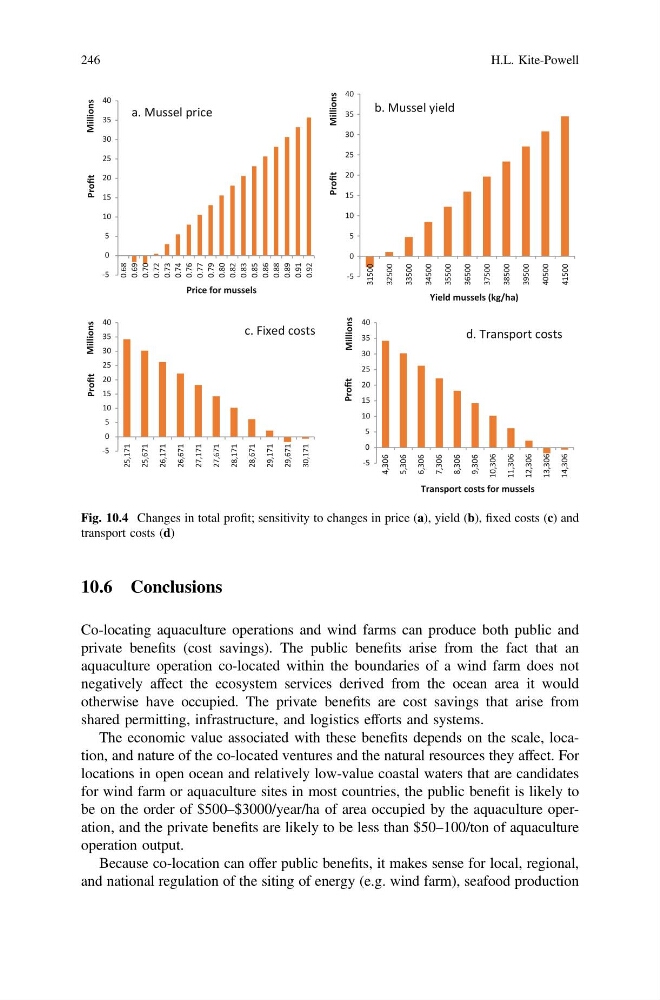
Fig. 10.4 Changes in total profit; sensitivity to changes in price (a), yield (b), fixed costs (c) and
transport costs (d)
246
H.L. Kite-Powell
Co-locating aquaculture operations and wind farms can produce both public and
private benefits (cost savings). The public benefits arise from the fact that an
aquaculture operation co-located within the boundaries of a wind farm does not
negatively affect the ecosystem services derived from the ocean area it would
otherwise have occupied. The private benefits are cost savings that arise from
shared permitting, infrastructure, and logistics efforts and systems.
The economic value associated with these benefits depends on the scale, location, and nature of the co-located ventures and the natural resources they affect. For
locations in open ocean and relatively low-value coastal waters that are candidates
for wind farm or aquaculture sites in most countries, the public benefit is likely to
be on the order of $500–$3000/year/ha of area occupied by the aquaculture operation, and the private benefits are likely to be less than $50–100/ton of aquaculture
operation output.
Because co-location can offer public benefits, it makes sense for local, regional,
and national regulation of the siting of energy (e.g. wind farm), seafood production
-5
0
5
10
15
20
25
30
35
40
0.68
0.69
0.70
0.72
0.73
0.74
0.76
0.77
0.79
0.80
0.82
0.83
0.85
0.86
0.88
0.89
0.91
0.92
Profit
Millions
Price for mussels
a. Mussel price
-5
0
5
10
15
20
25
30
35
40
31500
32500
33500
34500
35500
36500
37500
38500
39500
40500
41500
Profit
Millions
Yield mussels (kg/ha)
b. Mussel yield
-5
0
5
10
15
20
25
30
35
40
25,171
25,671
26,171
26,671
27,171
27,671
28,171
28,671
29,171
29,671
30,171
Profit
Millions
c. Fixed costs
-5
0
5
10
15
20
25
30
35
40
4,306
5,306
6,306
7,306
8,306
9,306
10,306
11,306
12,306
13,306
14,306
Profit
Millions
Transport costs for mussels
d. Transport costs
Fig. 10.4 Changes in total profit; sensitivity to changes in price (a), yield (b), fixed costs (c) and
transport costs (d)
246
H.L. Kite-Powell