

2
1 Electromagnetics for Zero-Index Metamaterials
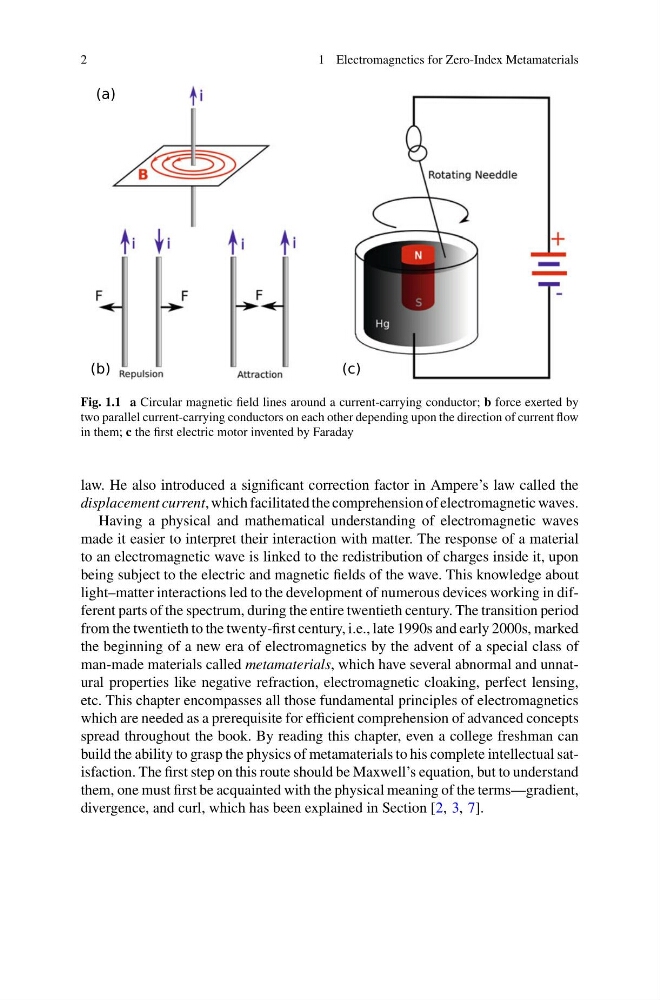
Fig. 1.1 a Circular magnetic field lines around a current-carrying conductor; b force exerted by
two parallel current-carrying conductors on each other depending upon the direction of current flow
in them; c the first electric motor invented by Faraday
law. He also introduced a significant correction factor in Ampere’s law called the
displacement current, which facilitated the comprehension of electromagnetic waves.
Having a physical and mathematical understanding of electromagnetic waves
made it easier to interpret their interaction with matter. The response of a material
to an electromagnetic wave is linked to the redistribution of charges inside it, upon
being subject to the electric and magnetic fields of the wave. This knowledge about
light–matter interactions led to the development of numerous devices working in different parts of the spectrum, during the entire twentieth century. The transition period
from the twentieth to the twenty-first century, i.e., late 1990s and early 2000s, marked
the beginning of a new era of electromagnetics by the advent of a special class of
man-made materials called metamaterials, which have several abnormal and unnatural properties like negative refraction, electromagnetic cloaking, perfect lensing,
etc. This chapter encompasses all those fundamental principles of electromagnetics
which are needed as a prerequisite for efficient comprehension of advanced concepts
spread throughout the book. By reading this chapter, even a college freshman can
build the ability to grasp the physics of metamaterials to his complete intellectual satisfaction. The first step on this route should be Maxwell’s equation, but to understand
them, one must first be acquainted with the physical meaning of the terms—gradient,
divergence, and curl, which has been explained in Section [2, 3, 7].
1 Electromagnetics for Zero-Index Metamaterials
Fig. 1.1 a Circular magnetic field lines around a current-carrying conductor; b force exerted by
two parallel current-carrying conductors on each other depending upon the direction of current flow
in them; c the first electric motor invented by Faraday
law. He also introduced a significant correction factor in Ampere’s law called the
displacement current, which facilitated the comprehension of electromagnetic waves.
Having a physical and mathematical understanding of electromagnetic waves
made it easier to interpret their interaction with matter. The response of a material
to an electromagnetic wave is linked to the redistribution of charges inside it, upon
being subject to the electric and magnetic fields of the wave. This knowledge about
light–matter interactions led to the development of numerous devices working in different parts of the spectrum, during the entire twentieth century. The transition period
from the twentieth to the twenty-first century, i.e., late 1990s and early 2000s, marked
the beginning of a new era of electromagnetics by the advent of a special class of
man-made materials called metamaterials, which have several abnormal and unnatural properties like negative refraction, electromagnetic cloaking, perfect lensing,
etc. This chapter encompasses all those fundamental principles of electromagnetics
which are needed as a prerequisite for efficient comprehension of advanced concepts
spread throughout the book. By reading this chapter, even a college freshman can
build the ability to grasp the physics of metamaterials to his complete intellectual satisfaction. The first step on this route should be Maxwell’s equation, but to understand
them, one must first be acquainted with the physical meaning of the terms—gradient,
divergence, and curl, which has been explained in Section [2, 3, 7].