

44
3 The Role of Legislation
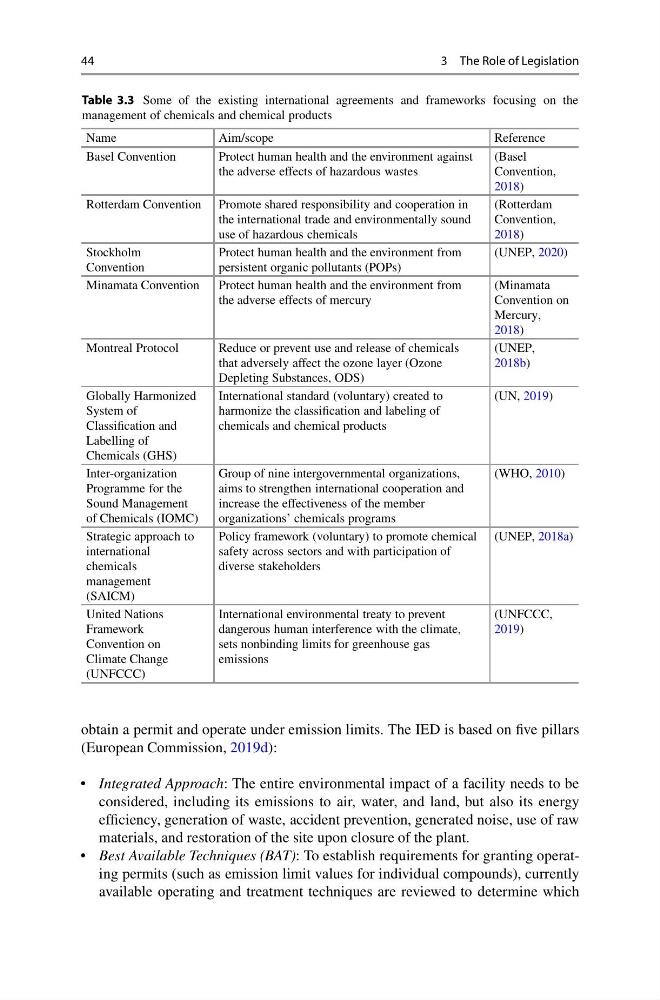
Table 3.3 Some of the existing international agreements and frameworks focusing on the
management of chemicals and chemical products
Name
Aim/scope
Reference
Basel Convention
Protect human health and the environment against
the adverse effects of hazardous wastes
(Basel
Convention,
2018)
Rotterdam Convention Promote shared responsibility and cooperation in
the international trade and environmentally sound
use of hazardous chemicals
(Rotterdam
Convention,
2018)
Stockholm
Convention
Protect human health and the environment from
persistent organic pollutants (POPs)
(UNEP, 2020)
Minamata Convention
Protect human health and the environment from
the adverse effects of mercury
(Minamata
Convention on
Mercury,
2018)
Montreal Protocol
Reduce or prevent use and release of chemicals
that adversely affect the ozone layer (Ozone
Depleting Substances, ODS)
(UNEP,
2018b)
Globally Harmonized
System of
Classification and
Labelling of
Chemicals (GHS)
International standard (voluntary) created to
harmonize the classification and labeling of
chemicals and chemical products
(UN, 2019)
Inter-organization
Programme for the
Sound Management
of Chemicals (IOMC)
Group of nine intergovernmental organizations,
aims to strengthen international cooperation and
increase the effectiveness of the member
organizations’ chemicals programs
(WHO, 2010)
Strategic approach to
international
chemicals
management
(SAICM)
Policy framework (voluntary) to promote chemical
safety across sectors and with participation of
diverse stakeholders
(UNEP, 2018a)
United Nations
Framework
Convention on
Climate Change
(UNFCCC)
International environmental treaty to prevent
dangerous human interference with the climate,
sets nonbinding limits for greenhouse gas
emissions
(UNFCCC,
2019)
obtain a permit and operate under emission limits. The IED is based on five pillars
(European Commission, 2019d):
• Integrated Approach: The entire environmental impact of a facility needs to be
considered, including its emissions to air, water, and land, but also its energy
efficiency, generation of waste, accident prevention, generated noise, use of raw
materials, and restoration of the site upon closure of the plant.
• Best Available Techniques (BAT): To establish requirements for granting operating permits (such as emission limit values for individual compounds), currently
available operating and treatment techniques are reviewed to determine which
3 The Role of Legislation
Table 3.3 Some of the existing international agreements and frameworks focusing on the
management of chemicals and chemical products
Name
Aim/scope
Reference
Basel Convention
Protect human health and the environment against
the adverse effects of hazardous wastes
(Basel
Convention,
2018)
Rotterdam Convention Promote shared responsibility and cooperation in
the international trade and environmentally sound
use of hazardous chemicals
(Rotterdam
Convention,
2018)
Stockholm
Convention
Protect human health and the environment from
persistent organic pollutants (POPs)
(UNEP, 2020)
Minamata Convention
Protect human health and the environment from
the adverse effects of mercury
(Minamata
Convention on
Mercury,
2018)
Montreal Protocol
Reduce or prevent use and release of chemicals
that adversely affect the ozone layer (Ozone
Depleting Substances, ODS)
(UNEP,
2018b)
Globally Harmonized
System of
Classification and
Labelling of
Chemicals (GHS)
International standard (voluntary) created to
harmonize the classification and labeling of
chemicals and chemical products
(UN, 2019)
Inter-organization
Programme for the
Sound Management
of Chemicals (IOMC)
Group of nine intergovernmental organizations,
aims to strengthen international cooperation and
increase the effectiveness of the member
organizations’ chemicals programs
(WHO, 2010)
Strategic approach to
international
chemicals
management
(SAICM)
Policy framework (voluntary) to promote chemical
safety across sectors and with participation of
diverse stakeholders
(UNEP, 2018a)
United Nations
Framework
Convention on
Climate Change
(UNFCCC)
International environmental treaty to prevent
dangerous human interference with the climate,
sets nonbinding limits for greenhouse gas
emissions
(UNFCCC,
2019)
obtain a permit and operate under emission limits. The IED is based on five pillars
(European Commission, 2019d):
• Integrated Approach: The entire environmental impact of a facility needs to be
considered, including its emissions to air, water, and land, but also its energy
efficiency, generation of waste, accident prevention, generated noise, use of raw
materials, and restoration of the site upon closure of the plant.
• Best Available Techniques (BAT): To establish requirements for granting operating permits (such as emission limit values for individual compounds), currently
available operating and treatment techniques are reviewed to determine which