

E.4 Probability Analysis for the Grinding Process of Cyanuric Chloride
295
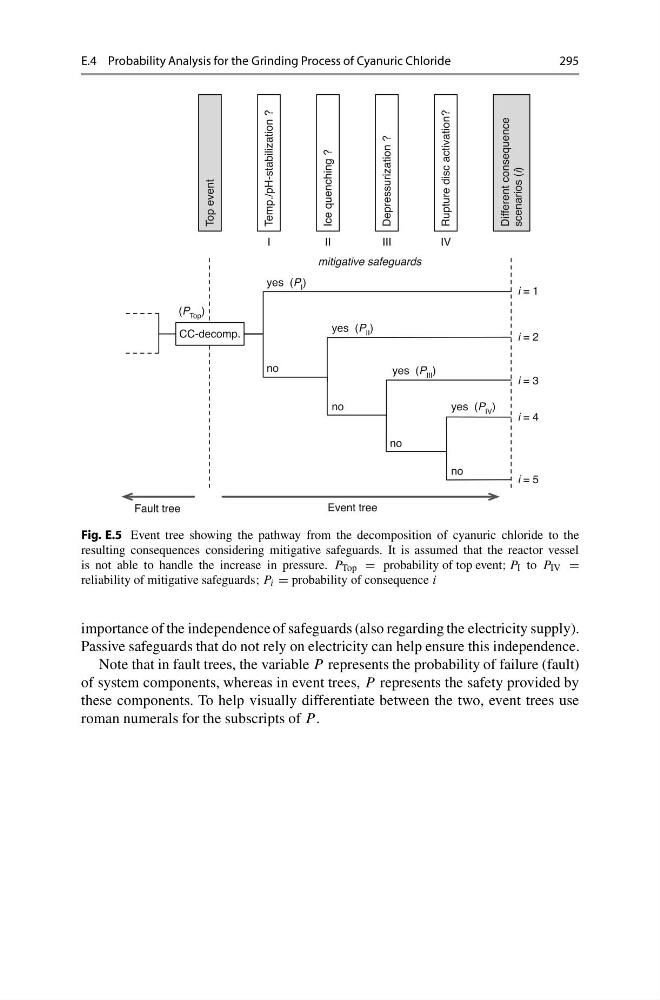
Fig. E.5 Event tree showing the pathway from the decomposition of cyanuric chloride to the
resulting consequences considering mitigative safeguards. It is assumed that the reactor vessel
is not able to handle the increase in pressure. P Top = probability of top event; P I to P IV =
reliability of mitigative safeguards; P i = probability of consequence i
importance of the independence of safeguards (also regarding the electricity supply).
Passive safeguards that do not rely on electricity can help ensure this independence.
Note that in fault trees, the variable P represents the probability of failure (fault)
of system components, whereas in event trees, P represents the safety provided by
these components. To help visually differentiate between the two, event trees use
roman numerals for the subscripts of P .
295
Fig. E.5 Event tree showing the pathway from the decomposition of cyanuric chloride to the
resulting consequences considering mitigative safeguards. It is assumed that the reactor vessel
is not able to handle the increase in pressure. P Top = probability of top event; P I to P IV =
reliability of mitigative safeguards; P i = probability of consequence i
importance of the independence of safeguards (also regarding the electricity supply).
Passive safeguards that do not rely on electricity can help ensure this independence.
Note that in fault trees, the variable P represents the probability of failure (fault)
of system components, whereas in event trees, P represents the safety provided by
these components. To help visually differentiate between the two, event trees use
roman numerals for the subscripts of P .