

114
6 Risk Assessment and Management of Chemical Products
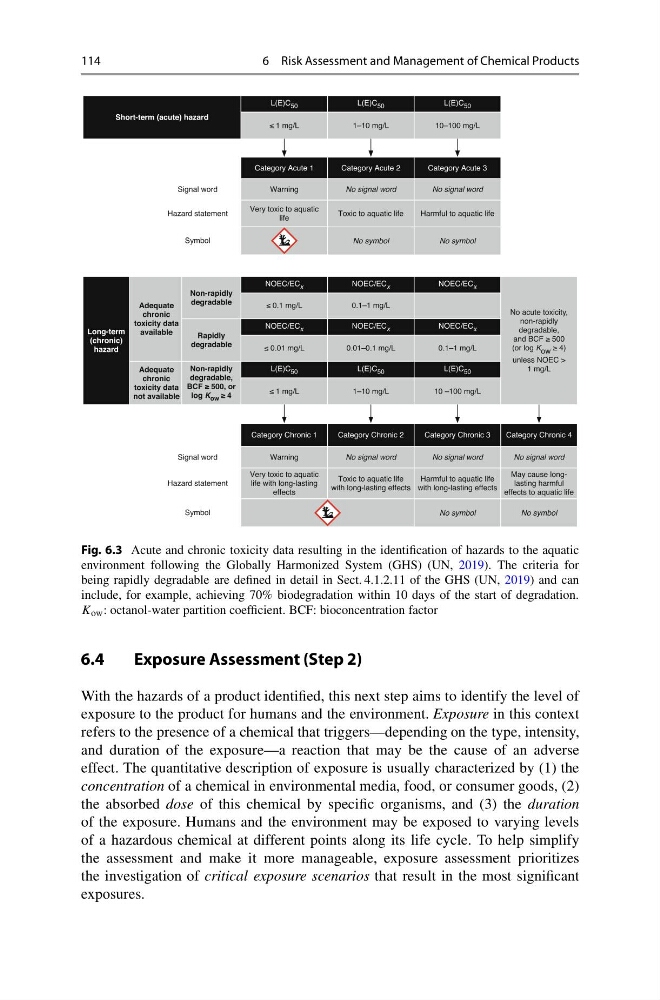
Fig. 6.3 Acute and chronic toxicity data resulting in the identification of hazards to the aquatic
environment following the Globally Harmonized System (GHS) (UN, 2019). The criteria for
being rapidly degradable are defined in detail in Sect. 4.1.2.11 of the GHS (UN, 2019) and can
include, for example, achieving 70% biodegradation within 10 days of the start of degradation.
K ow : octanol-water partition coefficient. BCF: bioconcentration factor
6.4
Exposure Assessment (Step 2)
With the hazards of a product identified, this next step aims to identify the level of
exposure to the product for humans and the environment. Exposure in this context
refers to the presence of a chemical that triggers—depending on the type, intensity,
and duration of the exposure—a reaction that may be the cause of an adverse
effect. The quantitative description of exposure is usually characterized by (1) the
concentration of a chemical in environmental media, food, or consumer goods, (2)
the absorbed dose of this chemical by specific organisms, and (3) the duration
of the exposure. Humans and the environment may be exposed to varying levels
of a hazardous chemical at different points along its life cycle. To help simplify
the assessment and make it more manageable, exposure assessment prioritizes
the investigation of critical exposure scenarios that result in the most significant
exposures.
6 Risk Assessment and Management of Chemical Products
Fig. 6.3 Acute and chronic toxicity data resulting in the identification of hazards to the aquatic
environment following the Globally Harmonized System (GHS) (UN, 2019). The criteria for
being rapidly degradable are defined in detail in Sect. 4.1.2.11 of the GHS (UN, 2019) and can
include, for example, achieving 70% biodegradation within 10 days of the start of degradation.
K ow : octanol-water partition coefficient. BCF: bioconcentration factor
6.4
Exposure Assessment (Step 2)
With the hazards of a product identified, this next step aims to identify the level of
exposure to the product for humans and the environment. Exposure in this context
refers to the presence of a chemical that triggers—depending on the type, intensity,
and duration of the exposure—a reaction that may be the cause of an adverse
effect. The quantitative description of exposure is usually characterized by (1) the
concentration of a chemical in environmental media, food, or consumer goods, (2)
the absorbed dose of this chemical by specific organisms, and (3) the duration
of the exposure. Humans and the environment may be exposed to varying levels
of a hazardous chemical at different points along its life cycle. To help simplify
the assessment and make it more manageable, exposure assessment prioritizes
the investigation of critical exposure scenarios that result in the most significant
exposures.