

The three most important types of nanocomposites are illustrated schematically in
Figure 2.3. The types differ in the dimensionality of the second phase, which may be
zero-dimensional (i.e., isolated nanoparticles), one-dimensional (i.e., consisting of
nanotubes or nanorods), or two-dimensional (i.e., existing as stacks or layers).
Composites with platelets as the second phase may be thought as two-dimensional.
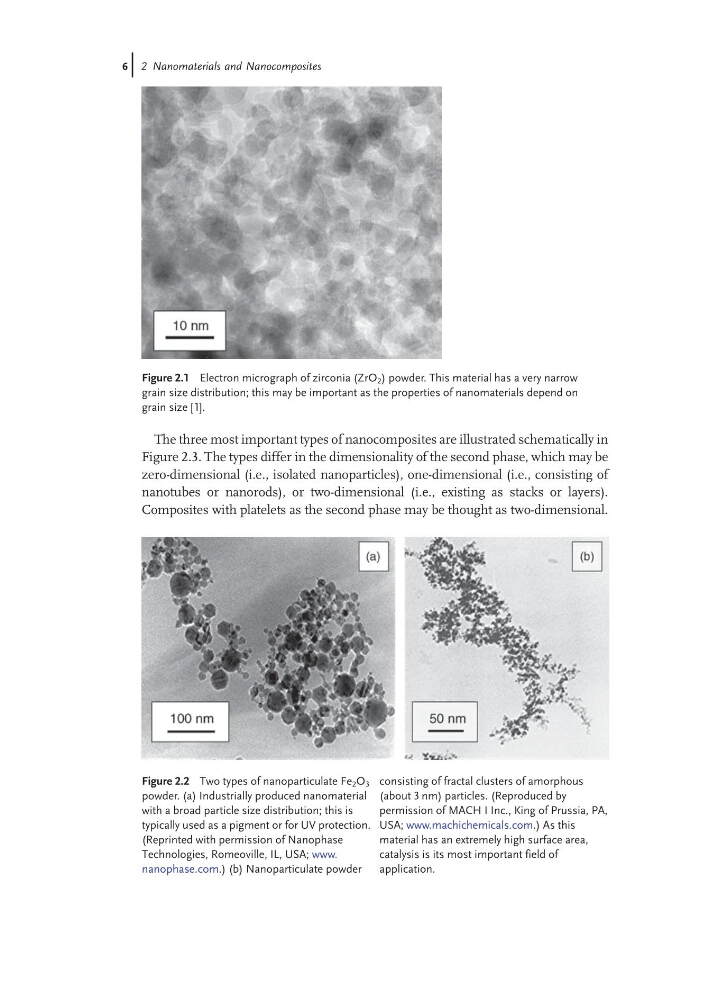
Figure 2.2 Two types of nanoparticulate Fe 2 O 3
powder. (a) Industrially produced nanomaterial
with a broad particle size distribution; this is
typically used as a pigment or for UV protection.
(Reprinted with permission of Nanophase
Technologies, Romeoville, IL, USA; www.
nanophase.com.) (b) Nanoparticulate powder
consisting of fractal clusters of amorphous
(about 3 nm) particles. (Reproduced by
permission of MACH I Inc., King of Prussia, PA,
USA; www.machichemicals.com.) As this
material has an extremely high surface area,
catalysis is its most important field of
application.
Figure 2.1 Electron micrograph of zirconia (ZrO 2 ) powder. This material has a very narrow
grain size distribution; this may be important as the properties of nanomaterials depend on
grain size [1].
6j 2 Nanomaterials and Nanocomposites
Figure 2.3. The types differ in the dimensionality of the second phase, which may be
zero-dimensional (i.e., isolated nanoparticles), one-dimensional (i.e., consisting of
nanotubes or nanorods), or two-dimensional (i.e., existing as stacks or layers).
Composites with platelets as the second phase may be thought as two-dimensional.
Figure 2.2 Two types of nanoparticulate Fe 2 O 3
powder. (a) Industrially produced nanomaterial
with a broad particle size distribution; this is
typically used as a pigment or for UV protection.
(Reprinted with permission of Nanophase
Technologies, Romeoville, IL, USA; www.
nanophase.com.) (b) Nanoparticulate powder
consisting of fractal clusters of amorphous
(about 3 nm) particles. (Reproduced by
permission of MACH I Inc., King of Prussia, PA,
USA; www.machichemicals.com.) As this
material has an extremely high surface area,
catalysis is its most important field of
application.
Figure 2.1 Electron micrograph of zirconia (ZrO 2 ) powder. This material has a very narrow
grain size distribution; this may be important as the properties of nanomaterials depend on
grain size [1].
6j 2 Nanomaterials and Nanocomposites