

characteristics usually allow the drone to have sufficient time to accurately identify and
lock targets in the theater, thereby reducing accidental injuries and collateral damage.
• Strong maneuverability
At present, for a fighter aircraft based on metal material structure, the turning overload
that the body structure can withstand is usually within 15G. However, due to the
physiological limitations of the pilot, the turning overload will generally not exceed
9G. For a drone, in theory, as long as the engine and maneuverability allow, the drone
can make the most overloaded turning maneuver that the body can withstand. In the
future, with the improvement of autonomy, drones can greatly shorten the OODA ring.
As a result, the agility of the drones will be higher, which can respond to the battlefield
situation more quickly.
• Long endurance
For a manned aircraft, its endurance is mainly limited by the pilot’s physiology. If the
flight time is too long, the pilot will have fatigue and negative emotions, and it is prone
to safety accidents. However, the drone operators can operate the aircraft in the ground
control station by turns. Meanwhile, automatic flight can be set during the cruise phase,
and nearly no human intervention is required. As long as the power and structure of the
drone are sustainable, it can be active in the theater for a long time without interruption,
so the endurance is far stronger than that of the manned aircraft.
4 UAV Formation
With the continuous development of artificial intelligence technology, the combat style
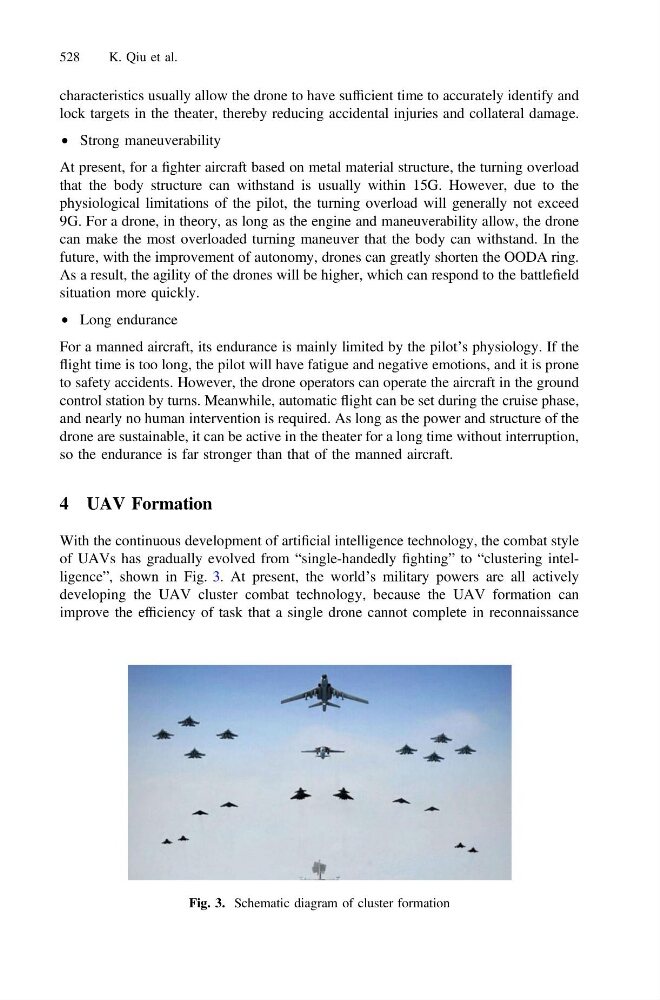
of UAVs has gradually evolved from “single-handedly fighting” to “clustering intelligence”, shown in Fig. 3. At present, the world’s military powers are all actively
developing the UAV cluster combat technology, because the UAV formation can
improve the efficiency of task that a single drone cannot complete in reconnaissance
Fig. 3. Schematic diagram of cluster formation
528
K. Qiu et al.