

An ATM Knowledge Graph-Based Method of Dynamic . . .
489
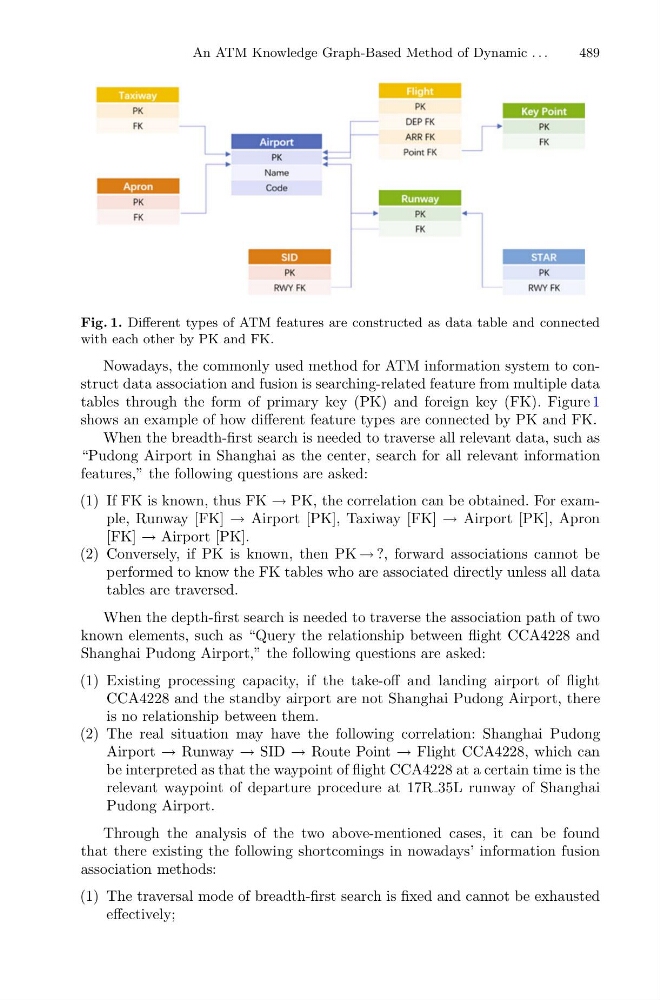
Fig. 1. Different types of ATM features are constructed as data table and connected
with each other by PK and FK.
Nowadays, the commonly used method for ATM information system to construct data association and fusion is searching-related feature from multiple data
tables through the form of primary key (PK) and foreign key (FK). Figure 1
shows an example of how different feature types are connected by PK and FK.
When the breadth-first search is needed to traverse all relevant data, such as
“Pudong Airport in Shanghai as the center, search for all relevant information
features,” the following questions are asked:
(1) If FK is known, thus FK → PK, the correlation can be obtained. For example, Runway [FK] → Airport [PK], Taxiway [FK] → Airport [PK], Apron
[FK] → Airport [PK].
(2) Conversely, if PK is known, then PK → ?, forward associations cannot be
performed to know the FK tables who are associated directly unless all data
tables are traversed.
When the depth-first search is needed to traverse the association path of two
known elements, such as “Query the relationship between flight CCA4228 and
Shanghai Pudong Airport,” the following questions are asked:
(1) Existing processing capacity, if the take-off and landing airport of flight
CCA4228 and the standby airport are not Shanghai Pudong Airport, there
is no relationship between them.
(2) The real situation may have the following correlation: Shanghai Pudong
Airport → Runway → SID → Route Point → Flight CCA4228, which can
be interpreted as that the waypoint of flight CCA4228 at a certain time is the
relevant waypoint of departure procedure at 17R 35L runway of Shanghai
Pudong Airport.
Through the analysis of the two above-mentioned cases, it can be found
that there existing the following shortcomings in nowadays’ information fusion
association methods:
(1) The traversal mode of breadth-first search is fixed and cannot be exhausted
effectively;