

6 Conclusion
The semantic recognition of image scene is an important content of high-resolution
remote sensing image interpretation. In this paper, related concepts and schemes of
image scene recognition are firstly analyzed, then visual feature representation method
for remote sensing image is provided and also a semantic recognition algorithm based
on PLSA is given. Experiment on recognition of ten typical remote sensing image
scenes verified the effectiveness of proposed algorithm. The recognition model
obtained by training can be further applied to the large remote sensing images for
interactive annotation.
References
1. Zhao R, Grosky WI, Negotiating the semantic gap: from feature maps to semantic landscapes.
In: Pacholski L, Ruička P (eds) SOFSEM 2001, LNCS 2234, 33–52
2. Kumars H, Sivaprakash P (2013) New approach for action recognition using motion based
features. In: Proceedings of 2013 IEEE conference on information & communication
technologies. IEEE Computer Society, Washington DC, USA, 1247–1252
3. Liang Z, Wang X, Huangr et al (2014) An expressive deep model for human action parsing
from a single image. In: Proceedings of 2014 IEEE international conference on multi-media
and expo. IEEE Computer Society, Washington DC, USA, 1–6
4. Zhang X, Zhang H, Zhang Y et al (2016) Deep fusion of multiple semantic cues for complex
event recognition. IEEE Trans. Image Process. 25(3):1033–1046
5. Pang L, Zhu S, Ngo CW (2015) Deep multimodal learning for affective analysis and retrieval.
IEEE Trans Multimedia 17(11):2008–2020
6. Kim H, Kim J, Oh T et al (2017) Blind sharpness prediction for ultra-high-definition video
based on human visual resolution. IEEE Trans Circuits Syst Video Technol 27(5):951–964
0
10
20
30
40
50
60
50
55
60
65
70
75
80
85
90
95
100
Mean Recognition Rate(%)
Number of Latent Semantic Topics
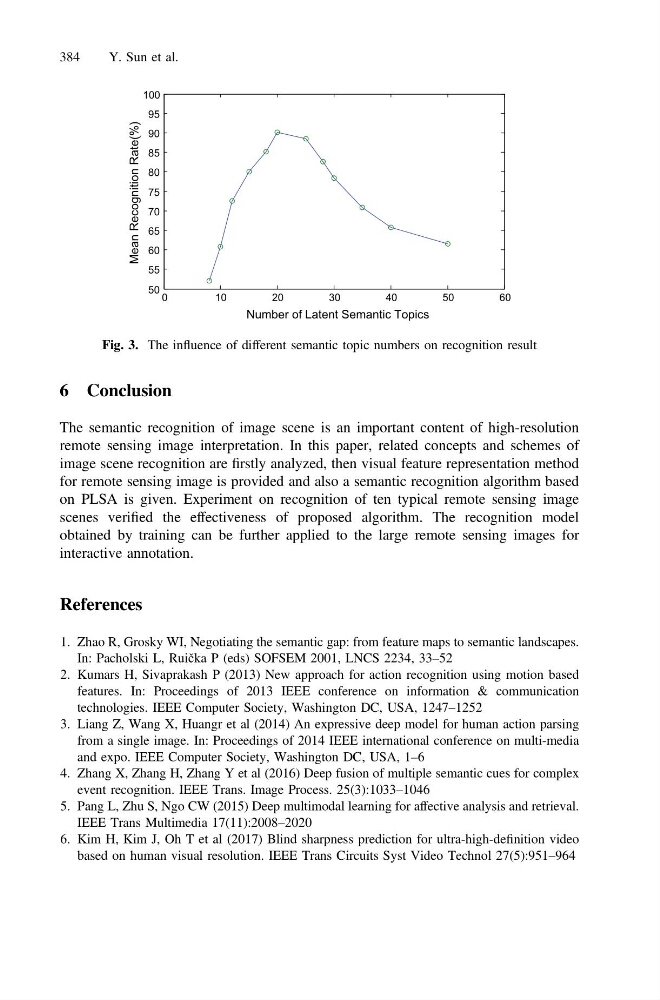
Fig. 3. The influence of different semantic topic numbers on recognition result
384
Y. Sun et al.
The semantic recognition of image scene is an important content of high-resolution
remote sensing image interpretation. In this paper, related concepts and schemes of
image scene recognition are firstly analyzed, then visual feature representation method
for remote sensing image is provided and also a semantic recognition algorithm based
on PLSA is given. Experiment on recognition of ten typical remote sensing image
scenes verified the effectiveness of proposed algorithm. The recognition model
obtained by training can be further applied to the large remote sensing images for
interactive annotation.
References
1. Zhao R, Grosky WI, Negotiating the semantic gap: from feature maps to semantic landscapes.
In: Pacholski L, Ruička P (eds) SOFSEM 2001, LNCS 2234, 33–52
2. Kumars H, Sivaprakash P (2013) New approach for action recognition using motion based
features. In: Proceedings of 2013 IEEE conference on information & communication
technologies. IEEE Computer Society, Washington DC, USA, 1247–1252
3. Liang Z, Wang X, Huangr et al (2014) An expressive deep model for human action parsing
from a single image. In: Proceedings of 2014 IEEE international conference on multi-media
and expo. IEEE Computer Society, Washington DC, USA, 1–6
4. Zhang X, Zhang H, Zhang Y et al (2016) Deep fusion of multiple semantic cues for complex
event recognition. IEEE Trans. Image Process. 25(3):1033–1046
5. Pang L, Zhu S, Ngo CW (2015) Deep multimodal learning for affective analysis and retrieval.
IEEE Trans Multimedia 17(11):2008–2020
6. Kim H, Kim J, Oh T et al (2017) Blind sharpness prediction for ultra-high-definition video
based on human visual resolution. IEEE Trans Circuits Syst Video Technol 27(5):951–964
0
10
20
30
40
50
60
50
55
60
65
70
75
80
85
90
95
100
Mean Recognition Rate(%)
Number of Latent Semantic Topics
Fig. 3. The influence of different semantic topic numbers on recognition result
384
Y. Sun et al.