

5.7 Ionization Counters
65
Scaler
Insulators
Anode
(A)
(B)
EHT
Amplifier
Discrimination
When fully
charged
Eye piece
Scale
Radiation
When fully
discharged
Holder clip
Anode leaf
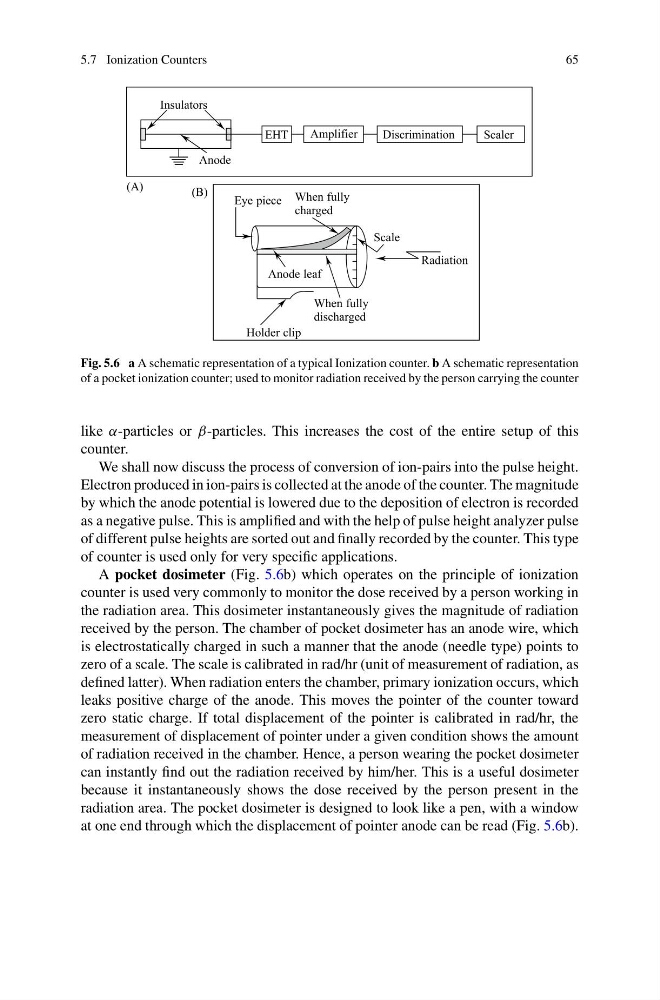
Fig. 5.6 a A schematic representation of a typical Ionization counter. b A schematic representation
of a pocket ionization counter; used to monitor radiation received by the person carrying the counter
like α-particles or β-particles. This increases the cost of the entire setup of this
counter.
We shall now discuss the process of conversion of ion-pairs into the pulse height.
Electron produced in ion-pairs is collected at the anode of the counter. The magnitude
by which the anode potential is lowered due to the deposition of electron is recorded
as a negative pulse. This is amplified and with the help of pulse height analyzer pulse
of different pulse heights are sorted out and finally recorded by the counter. This type
of counter is used only for very specific applications.
A pocket dosimeter (Fig. 5.6b) which operates on the principle of ionization
counter is used very commonly to monitor the dose received by a person working in
the radiation area. This dosimeter instantaneously gives the magnitude of radiation
received by the person. The chamber of pocket dosimeter has an anode wire, which
is electrostatically charged in such a manner that the anode (needle type) points to
zero of a scale. The scale is calibrated in rad/hr (unit of measurement of radiation, as
defined latter). When radiation enters the chamber, primary ionization occurs, which
leaks positive charge of the anode. This moves the pointer of the counter toward
zero static charge. If total displacement of the pointer is calibrated in rad/hr, the
measurement of displacement of pointer under a given condition shows the amount
of radiation received in the chamber. Hence, a person wearing the pocket dosimeter
can instantly find out the radiation received by him/her. This is a useful dosimeter
because it instantaneously shows the dose received by the person present in the
radiation area. The pocket dosimeter is designed to look like a pen, with a window
at one end through which the displacement of pointer anode can be read (Fig. 5.6b).
65
Scaler
Insulators
Anode
(A)
(B)
EHT
Amplifier
Discrimination
When fully
charged
Eye piece
Scale
Radiation
When fully
discharged
Holder clip
Anode leaf
Fig. 5.6 a A schematic representation of a typical Ionization counter. b A schematic representation
of a pocket ionization counter; used to monitor radiation received by the person carrying the counter
like α-particles or β-particles. This increases the cost of the entire setup of this
counter.
We shall now discuss the process of conversion of ion-pairs into the pulse height.
Electron produced in ion-pairs is collected at the anode of the counter. The magnitude
by which the anode potential is lowered due to the deposition of electron is recorded
as a negative pulse. This is amplified and with the help of pulse height analyzer pulse
of different pulse heights are sorted out and finally recorded by the counter. This type
of counter is used only for very specific applications.
A pocket dosimeter (Fig. 5.6b) which operates on the principle of ionization
counter is used very commonly to monitor the dose received by a person working in
the radiation area. This dosimeter instantaneously gives the magnitude of radiation
received by the person. The chamber of pocket dosimeter has an anode wire, which
is electrostatically charged in such a manner that the anode (needle type) points to
zero of a scale. The scale is calibrated in rad/hr (unit of measurement of radiation, as
defined latter). When radiation enters the chamber, primary ionization occurs, which
leaks positive charge of the anode. This moves the pointer of the counter toward
zero static charge. If total displacement of the pointer is calibrated in rad/hr, the
measurement of displacement of pointer under a given condition shows the amount
of radiation received in the chamber. Hence, a person wearing the pocket dosimeter
can instantly find out the radiation received by him/her. This is a useful dosimeter
because it instantaneously shows the dose received by the person present in the
radiation area. The pocket dosimeter is designed to look like a pen, with a window
at one end through which the displacement of pointer anode can be read (Fig. 5.6b).