

48
4 Interaction of Radiation with Matter
Overall Effect
Photoelectric Effect
Compton Scattering
Pair Prodeuction
1.0
0.1
0.0
0.01
0.10
1.0
10.0
Energy of Gamma Rays (MeV)
Absorption Coefficient (cm
1
)
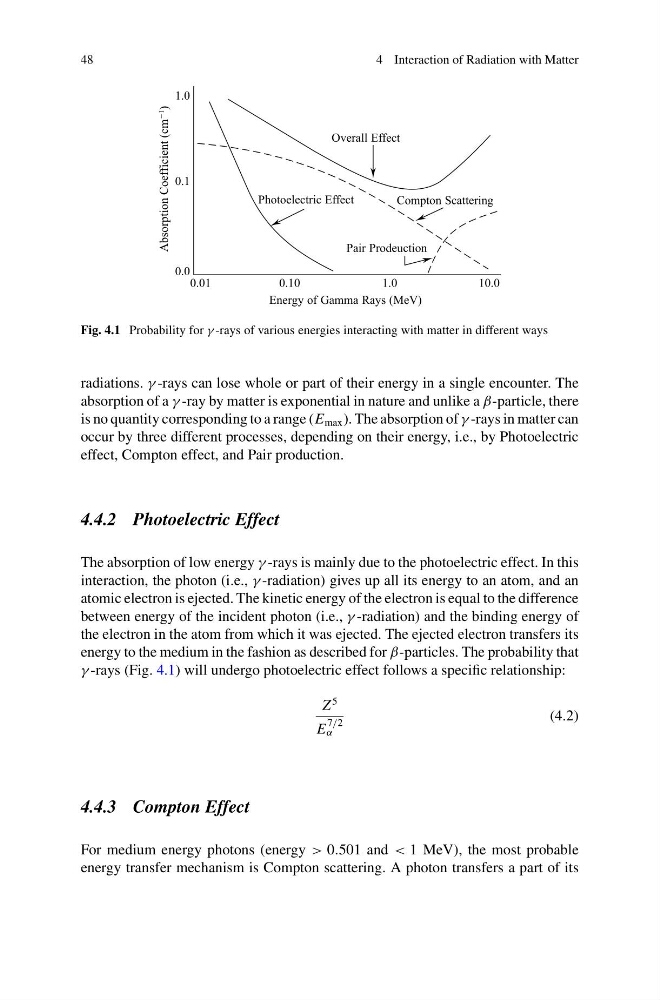
Fig. 4.1 Probability for γ -rays of various energies interacting with matter in different ways
radiations. γ -rays can lose whole or part of their energy in a single encounter. The
absorption of a γ -ray by matter is exponential in nature and unlike a β-particle, there
is no quantity corresponding to a range (E max ). The absorption of γ -rays in matter can
occur by three different processes, depending on their energy, i.e., by Photoelectric
effect, Compton effect, and Pair production.
4.4.2 Photoelectric Effect
The absorption of low energy γ -rays is mainly due to the photoelectric effect. In this
interaction, the photon (i.e., γ -radiation) gives up all its energy to an atom, and an
atomic electron is ejected. The kinetic energy of the electron is equal to the difference
between energy of the incident photon (i.e., γ -radiation) and the binding energy of
the electron in the atom from which it was ejected. The ejected electron transfers its
energy to the medium in the fashion as described for β-particles. The probability that
γ -rays (Fig. 4.1) will undergo photoelectric effect follows a specific relationship:
Z
5
E
7/2
α
(4.2)
4.4.3 Compton Effect
For medium energy photons (energy > 0.501 and < 1 MeV), the most probable
energy transfer mechanism is Compton scattering. A photon transfers a part of its
4 Interaction of Radiation with Matter
Overall Effect
Photoelectric Effect
Compton Scattering
Pair Prodeuction
1.0
0.1
0.0
0.01
0.10
1.0
10.0
Energy of Gamma Rays (MeV)
Absorption Coefficient (cm
1
)
Fig. 4.1 Probability for γ -rays of various energies interacting with matter in different ways
radiations. γ -rays can lose whole or part of their energy in a single encounter. The
absorption of a γ -ray by matter is exponential in nature and unlike a β-particle, there
is no quantity corresponding to a range (E max ). The absorption of γ -rays in matter can
occur by three different processes, depending on their energy, i.e., by Photoelectric
effect, Compton effect, and Pair production.
4.4.2 Photoelectric Effect
The absorption of low energy γ -rays is mainly due to the photoelectric effect. In this
interaction, the photon (i.e., γ -radiation) gives up all its energy to an atom, and an
atomic electron is ejected. The kinetic energy of the electron is equal to the difference
between energy of the incident photon (i.e., γ -radiation) and the binding energy of
the electron in the atom from which it was ejected. The ejected electron transfers its
energy to the medium in the fashion as described for β-particles. The probability that
γ -rays (Fig. 4.1) will undergo photoelectric effect follows a specific relationship:
Z
5
E
7/2
α
(4.2)
4.4.3 Compton Effect
For medium energy photons (energy > 0.501 and < 1 MeV), the most probable
energy transfer mechanism is Compton scattering. A photon transfers a part of its