

8.2 Solid Sample Source
143
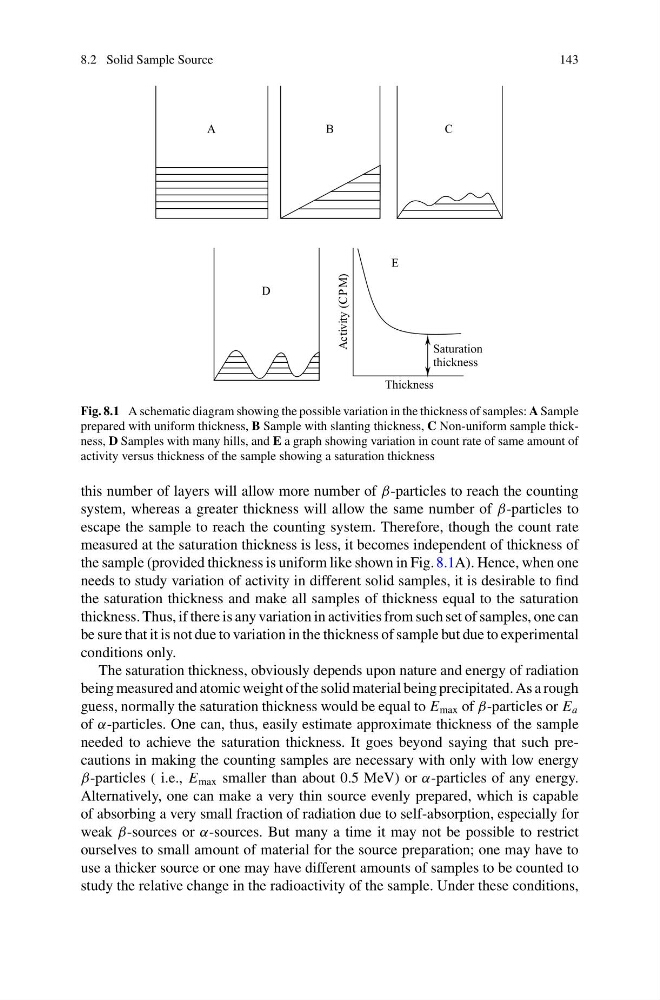
Fig. 8.1 A schematic diagram showing the possible variation in the thickness of samples: A Sample
prepared with uniform thickness, B Sample with slanting thickness, C Non-uniform sample thickness, D Samples with many hills, and E a graph showing variation in count rate of same amount of
activity versus thickness of the sample showing a saturation thickness
this number of layers will allow more number of β-particles to reach the counting
system, whereas a greater thickness will allow the same number of β-particles to
escape the sample to reach the counting system. Therefore, though the count rate
measured at the saturation thickness is less, it becomes independent of thickness of
the sample (provided thickness is uniform like shown in Fig. 8.1A). Hence, when one
needs to study variation of activity in different solid samples, it is desirable to find
the saturation thickness and make all samples of thickness equal to the saturation
thickness. Thus, if there is any variation in activities from such set of samples, one can
be sure that it is not due to variation in the thickness of sample but due to experimental
conditions only.
The saturation thickness, obviously depends upon nature and energy of radiation
being measured and atomic weight of the solid material being precipitated. As a rough
guess, normally the saturation thickness would be equal to E max of β-particles or E a
of α-particles. One can, thus, easily estimate approximate thickness of the sample
needed to achieve the saturation thickness. It goes beyond saying that such precautions in making the counting samples are necessary with only with low energy
β-particles ( i.e., E max smaller than about 0.5 MeV) or α-particles of any energy.
Alternatively, one can make a very thin source evenly prepared, which is capable
of absorbing a very small fraction of radiation due to self-absorption, especially for
weak β-sources or α-sources. But many a time it may not be possible to restrict
ourselves to small amount of material for the source preparation; one may have to
use a thicker source or one may have different amounts of samples to be counted to
study the relative change in the radioactivity of the sample. Under these conditions,
143
Fig. 8.1 A schematic diagram showing the possible variation in the thickness of samples: A Sample
prepared with uniform thickness, B Sample with slanting thickness, C Non-uniform sample thickness, D Samples with many hills, and E a graph showing variation in count rate of same amount of
activity versus thickness of the sample showing a saturation thickness
this number of layers will allow more number of β-particles to reach the counting
system, whereas a greater thickness will allow the same number of β-particles to
escape the sample to reach the counting system. Therefore, though the count rate
measured at the saturation thickness is less, it becomes independent of thickness of
the sample (provided thickness is uniform like shown in Fig. 8.1A). Hence, when one
needs to study variation of activity in different solid samples, it is desirable to find
the saturation thickness and make all samples of thickness equal to the saturation
thickness. Thus, if there is any variation in activities from such set of samples, one can
be sure that it is not due to variation in the thickness of sample but due to experimental
conditions only.
The saturation thickness, obviously depends upon nature and energy of radiation
being measured and atomic weight of the solid material being precipitated. As a rough
guess, normally the saturation thickness would be equal to E max of β-particles or E a
of α-particles. One can, thus, easily estimate approximate thickness of the sample
needed to achieve the saturation thickness. It goes beyond saying that such precautions in making the counting samples are necessary with only with low energy
β-particles ( i.e., E max smaller than about 0.5 MeV) or α-particles of any energy.
Alternatively, one can make a very thin source evenly prepared, which is capable
of absorbing a very small fraction of radiation due to self-absorption, especially for
weak β-sources or α-sources. But many a time it may not be possible to restrict
ourselves to small amount of material for the source preparation; one may have to
use a thicker source or one may have different amounts of samples to be counted to
study the relative change in the radioactivity of the sample. Under these conditions,